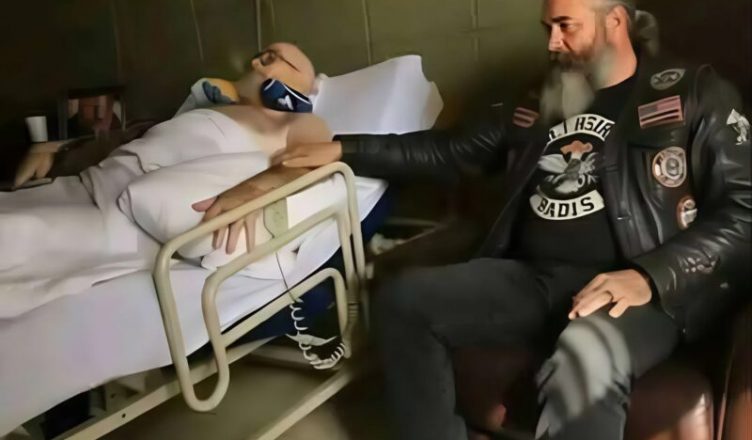
Six months — that’s how long my three children stayed away. Six months of empty chairs, silent phones, and nurses who pretended not to pity me.
I wasn’t waiting for a miracle anymore. I was just waiting for the clock to run out.
And then he walked in by mistake — a tattooed biker with road dust still clinging to his boots.
He spotted the Military Cross on my nightstand and froze mid-step. Something in his eyes shifted… like a man recognizing a battle scar he carried on the inside.
He didn’t back out or apologize. He came closer and called me brother, like he meant it. And the strangest thing happened: I started talking. About my service. My regrets. And about the slow, quiet way my own children had abandoned me while I was dying.
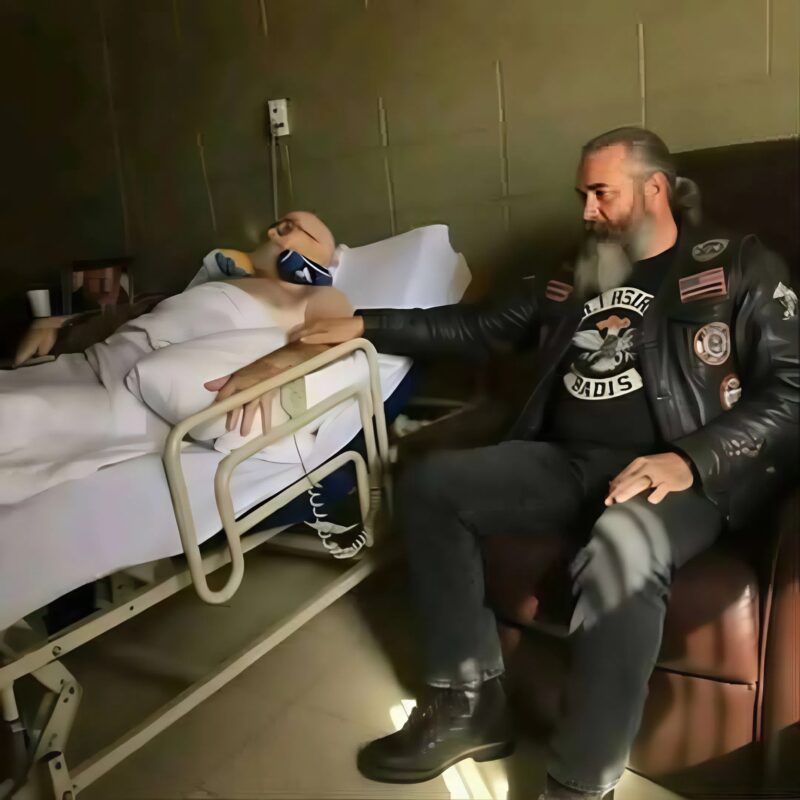
He listened. Really listened. No judgment. No fake sympathy. Just a solid, breathing presence in a room where everything else felt temporary.
Then he leaned down, lowered his voice, and said:
“I can’t make them love you… but I can make damn sure they regret not showing up. You want that?”
Something in my chest flickered — not hope, no… something sharper, meaner, realer.
I nodded.
And for the first time in months, I felt my face stretch into a smile.
He came back the next day. And the day after that.
Soon he was a regular fixture: leather vest, steel-toed boots, hands scarred from a life spent fighting things most people never see. The nurses adored him. Patients stared at him like he was some outlaw angel who’d taken a wrong turn.
He brought me coffee, old newspapers, stories from the road. Sometimes he said nothing at all, just sat with me — and somehow that silence carried more weight than any apology my kids never made.
One night he asked, straight out:
“You still want them to feel it? The regret?”
His eyes weren’t cruel. They were honest — painfully honest.
“Yes,” I whispered. “I want them to remember I exist. Just once.”
He nodded like a man accepting a mission.
The next afternoon, the impossible happened.
My children burst into the room — pale, breathless, shaking like survivors pulled from cold water. My daughter was crying already. My middle son kept muttering that he “didn’t know.” The youngest leaned against the wall, unable to look at me, as if the truth burned his eyes.
They circled my bed like people paying respects at a funeral that came too early.
“Dad… why didn’t you tell us?” my daughter sobbed.
I wanted to laugh. I didn’t.
It hurt too much.
“I called,” I said softly. “You were busy.”
Their shame was a living thing — thick, heavy, choking the room.
In the corner, the biker sat in a chair, arms crossed. Watching.
Then he stood up, adjusted his vest, and spoke to them with the kind of steady, unforgiving calm that only people who’ve buried too many regrets own:
“He didn’t ask for your fear. He asked for your time. Give it to him now. Before you lose the chance forever.”
He didn’t wait for a response.
He just walked out.
Only later did I learn what he’d done.
He had sent them pictures.
Not staged. Not dramatic.
Real.
My hands — thin as twigs.
My face — hollowed out by chemo.
My Military Cross lying beside me like the last piece of a life they never bothered to ask about.
And under the photos, he wrote just four words:
He’s waiting. That’s all.