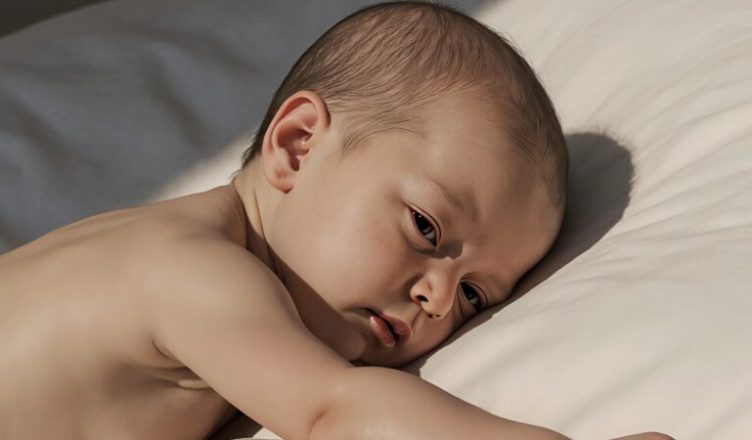
She didn’t have the full form of her tiny right arm. And in that moment, the world didn’t explode; it just… stopped. Like a film projector that jams on the most important frame.
I remember the room vividly: bright lights, hurried footsteps, the soft clatter of metal instruments, the warm weight of expectation in my chest. I waited for that first cry—the honest, trembling sound every parent dreams about.
But instead of relief, I caught a flicker in the doctor’s expression. A shadow. A question he didn’t want to ask out loud.
He turned her slightly, and my heart dropped so fast it felt like it left my body. Part of her hand was missing. One moment I was a new mother. The next, I was a soldier thrown onto a battlefield with no map, no warning, no armor.
Fear doesn’t scream. It whispers.
Did I miss a sign? Did I do something wrong? Could I have prevented this?
The questions hit me like cold water, one after another, until I couldn’t breathe.
But then she inhaled.
A soft, steady breath—almost defiant.
As if she was telling the world, “I’m here. Watch me.”
And something shifted inside me. I wasn’t holding a fragile child. I was holding a fighter.
The first months felt like walking on glass. Every doctor’s appointment was a silent interrogation of my own strength. Every look from strangers—too long, too curious, too pitying—cut deeper than I expected. I had to learn fast that pity is poison. Strength is the antidote.
But she grew.
Not despite her missing hand, but because of the battles she faced earlier than most kids ever will.
When she turned one, she tried to pull a toy toward herself using her left hand, clumsy and determined. Most people wouldn’t have noticed. But I did. Because that tiny, stubborn gesture was a declaration: she was never going to wait for the world to adjust to her. She was adjusting to it—on her own terms.
People warned me about challenges. What they didn’t tell me was the truth that matters more:
kids like her are forged differently.
They know effort from day one. They understand struggle without anyone explaining it. They carry a fire inside them that others don’t need—but they do.
Today she’s three. She runs like the wind is her personal coach. Her laughter hits the room first, and everything else follows. Her joy is loud. Her spirit is louder.
And yes—she’s growing up with something the world calls a limitation.
But what I see isn’t a limitation.
It’s the blueprint of her power.
Sometimes I catch myself staring at her, realizing something uncomfortable and beautiful at the same time:
she was never the one who needed to be “fixed.”
I was.
I needed to let go of fear.
I needed to stop looking for what was missing and start seeing what was blazing right in front of me.
She touches my cheek with her warm little hand—the one she has—and laughs. And in that laugh, there’s no apology. No excuse. No hesitation.
There’s only life.
Full, bright, unfiltered life.
And I finally understand:
strength doesn’t always enter your world in a perfect shape.
Sometimes it arrives as a child who forces you to rebuild your own definition of what “whole” really means.