The November wind cut like broken glass, carrying the raw, bone-deep chill of the river through the city’s forgotten corners. Near a row of peeling concrete garages, a five-year-old boy played alone, his laughter swallowed by the gray skies. His mother stood nearby, pressed to her phone, giggling at a friend’s joke. She glanced over at him occasionally, never really seeing him.
The boy wandered closer to the riverbank — a drop-off made slick and treacherous by days of relentless rain. The river was swollen, fast, unforgiving. One misstep was all it took. His foot slipped. A scream was muffled by the splash as he plunged into the water. His heavy coat soaked instantly, dragging him under.
The mother didn’t notice.
She was still laughing.
The boy flailed in the freezing current, gasping, fighting, swallowed again and again by waves that wanted him. His arms thrashed at the air, at the sky, at nothing.
And then — from across the river — came a man.
No one in the neighborhood had time for him. A thin, scruffy figure in torn layers of mismatched clothing, known only as “Erlich.” The homeless guy. The one people crossed the street to avoid. The man who scavenged cans and slept in the hollowed-out skeleton of an abandoned house nearby.
But he heard the scream. And he ran.
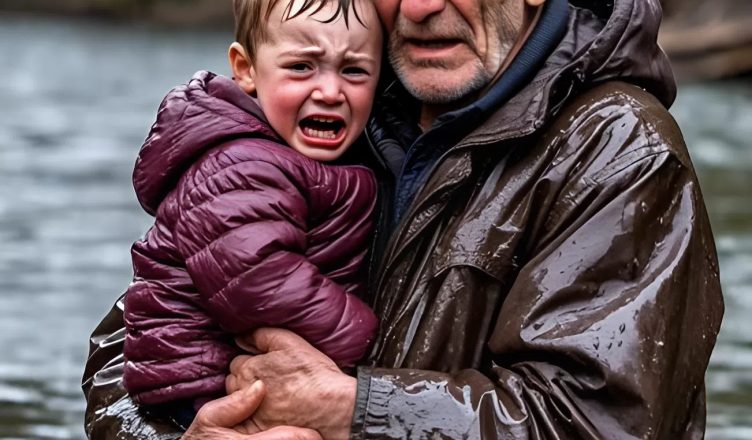
He didn’t hesitate — not for a second. Erlich dove into the river without removing a single piece of his grimy clothing. The water pummeled him, tried to take him down too, but he fought through it. His arms reached, grabbed, found the boy. He pulled him up by the collar, gasping, coughing, eyes wide with shock and fear.
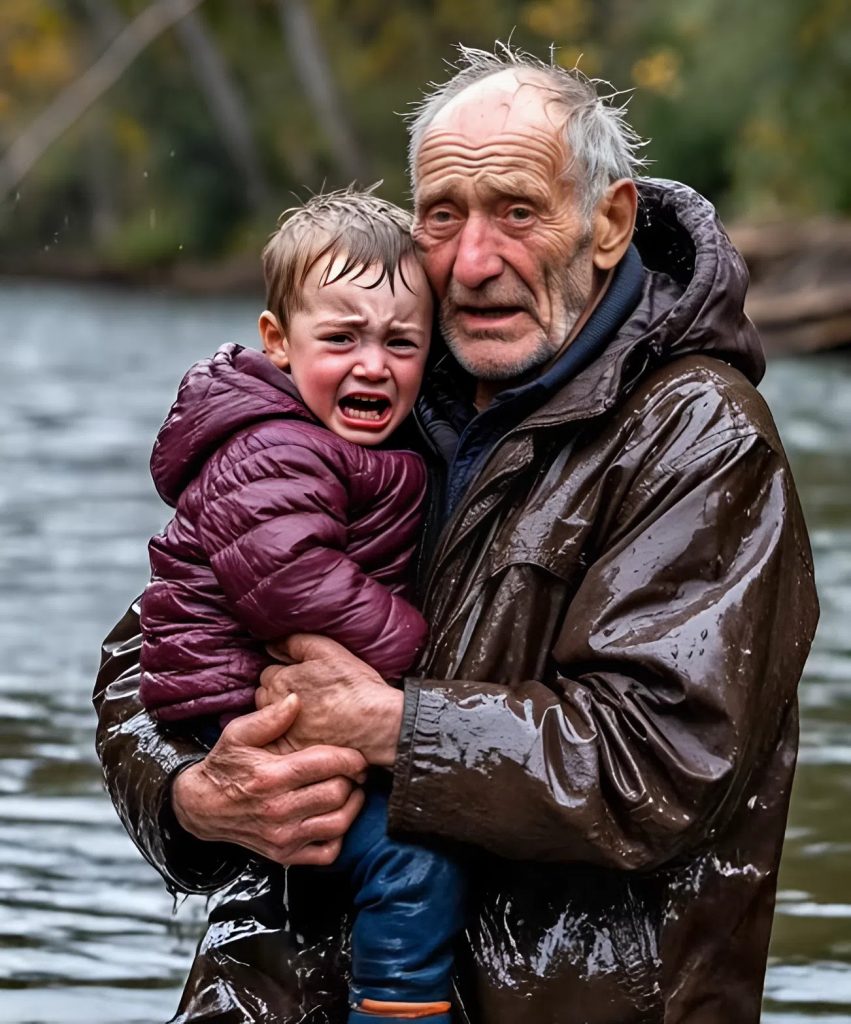
Erlich dragged him to shore. The child was pale, trembling. Without thinking, the man pulled off his own coat and wrapped the boy in it, holding him tight to keep him warm. Then he carried him across the street, toward the mother.
Only then did she look up.
And scream.
“You touched my son? You disgusting freak! What did you do to him?!”
Erlich blinked, breathless. “He was drowning…”
She didn’t let him finish.
“Better he had drowned than been in your filthy hands!”
The words rang out, ugly and cold. People heard. Heads turned. A few came out of garages, watching. The boy began to cry again — not from the cold this time, but from fear, confusion, shame.
Erlich stood frozen. Not from the temperature, but from something far worse: heartbreak. He had expected nothing — no applause, no handshake, no reward. But this? A mother screaming that her child should’ve drowned?
She didn’t check if her son was breathing. She didn’t kneel beside him. She didn’t hug him.
She only saw a man she’d judged unworthy of existing.
The story spread through the neighborhood like wildfire. Some tried to excuse the mother — shock, panic, fear. But most were horrified. In the man they had ignored, mocked, or feared, they now saw something they had forgotten to recognize:
Humanity.
The next day, people started approaching Erlich. The woman from the kiosk brought him tea in a dented thermos. A teenager, one of those who had once thrown pebbles at him, offered a blanket. Others brought clothes, food. A few men helped clear the trash from his crumbling shelter. They didn’t know what to say, but their actions spoke loud enough.
The mother vanished from public sight. Rumors spread — that child services had contacted her, that she filed a complaint against Erlich. But the truth stood taller than paperwork: too many people had seen what happened. Too many knew.
Weeks passed. One cold afternoon, Erlich was seen walking through the park. He wore a new coat, his beard trimmed, his head held high. People nodded to him now. Not everyone, but enough.
The child he saved was with his grandmother now. Safe. Quiet. And sometimes he told her, in whispers, about the man in the river who pulled him from the dark.
This story isn’t about the mother, not really. It’s not even fully about the boy.
It’s about who we choose to be when no one is watching.
It’s about how a man with nothing — no home, no money, no reputation — acted with more courage, compassion, and honor than those with everything.
It’s about a community waking up.
And it’s about how sometimes, the people we ignore the most… are the ones holding the world together with bare hands and open hearts.