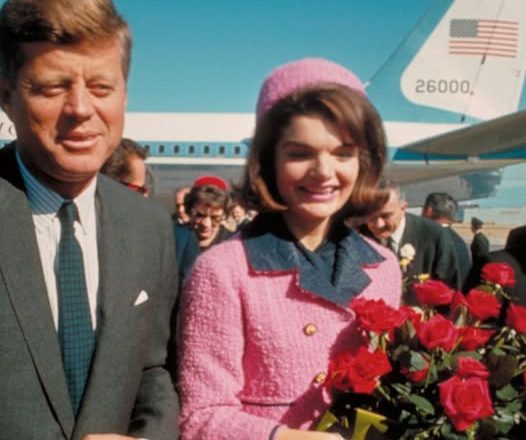
Even now, those images don’t feel like historical documents; they feel like a wound that never fully healed. The faces along the motorcade route look suspended in disbelief: a raised hand frozen mid-wave, a smile turning brittle and uncertain. It seems like an ordinary sunny Texas day — clear sky, festive mood, the presidential car gliding slowly through the streets — but that very contrast between lightness and the sudden plunge into tragedy gives the moment an almost mythic weight.
Decades later, historians, eyewitnesses, journalists, and skeptics still debate: was it the act of a lone gunman or a carefully orchestrated operation? It’s hard to accept the simplest explanation when the narrative is littered with anomalies, odd coincidences, and contradictory testimony. Why were certain cameras inactive at critical angles? Why did some witnesses later revise their accounts? And why are there so many people who claim they “saw nothing,” despite being only steps away?
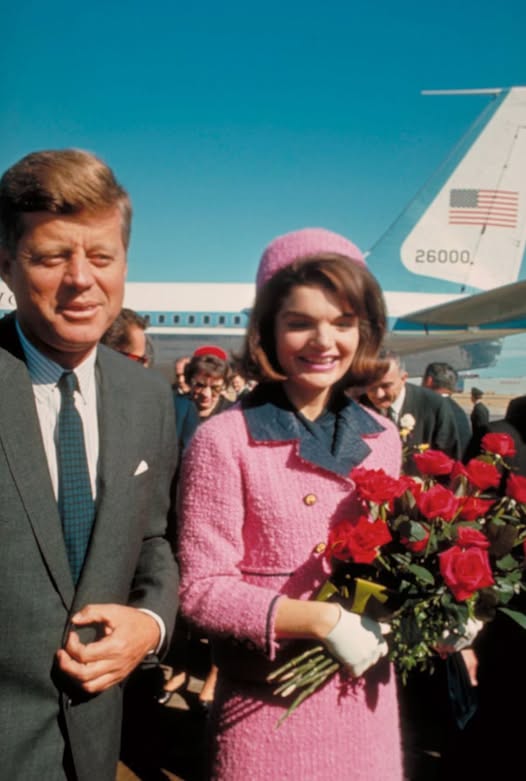
In the photographs, the silence speaks louder than sound: the calm before and the shock after. There are no graphic images — only the emotional devastation imprinted on human faces. Dallas became more than a location; it became a symbol — the point where America lost not just a leader, but a kind of innocence, a belief in transparency, a comforting illusion of a predictable world.
Here comes the deeper question: can a single day change the psychological fabric of a nation? Was November 22, 1963 merely a tragedy, or a turning point? The optimistic glow of the 1950s gave way to suspicion, unease, and a more anxious civic mindset. People began wondering: who truly holds power? Who pulls the strings behind visible authority? And is the official story ever the full story?
On a human level, that day exposed the fragility of daily life. One moment, you’re smiling and waving; the next, you’re confronted with the reality that stability can evaporate in an instant. Those who were there experienced something deeper than fear — they encountered the thinness of the line between order and chaos.
Some say that after Dallas, America stopped being “the carefree land of tomorrow” and became a country shaped by unanswered questions. Theories multiplied. Doubt embedded itself in the national psyche. People need to feel they understand their history, that they can trust the narrative of their own country. Dallas fractured that trust. It left behind not just an event, but a shadow.
That shadow stretches through archives, interviews, documentaries, novels, films. Whenever people revisit the images and testimonies of that day, they don’t say: “That’s just history.” They say: “This explains something about who we are.” And perhaps that is the truest legacy of Dallas — it became the emotional fault line in the American story.
Looking back, one senses that America gazed at the smiling face of its own future — and then that future was abruptly severed. For over half a century, the nation has tried to trace that broken thread, to understand where it snapped, and whether it’s possible to acknowledge the past without being imprisoned by it.
And maybe the very fact that we still return to that November, still ask what really happened, is proof that Dallas continues to define us — not just as a memory, but as an ongoing question.