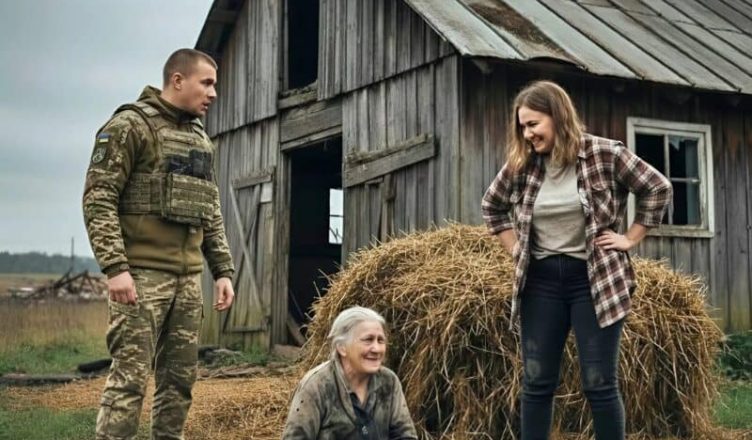
He blinked.
“What are you talking about?”
She pressed the phone to her chest like a shield.
“You didn’t hear her when you left. She walked through every room like she owned it. Opened every cupboard. Checked our groceries. Counted our money. Smelled my clothes. Every day she told me I wasn’t good enough for you — that a ‘battle-tested officer’ deserved a real woman, not some cheap nobody.”
A pressure roared in his temples. He remembered how his mother’s voice on the phone was always steady:
“We’re fine here, son. Take care of yourself and don’t worry about us.”
Not a hint of complaint. Not a drop of bitterness.
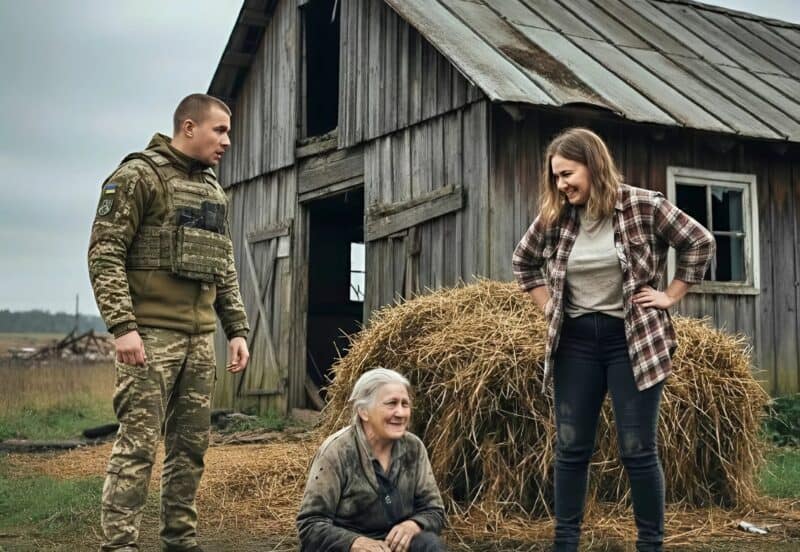
“And that justified putting her in a shed?” he asked, stepping toward her. “For words?”
“You don’t understand…” she backed up. “At first, I just asked her to respect boundaries. But she would walk into our bedroom without knocking. She moved my things. At night she’d stand by our bed and watch us sleep. Whispering that you’d eventually leave me for a ‘proper woman.’”
Her eyes glimmered — with anger or hurt, he couldn’t tell.
“She pushed me out of your life. Piece by piece.”
A memory flickered: just before his last deployment, his mother had hugged him in the hallway and whispered:
“Don’t leave her alone. She’s young, she’s anxious. She’s afraid of losing you.”
No hatred. No contempt.
“When did this even start?” he asked quietly.
She lowered her gaze.
“The day you left last time. She told me: ‘This house is mine, and you are temporary.’”
“And you believed her?”
“She kept repeating it. Every day. She looked at me like I was dirt under her shoes.”
He wanted to find reason in that explanation — something human in it. But then he saw again those wrists, marked with dark rope tracks, and the bowl of moldy porridge.
“Even if everything you say was true,” he whispered, “even if every word from her was poison…”
He raised his eyes.
“What gave you the right to treat her like an animal?”
She inhaled sharply:
“I didn’t… it didn’t start that way. She asked to move outside. Said she preferred fresh air, simple rooms, old blankets. Said she was used to rough living. I thought it would give us all peace.”
He thought of the shed: no heat, no real door, no bed — just a pile of rags.
“A bed?” His voice cut through the air. “There wasn’t even a mattress.”
She swatted at the air as if fighting off an invisible insect.
“Then… it escalated. She screamed when I asked her inside. Said I was taking her son away. Once she shoved me and told me I was ‘nothing.’”
He stepped closer; his voice hardened:
“Then why the rope burns on her wrists? Why?”
Silence flooded the room. Wind moaned in the chimney.
“Tell the truth,” he said softly. “Now.”
Her confession came in a burst:
“I was afraid of her. Afraid she would drive me out. She already took your pay card ‘to manage savings.’ She made me sign papers so she’d control the household funds. She said a ‘real woman’ keeps the books.”
Her voice shook.
“She threatened me. Said if I didn’t obey, she would tell you…”
His head lifted:
“Tell me what?”
The answer struck like a blow to the chest:
“That there was no baby.”
The world seemed to drain of color.
“What baby?”
She sank onto a chair.
“The one I told you about before your last deployment. I said I was pregnant. Remember?”
He remembered — gripping his phone in a cold trench, hands trembling not from cold, but from joy.
“I lied,” she whispered. “I was terrified of losing you to the war — to distance, to silence. I thought if I said there was a baby… you would stay connected. Think of us.”
Inside him, something turned upside down.
“You lied about a child… and she found out?”
She nodded.
“She found the test. Saw the messages with my friend. She knew. She came to me at night and said I was a liar, a fraud — a disgrace. She said she would tell you everything when you came home.”
He saw now two women — one wounded and aging, one trembling and young — and two stories, each believing itself true.
“So you silenced her?” he asked slowly. “You locked her up so your lie wouldn’t be exposed?”
Her face twisted with shame.
“I didn’t tie her up right away! At first she stayed outside willingly. I brought her food, blankets. But she started yelling for neighbors. Reaching for the gate. Screaming that she’d expose me. I panicked. I pushed her. She fell. And then… I tied her hands so she wouldn’t run.”
Her voice cracked.
“I thought it would be temporary…”
He closed his eyes — and saw himself as a boy, his mother shielding him from a raging drunk father… and that same mother now huddled on a cold wooden floor.
He opened his eyes again — and the warmth was gone.
“You could have written me,” he said evenly. “You could’ve asked for help. We could’ve moved her somewhere else. Anything. But instead you tortured an old woman while I was out learning not to die.”
She looked up:
“I was afraid