I expected her to look embarrassed, maybe even apologize. But she didn’t.
Instead, she straightened her back, lifted her chin, and looked at me with a calm, confident gaze.
“My dear,” she began quietly, “do you honestly think that I must shape my choices around your financial concerns?”
I froze. This wasn’t the reaction I had prepared for.
She continued — and her voice held steady, almost powerful in its softness:
“For forty years I was a mother. Then a grandmother. I was a wife, a caretaker, a supporter, a cook, a problem solver, a listener, a taxi driver… I was everything for everyone. And now I am finally something for myself.”
I felt words rise to my throat — but none came out.
She went on, with clarity that almost frightened me:
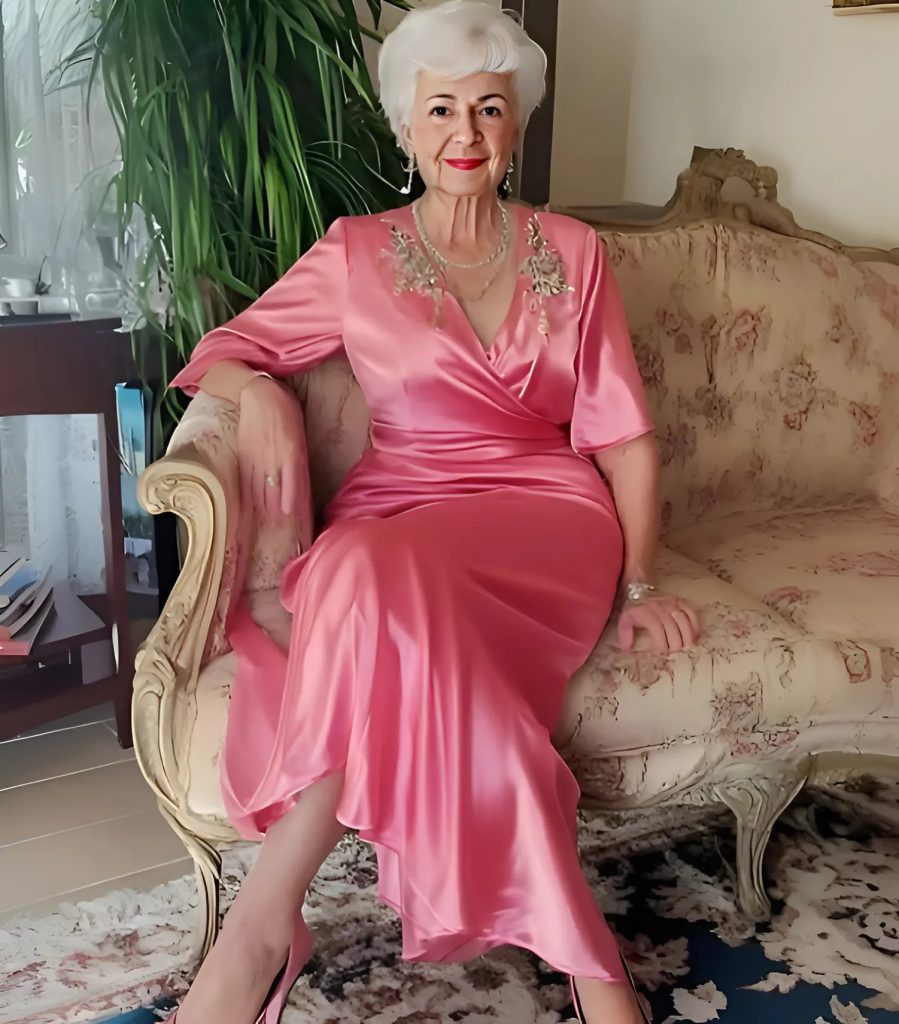
“That dress wasn’t just a purchase. It was a declaration. I am seventy. I am still here. I am still a woman. I want to feel beautiful — even if only for a few evenings. I want to look in the mirror and see not just a grandmother or an aging woman, but myself.”
Her words washed over me — not loud, but heavy with truth.
She leaned forward slightly.
“And if I don’t honor myself now — then when? At eighty? Ninety? Or never?”
Something inside me — something rigid — cracked.
She continued:
“You believe I should save money for your son’s education. But I have already invested decades into your futures — yours, your brother’s, your children’s. I skipped vacations. I skipped indulgences. I pushed aside my wishes. I wore cheap shoes. I dyed my hair at home. I cooked instead of going out. I did all of this with love — real love. But now I choose to spend something on myself, something that brings me joy.”
Then she said the most unexpected thing — not angrily, but with quiet certainty:
“You call me selfish. Perhaps — for the first time in my life — I finally am. And I think I’ve earned that right.”
I looked at her — really looked — at her silver hair, her tired but warm eyes, her hands that had raised children, soothed fevers, signed school forms, baked birthday cakes, tied shoelaces, held trembling fingers. Hands that had built our world.
And I realized — painfully — that I had never really asked her what she wanted.
She smiled gently:
“I will certainly help my grandson with college. But that will be my gift — not my duty. And the dress… that was a gift to myself.”
Later, when I got home, I found an old photo of her — in her thirties — laughing, radiant, spinning in a summer dress. A bright woman with dreams glimmering in her eyes.
And I asked myself — when did I stop seeing her as that woman and start seeing her only as a role? As a provider? As someone who must always give and never receive?
The truth made me uncomfortable.
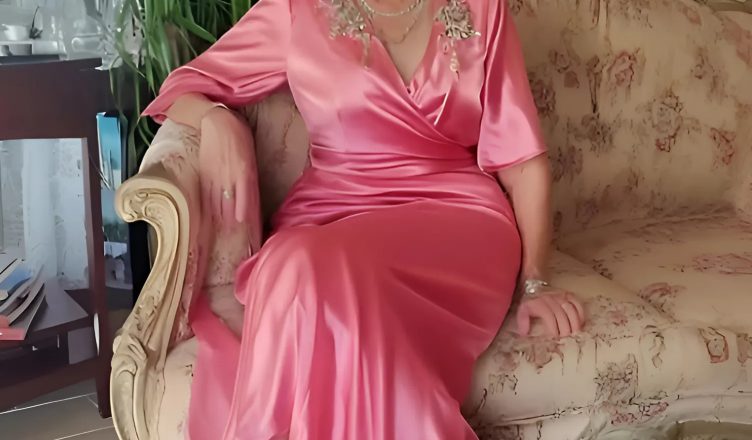
A few days later, she sent me a photo. Her friend took it. She was wearing the $1800 dress — and she looked… astonishing. Proud, elegant, glowing. The women around her weren’t admiring the dress. They were admiring her.
She added just one message:
“Thank you for teaching me to give to others. Now I’m learning to give something back to myself.”
I stared at those words.
Old age isn’t a fade into invisibility. For some — it is the moment of final flowering.
That dress… wasn’t wasteful.
It was an affirmation.
A quiet revolution.
A late bloom of the soul.
And now, every time she wears it — walking confidently, laughing freely, shoulders straight, head high — I see clearly: I wasn’t witnessing selfishness.
I was witnessing freedom.