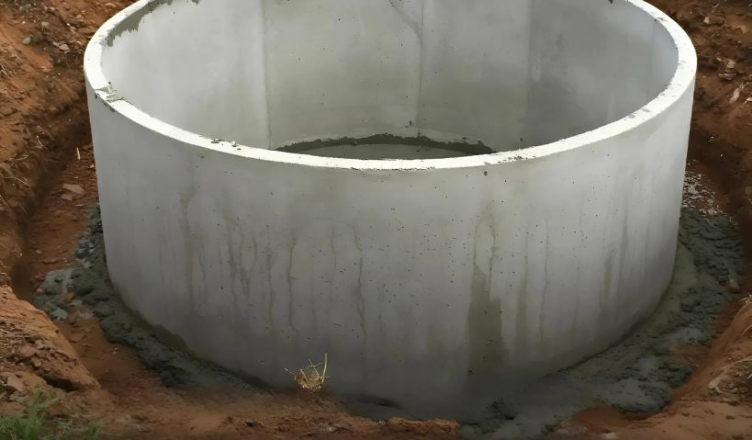
When Daniel moved into the quiet neighborhood, he kept to himself. He was polite but distant, the kind of neighbor who waved briefly and returned to his work. That work, however, quickly became the subject of curiosity. One morning, a truck arrived carrying a massive concrete ring—wide, heavy, and unmistakably industrial. By the end of the day, Daniel and a small crew had lowered it into a deep pit in the middle of his backyard.
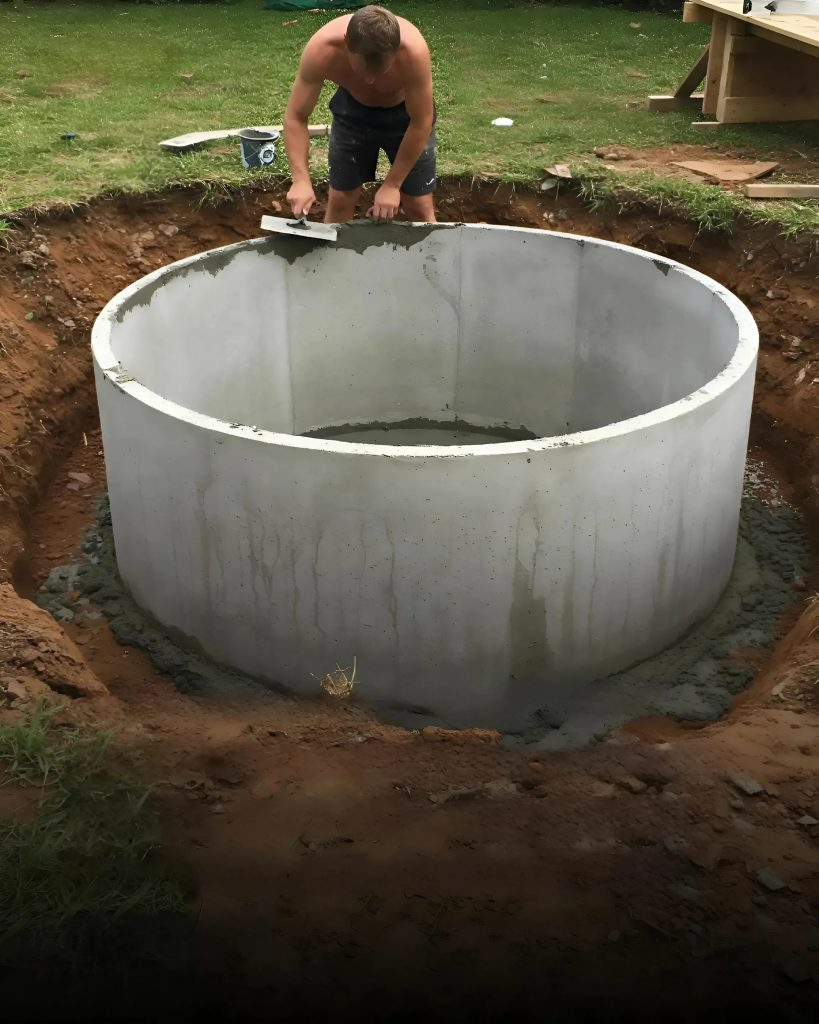
People whispered. Some joked that he was building a bunker. Others wondered if it was an underground shelter or something illegal. When asked directly, Daniel only smiled and said, “You’ll see.”
Weeks passed. The hole grew deeper, and more concrete rings were added, stacked carefully beneath the ground. Then the crew left, and Daniel continued alone. Every evening after work, he was out there, measuring, leveling, adjusting. The backyard looked like a construction site, but no house extension ever appeared.
The rumors grew wilder.
Why would anyone bury something so large and expensive just to cover it again?
Autumn came, and Daniel began laying tiles. Not in his house, but inside the buried structure. Neighbors could see him climb down a ladder with buckets, tools, and carefully chosen ceramic pieces. The opening was still visible, but nothing else made sense.
One afternoon, a storm hit. Heavy rain poured for hours, flooding streets and yards. While others rushed to protect basements and garages, Daniel calmly walked outside with an umbrella and disappeared into the opening.
That was the moment people truly worried.
But when the rain stopped, something remarkable happened. Water that had pooled everywhere else was gone from Daniel’s yard. The next morning, he invited the neighbors over for the first time.
What they saw left them silent.
The buried concrete rings formed a beautifully tiled underground cistern, designed to collect and filter rainwater. The last tile he had laid completed a gravity-fed system that redirected runoff from surrounding properties, preventing floods and storing clean water for drought seasons. It was not just for him—it helped the entire block.
Daniel explained that he had grown up in a region where water scarcity shaped daily life. He had learned to respect it, store it, and never waste it. When he moved, he noticed how easily water was lost to drains and streets. This was his answer.
The concrete ring wasn’t a bunker. It was a promise—to the future, to the land, and to the people around him.
From that day on, no one questioned Daniel’s quiet determination again. Sometimes, the most meaningful projects look strange at first. Understanding often comes only after the final tile is laid.