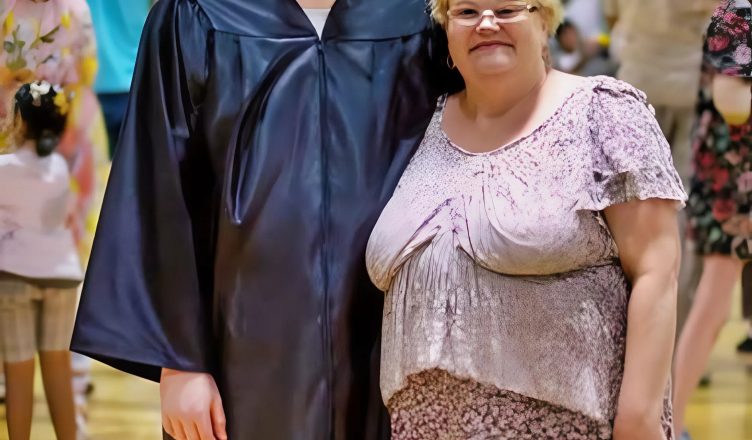
You could hear restrained breaths, the faint creak of chairs, nervous shifting. Those few seconds stretched into an eternity. I looked out at the faces in front of me — the faces of people who had ignored me for years. The ones who laughed when I walked past. The ones who whispered behind my back, as if my mother did not deserve dignity.
Then I went on.
I told them everything.
I spoke about my mother waking up every morning before sunrise, at four o’clock, to go to work. About how she came home with aching shoulders, cracked hands, and exhaustion written deep in her eyes — yet she always smiled at me. As if her pain never mattered.
I told them how she cried quietly in the bathroom, convinced I couldn’t hear her. How she used to say to me again and again:
“Work is never something to be ashamed of. What’s shameful is losing your humanity.”
She once studied to become a nurse. She had dreams, plans, a future. Then my father was badly injured at a construction site, and everything collapsed. My mother gave up her studies, sold her jewelry, and took whatever job she could so I could stay in school. She never complained. Not once. Not when neighbors turned away. Not when other children mocked me.
I saw tears in the audience. Not forced ones — real tears. The kind that appear when truth hits too close to the heart.
I looked at the teachers. The principal. The parents of my classmates. The people who liked to talk about values and respect, yet stayed silent when a child was humiliated because of their parent’s job.
“You taught us about respect,” I said.
“But who taught your children to respect those who do the hardest, dirtiest, and yet most essential work?”
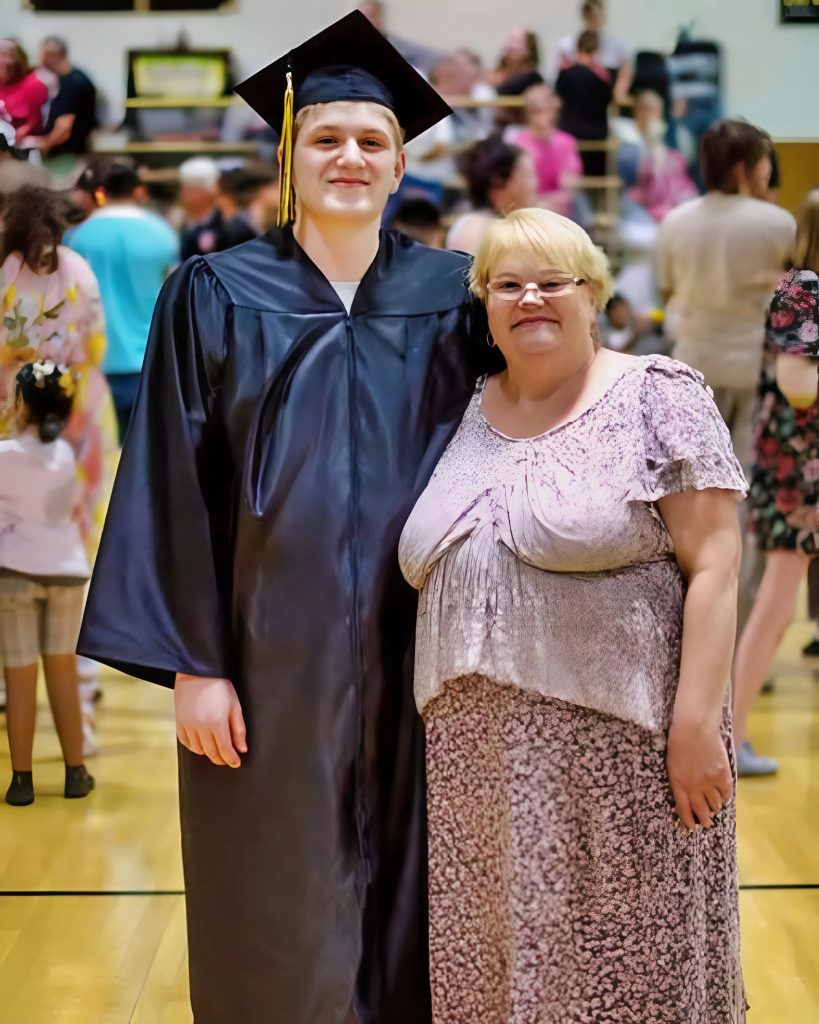
My mother sat among the audience, gripping the edge of her coat. She tried to smile, but tears streamed freely down her face. For the first time, she didn’t try to hide them.
I stepped down from the stage and walked toward her. I took her hand — rough, warm, real.
“Everything I am, I owe to you,” I said.
“And if anyone believes you are less than them, let them first try to live just one day of your life.”
At that moment, the entire hall stood up.
Not out of politeness. Not because it was expected. People rose slowly, as if something important was finally sinking in. The applause was uneven and imperfect, but it was honest. It wasn’t celebration — it was recognition.
After the ceremony, people approached me who had never noticed me before. They apologized. Looked down. Said they “didn’t understand,” that they were “young,” that they “made mistakes.” I listened — and for the first time, it didn’t hurt. I was no longer the invisible, broken boy.
My mother and I stepped outside together. The evening air was warm. She looked at me and whispered:
“I’m sorry you had to go through all of this.”
I held her tighter than ever before.
“No, Mom. Thank you,” I said.
“You taught me that dignity has no smell. It has strength.”
Today, I’ve been accepted into university. I want to work with people. I want to stand up for those society prefers not to see. Because I know what it feels like to be labeled someone else’s shame.
But to me, my mother has never been a shame.
She is a hero.
And the next time you see someone in a work uniform, with tired eyes and dirty hands, remember this: maybe that person is sacrificing their life so that one day, their child can stand on a stage and speak the truth.
A truth you can no longer look away from.