She stared out the window, but she didn’t see the street or the quiet of the sleeping city. In the reflection of the glass, other images surfaced—broken doors, interrogation rooms, the restrained fear in the eyes of people who once believed they were untouchable. The threat spoken at the market had not been empty. Men like that never forgot humiliation. And they always came back to collect.
In the morning, Emma walked her mother to a neighbor’s apartment and, for the first time in years, spoke without hesitation:
— You will never go back to that market. Ever.
Her mother tried to argue, but there was no anger or panic in Emma’s voice. Only the calm, icy certainty of someone who had already made a final decision.
Emma returned to the market alone. No uniform. No weapon. Just her phone in her pocket and an alert, steady gaze. The security cameras that had “coincidentally” been broken for years suddenly started working that very day. The local officer who always claimed there was “nothing he could do” received an anonymous report with names, dates, and exact sums. The tax authorities got documents. Health inspectors received complaints. And the police were sent videos.
But the real turning point came that evening.
The three gang members returned, convinced they would once again find a defenseless old woman. Instead, they saw Emma sitting behind the stall, calmly sorting apples. She didn’t look up right away. She allowed them one more second to feel powerful. It was their last mistake.
— So, did you bring the money? — sneered the man who had twisted her mother’s wrist the day before.
Emma raised her eyes slowly.
— No. I brought you a choice.
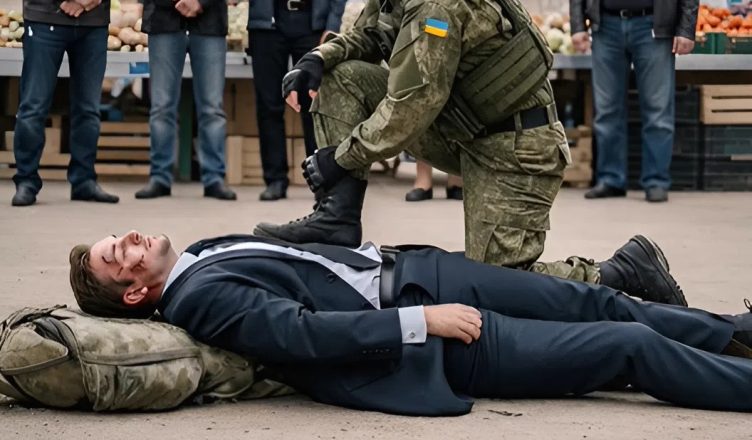
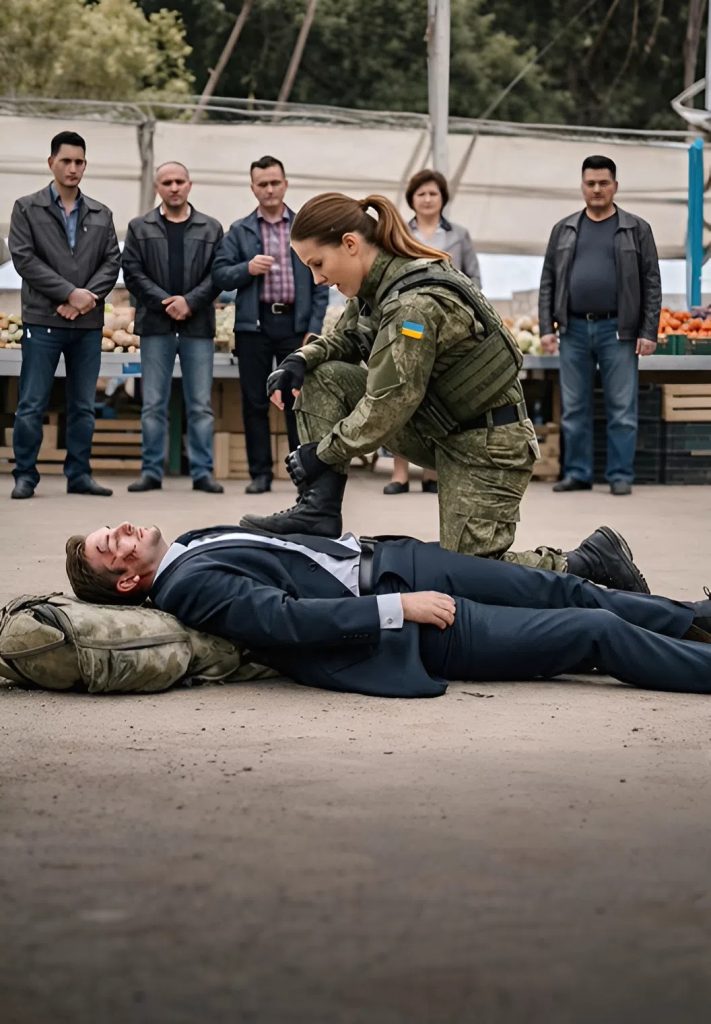
They didn’t have time to laugh. Within minutes, one lay on the ground with a dislocated shoulder, another groaned with blood streaming down his face, and the third struggled for air, unable to understand how an unarmed woman could move with such precision, speed, and ruthlessness. Emma didn’t continue. She crouched down and spoke quietly:
— Now listen very carefully.
She listed addresses, names, and connections. She told them who was already under surveillance, whose door would be kicked in the next morning, and who would disappear from their operations forever. That was when they understood: this wasn’t a fight. It was the end.
A week later, the market had changed. The extortion stopped. The shouting vanished. Fear dissolved. Several “untouchables” fled the city overnight. Two were arrested. One disappeared without a trace—and no one asked questions.
People whispered. They spoke of “the vendor’s daughter,” who turned out to be more terrifying than the criminals themselves—because she was justice. Elderly women straightened their backs for the first time in years. They didn’t know the details, but they felt that something had shifted.
Emma’s mother learned the truth later. She cried—not out of fear, but from the painful realization of how much weight her daughter had carried in silence, protecting others while she herself believed Emma was simply tired.
Emma never returned to service. She stayed with her mother. Sometimes she came back to the market—not to sell, just to watch. And everyone who had once believed weakness was an easy target now lowered their eyes when she passed.
Because the most dangerous people are not those who shout and threaten.
The most dangerous are those who remain silent for a long time…
and then step between evil and the ones they love.