
And yet, every night, I bring it to her with my words.
While other children fall asleep to glowing screens, I whisper landscapes into the darkness. I describe how cartoon characters move, how their expressions change, how joy softens a voice and fear tightens it. I choose every word carefully, as if language itself could become vision. Ella doesn’t see with her eyes. She sees with her mind.
I record these stories during my lunch breaks at the supermarket. Hidden in the storage room, surrounded by boxes and shelves, headphones pressed tight against my ears, completely shut off from the world. In those moments, nothing exists except my voice and my daughter.
At least, that was true until last week.
The door flew open without warning. My manager stormed in and ripped the headphones off my head.
“Are you seriously ignoring your job during work hours?” he shouted.
My body went cold.
“I… I’m on my break,” I stammered.
He looked at me without a trace of empathy.
“Not anymore. You’re fired.”
Just like that. One sentence. No explanation. No mercy.
I begged him. Not for myself—for Ella. She attends a special academy for visually impaired children. The tuition is unbearable. My salary barely covered it, but it was all we had. He didn’t care.
That evening, I sat at the kitchen table staring at unpaid bills, my hands trembling. One thought kept looping in my head:
How do you tell your child that you’ve failed them?
Ella found me by the sound of my breathing.
“Mom,” she asked softly, “are you sad?”
I couldn’t answer.
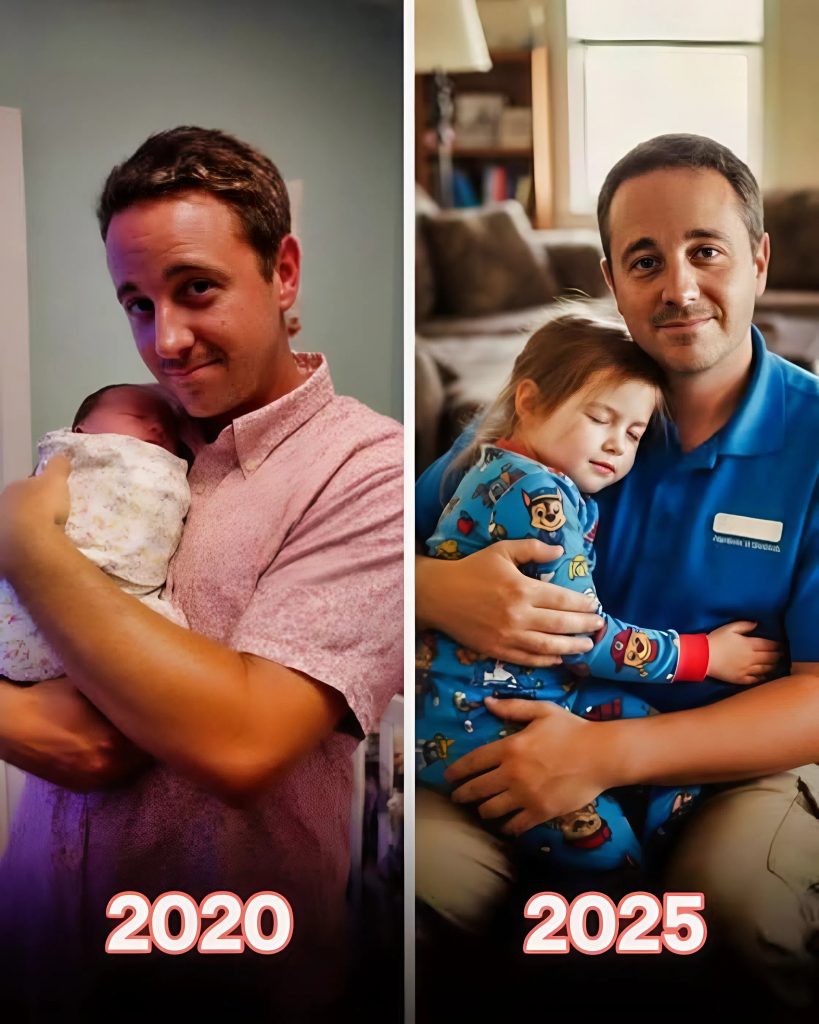
The next morning, an unfamiliar car stopped in front of our small house. Too elegant. Too quiet for our street. A man stepped out, dressed in a perfectly tailored suit, a briefcase in his hand. He knocked.
“Mrs. Cole?” he asked calmly.
“Yes…?” My voice barely held together.
He smiled—not coldly, but with a strange warmth.
“Please pack your things. And your daughter’s. You’re coming with me.”
My heart dropped.
“Wait—what? Are you taking Ella? I’ll find the money, I swear I will!”
He handed me a business card.
LUMEN Foundation – Sensory and Visual Adaptation.
Legal representative. Private curator.
My legs nearly gave out.
“There must be a mistake,” I whispered. “We never asked for help.”
“Yes, you did,” he replied quietly. “Just not in words.”
He stepped inside. Ella was sitting on the living room floor, hugging her old stuffed rabbit. She turned her head toward the unfamiliar voice and smiled.
“That man smells like rain,” she said. “Is he kind?”
The man froze.
“Yes, sweetheart,” I said through tears. “He’s kind.”
He explained that someone had heard my recordings. That my voice—what I thought was just a desperate attempt to survive—had reached people searching for something rare. Not a narrator. Not an actress.
A mother who could see for her child.
The foundation paid for Ella’s education. Her treatment. The technology. Everything.
And me?
They gave me a microphone.
Now I describe the world to children who have never seen light. I talk about colors that can’t be looked at but can be felt. And sometimes, things happen that doctors can’t explain.
One evening, Ella squeezed my hand and whispered:
“Mom… today I saw the light.”
In that moment, I understood that sight doesn’t always begin with the eyes.
Sometimes, it begins with a voice.
And with love.