My mother simply took off her glasses, slowly, and looked at me with a strange intensity, as if she were seeing me for the very first time. Then she said a sentence that completely knocked the ground out from under my feet.
— Are you absolutely sure that I owe you anything?
I froze. A wave of indignation rushed through my mind.
— Mom, how can you say that? We’re family. He’s your grandson. You’ve always said that family comes first…
She stopped me with a calm gesture. No anger. No irritation. Nothing like I had expected.
— I used to say that when I was younger. When I still had strength. When I spent most of my life living for others instead of myself.
Those words cut deep. I had never heard her speak like this before. There was no guilt in her voice, no need to justify herself—only exhaustion. A quiet, heavy exhaustion.
She stood up, walked toward the window, and continued without turning around:
— Do you know how many times I denied myself things in my life? How many dresses I didn’t buy, how many trips I never took, how many dreams I buried because “it wasn’t the right time”? Because there were children, work, responsibilities… I always told myself that my turn would come later.
I said nothing. Suddenly, it felt like I had crossed an invisible line and stepped into a part of her life I had never really wanted to see.
— All my life I was convenient for everyone else, — she said quietly. — A good mother. A reliable grandmother. A woman who always put herself last. And you know what? No one ever asked what I wanted.
Something tightened inside me. Anger mixed with discomfort… and shame.
— But this isn’t about your wishes right now, — I tried to object. — This is about your grandson’s future.
She turned to face me. Her expression was calm, but unshakable.
— His future is the responsibility of his parents. Yours and your husband’s. Not mine.
The words landed like a slap.
— So you’ve just decided to think only about yourself? — I blurted out. — At seventy? When you have a family?
She gave a small, bitter smile.
— Precisely because I’m seventy. Because the time ahead of me is no longer endless. And I don’t want to spend what I have left feeling guilty for finally allowing myself to buy one dress.
I left that day furious, slamming the door behind me. I was convinced my mother had changed. That she had become cold. Selfish. I told the story to my friends, expecting support. Instead, one of them quietly asked:
— What if she’s right?
That question stayed with me.
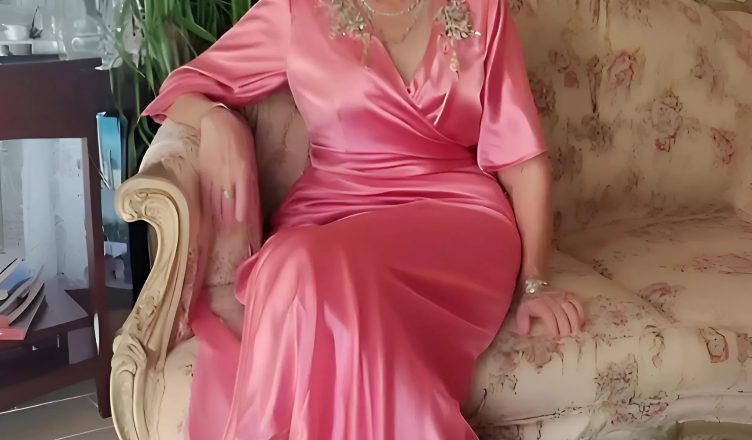
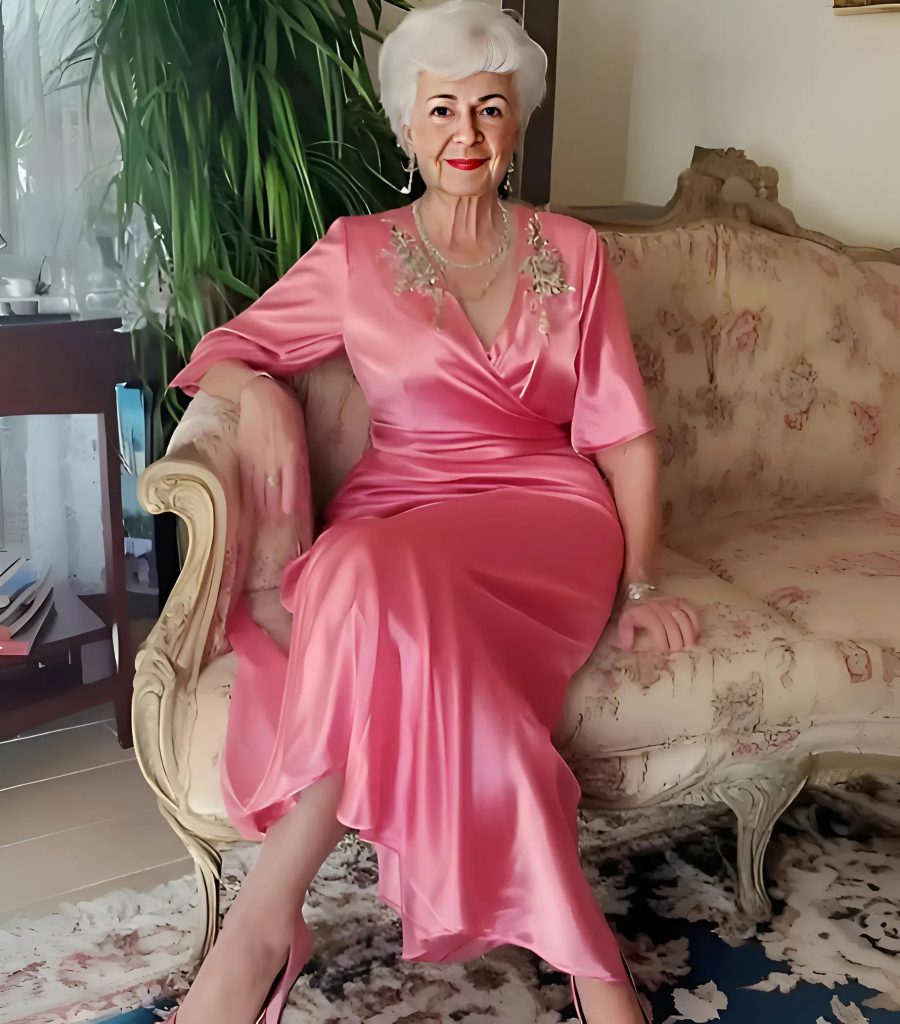
A few weeks later, I came across a photo on social media by accident. My mother was standing among her friends, wearing that very dress. She was laughing, a glass of wine in her hand. She didn’t look like a “grandmother.” She looked alive.
That was the moment something inside me shifted.
I remembered how often she used to say, “I don’t need anything.” How she always chose the cheapest option. How she postponed everything to some vague “someday.” And that “someday” never came.
Fear washed over me. Fear that I was walking the same path. That I, too, was slowly learning to silence my own needs. And I realized that maybe I wasn’t angry about the dress at all—but about the fact that my mother had the courage to do something I still wasn’t brave enough to do.
A month later, I went to her house without calling ahead. She opened the door in a robe, surprised but calm.
— I’m sorry, — I said almost immediately. — I was unfair to you.
She didn’t say anything. She just hugged me—long and tightly.
— I understand you, — she whispered. — But you need to try to understand me too.
That day we talked for hours. About money. About responsibility. About how easy it is to place our expectations on parents, even when we ourselves are long grown.
When I left, I wasn’t the same person.
Now I know: that $1,800 dress was not a whim. It was a statement. A late, but honest declaration that she, too, has the right to live.
And perhaps it was the most important lesson my mother has ever taught me.