I didn’t even have time to hit “pause.” The image shook violently, as if the camera were being held by trembling hands. At first there was only darkness and a deep, monotonous hum — the unmistakable sound of heavy industrial machinery. Then the picture slowly came into focus.
I immediately understood where it was filmed. A processing plant. Cold, gray, and neglected, with peeling walls and dim fluorescent lights hanging from the ceiling. The camera moved slowly between long metal tables. Chunks of meat lay scattered across them. But something was wrong. The color was unnaturally pale, streaked with dark patches and strange fibers that didn’t look organic at all.
A man in a work uniform stepped into the frame. His face was blurred, but his voice was clear — rough, exhausted, the voice of someone who hadn’t slept in days.
“If you’re watching this, it means they didn’t manage to erase everything,” he said quietly. “I don’t know how much time I have left. But I can’t stay silent anymore.”
My throat tightened. Without thinking, I pushed my breakfast plate away, as if the sausage itself could suddenly become dangerous.
The man explained that he worked at a meat-processing factory whose products were sold in countless stores. He never mentioned brand names, but the camera lingered on packaging lines, boxes, and logos I recognized instantly. I’d seen them hundreds of times in supermarkets.
“You think this is meat?” he let out a short, nervous laugh. The camera zoomed in on a pinkish mass. “This doesn’t belong in food. These are waste materials. Ingredients that, according to the paperwork, are supposed to be destroyed. In reality, they’re ground up, treated with chemicals, and turned into sausage.”
My stomach twisted.
The next clip was clearly filmed at night. The factory floor was almost completely dark. A few workers stood around a massive grinder. One of them kept glancing around nervously, as if afraid of being seen.
“Sometimes things end up in the mix that should never be there,” a voice whispered off-camera. “Metal. Plastic. Pieces of machinery. Officially, it’s labeled as a production defect. But defects aren’t thrown away. They’re just added to another batch.”
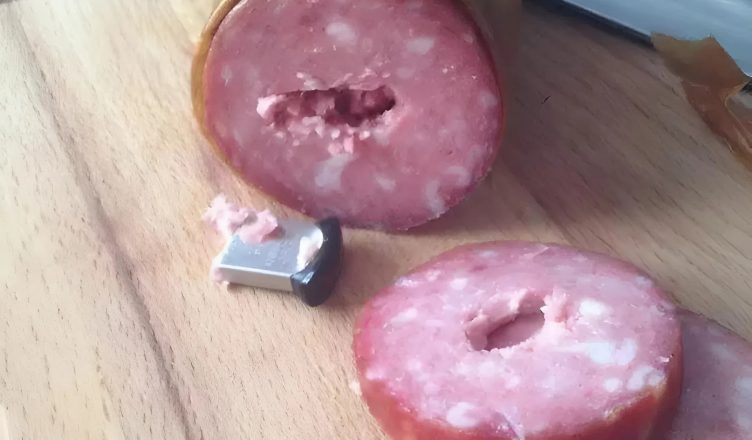
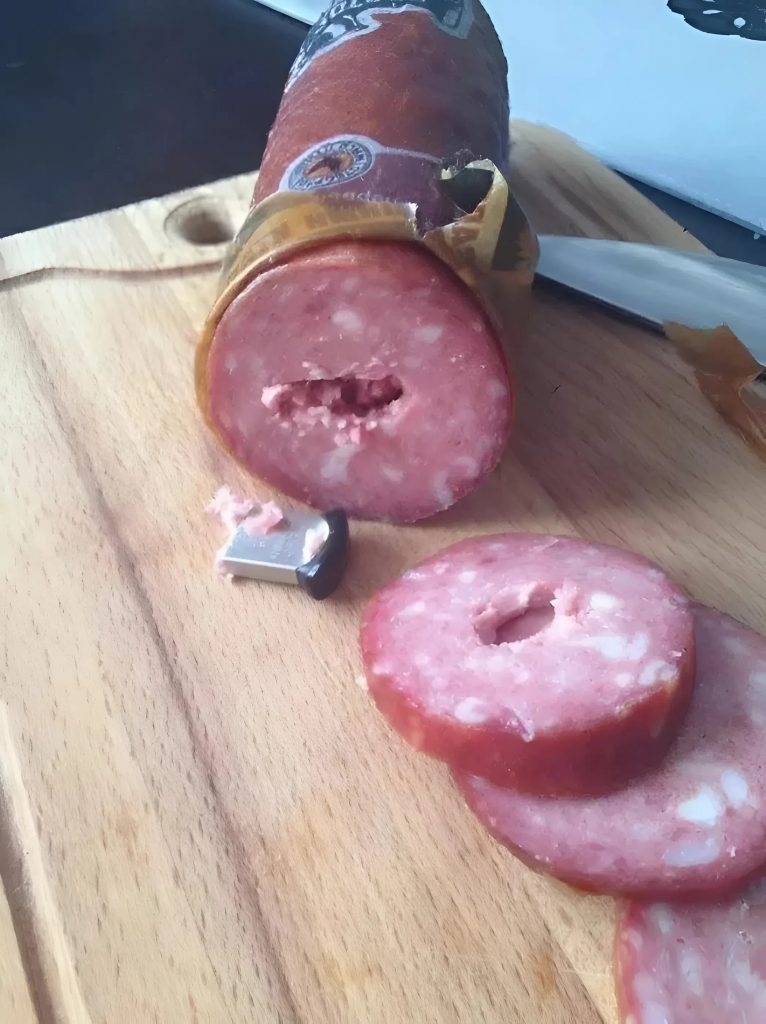
A cold shiver ran down my spine. I remembered the knife getting stuck in the sausage. That hard, shiny object buried inside. Nausea rose in my throat.
But the worst was still to come.
The final file was titled:
“IF ANYTHING HAPPENS TO ME.”
This time, the man didn’t try to hide his fear. The camera was completely still, as if it had been hidden somewhere.
“They know,” he said, breathing heavily. “Management knows I’ve been collecting evidence. They told me: either I keep quiet, or…” He stopped, swallowed hard. “If you found this flash drive, it means I didn’t manage to pass everything on to journalists. I made copies. I hid them where no one would ever look. Inside the products. Inside the sausages. They never check them thoroughly.”
I sat frozen in front of the screen. One thought kept pounding in my head: I ate it. I ate food that might have contained not only metal, but someone’s desperate last attempt to tell the truth.
The video cut off abruptly. The screen went black.
A heavy silence filled the room, broken only by the soft hum of the computer. I stared at the flash drive in my hand. A small piece of plastic that had passed through production, packaging, storage, and the store — only to end up on my kitchen table.
I didn’t know if that man was still alive. I didn’t know how many similar flash drives might be hidden inside other products that people were slicing at that very moment, serving to their children, eating without a second thought.
I threw the remaining sausage into the trash, tied the bag tightly, and took it out immediately. When I came back, I washed my hands for a long time, even though I knew it wouldn’t wash away that sticky sense of dread.
Since that morning, I can’t look at meat counters the same way. Every time I pass them, the same question creeps into my mind: what’s really inside? And what if the most terrifying thing isn’t what we might still discover — but what we’ve already eaten without ever knowing.