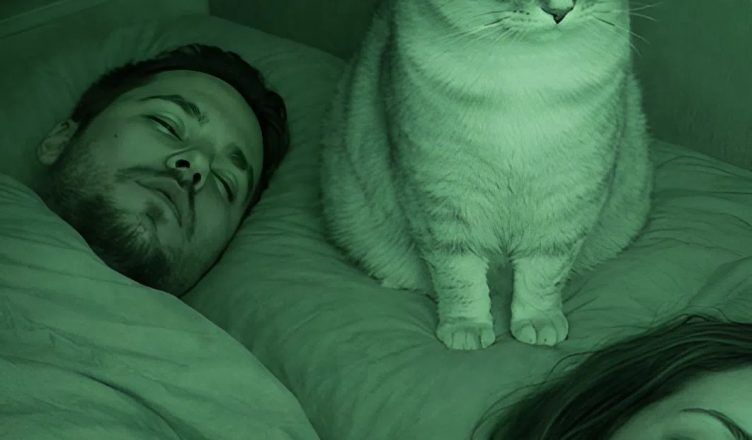
When I replayed the night recording and began watching it minute by minute, I immediately sensed that something was wrong. The camera had captured the entire night—from the moment we turned off the lights until morning. At first, everything looked ordinary. We slept peacefully, occasionally shifting in our sleep. The room was dark and quiet. Our cat lay calmly on her bed near the wall, just as she always had.
Then, at exactly 2:48 a.m., everything changed.
The cat suddenly sat upright. No stretching. No yawning. It was as if she had received a silent command. For several seconds she remained completely still, staring into empty space. Then she stepped down softly and moved toward our bed without making a sound.
As I watched, I realized I was holding my breath.
She jumped onto the bed, carefully walked around me, and sat beside my husband’s head. And that was when the most disturbing part began.
She stared at his face—unblinking, intensely focused. Sometimes for ten minutes. Sometimes longer. Her body was tense, alert. She tilted her head slightly, as if listening for something no one else could hear. At times, she raised a paw and held it just inches from his face, never touching him. Just waiting.
But the worst came moments later.
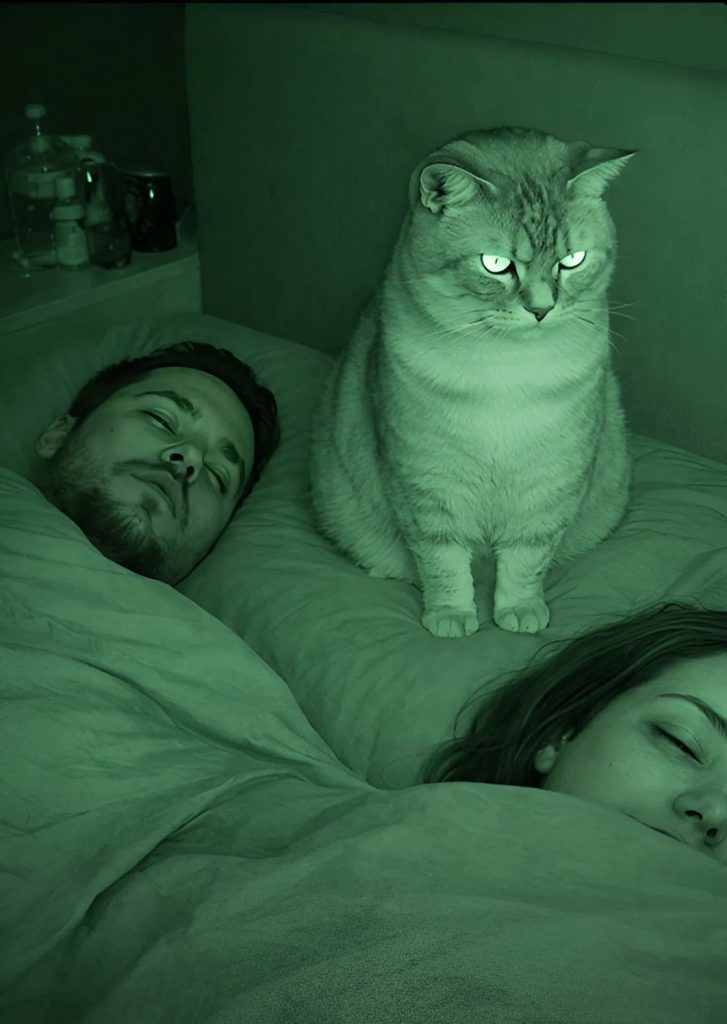
On the recording, my husband’s breathing began to change. His chest slowed… and then stopped moving altogether. Seconds passed. Ten. Fifteen. Twenty. He wasn’t breathing.
That was when the cat reacted.
She began to meow—softly at first, then more urgently. She struck the pillow near his head with her paw. Once, she even bit the edge of the blanket and yanked it sharply. A moment later, my husband gasped violently for air, as if breaking the surface after being underwater too long.
This happened more than once in a single night.
In the morning, I showed him the footage. At first, he tried to laugh it off, insisting it meant nothing. But his expression changed when he saw those long moments when his breathing completely stopped.
“I don’t feel anything,” he said quietly. “I’m just asleep.”
That same day, I insisted he see a doctor. Tests followed. Examinations. Overnight sleep monitoring. The diagnosis left me shaken: severe sleep apnea. The doctor explained that during sleep, breathing can stop entirely—for long stretches of time. And sometimes, it doesn’t restart.
“You were incredibly lucky,” the doctor said gravely. “Something has been interrupting these episodes.”
I didn’t need to ask what.
Treatment began immediately. A breathing device. Regular monitoring. The dangerous pauses nearly disappeared. And along with them, our cat’s strange nighttime behavior vanished as well.
She no longer gets up at night. She no longer sits by the pillow. She no longer stares into the darkness. She sleeps peacefully until morning, curled into a small, quiet ball—just like before.
As if there is nothing left to guard.
Sometimes I shudder when I think about what could have happened if I had never installed that camera. If I had dismissed her behavior as something harmless. If one night she hadn’t been there in time.
Now, when I wake up in the dark and see her sleeping calmly, I don’t feel fear anymore. I feel gratitude—deep, silent, and overwhelming.
Because now I know this: sometimes animals sense danger long before we do. And sometimes, they stand between life and death—long before we even realize we’re in danger.