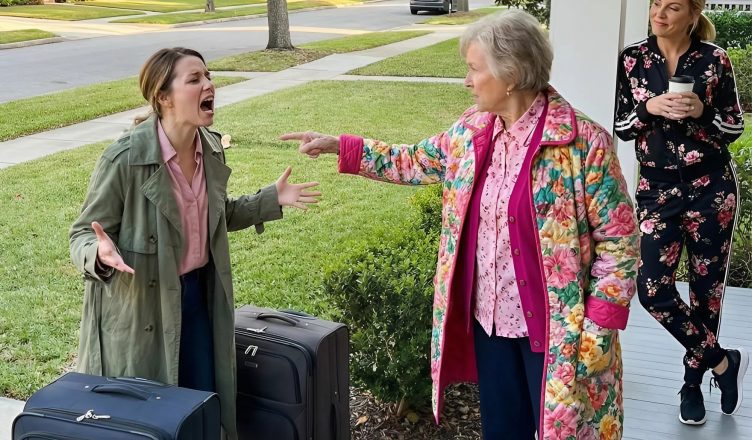
Violent. A head-on collision between truth and carefully maintained lies. In a single evening, everything they called “family” began to collapse.
He arrived late that night. I didn’t call ahead, didn’t warn him, didn’t cause a scene. I simply asked to meet. We sat in a small, worn-down café where the air smelled of cheap coffee and other people’s exhaustion. Mark was still smiling, relaxed, unaware that his reality was about to fracture.
“Why are you staying here?” he asked, confused. “Why aren’t you at home?”
I took a deep breath and told him everything. Calmly. Clearly. Without tears or exaggeration. The ultimatum. The one hour I was given to leave. Linda standing in the doorway, arms crossed. Heather’s satisfied smile. And then the phone call a week later, demanding money as if none of it had ever happened.
At first, he didn’t believe me. Then his face went pale. Finally, he stood up, left his coffee untouched, and walked out without a word.
I knew exactly where he was going.
An hour later, my phone rang. Linda. Her tone had changed. No shouting this time—just a tight, artificial politeness.
“Emily… there’s been a misunderstanding. Mark is very upset. We can still fix this.”
I let out a quiet, bitter laugh.
“A misunderstanding is when you read the wrong date on a calendar,” I said. “What you did was a choice.”
“You’re turning my son against his family,” she hissed.
“No,” I replied evenly. “You’re just showing him who you really are.”
Later, Mark told me what happened at the house. Linda denied everything. Said it was “temporary,” claimed I had “decided to leave on my own.” Heather exploded—screaming that I was manipulative, accusing me of using them for money. And then Mark asked one simple question that stopped everything cold:
“If Emily made you so uncomfortable, why were you demanding that she pay the mortgage?”
No one answered.
The silence was deafening.

That same night, Mark went through the accounts. And the truth was worse than either of us expected. A large portion of the money I had been paying “for the house” hadn’t gone to the house at all. It had gone to Heather’s debts. Credit cards. Loans. Transfers hidden behind vague explanations.
I wasn’t family.
I was an ATM.
Convenient. Quiet. Disposable.
But that version of me no longer existed.
Two days later, Mark moved out. No yelling. No dramatic goodbyes. Linda cried. Heather threatened. It didn’t matter. The masks had fallen—and I hadn’t been the one to rip them off.
Then came what they feared most.
Mark transferred all of our shared savings into a separate account. And for the first time in his life, he refused to “help the family.” Payments were missed. Panic set in. Linda’s phone rang nonstop.
She called me again.
“Emily… we need to talk. You don’t want this to end like this, do you?”
I looked at the screen. I felt no anger. No sadness. Just a deep, steady calm.
“No, Linda,” I said softly. “It already ended. You’re just realizing it now.”
I hung up and turned off my phone.
Some people think they know exactly who you are. Weak. Temporary. Useful.
Until one day you leave—quietly, without drama—and take with you the one thing they never expected to lose.
Their control.
And they’re left behind. In an empty house. With empty accounts. And a truth they can no longer escape.
And me?
I finally came home.
To a real home.
A place where I’m not merely tolerated—
but chosen.