He slowly scanned the store — the line of customers, the carts, the fluorescent lights humming overhead — as if measuring the weight of the moment.
Then he said quietly:
“Because the woman you helped came to the police station.”
My heart dropped straight into my stomach.
“She… came to the police?” I whispered. “I didn’t steal anything. I paid with my own card. I swear.”
“I know,” he said calmly. “That’s why you’re not in trouble. But I need your manager here.”
People in line started murmuring. Someone behind me pulled out a phone. My hands were shaking as I pressed the button to call the manager. In my head, every nightmare played at once: being fired, accused of breaking store policy, humiliated — all because of a bag of apples and a box of cereal.
My manager came out from the back room. He was usually strict, distant, the kind of man who rarely smiled.
“What’s going on?” he asked sharply.
The officer turned to him.
“This cashier paid for groceries for a woman with two children a few days ago.”
My manager looked at me, eyebrows raised.
“Is that true?”
“Yes,” I said softly. “If I broke the rules, I’ll accept whatever consequence. But I couldn’t just take food away from kids.”
The officer nodded.
“Sir, do you know what happened after that?”
My manager said nothing. I shook my head.
“That woman came to the station crying,” the officer continued. “She thought she was going to be arrested. She said no stranger had ever helped her before without asking for something in return.”
The store went completely silent.
“She told us that for the first time in weeks, her children went to bed full. That they ate apples for breakfast. That they smiled. She said she couldn’t stop thinking about the cashier who treated her like a human being instead of a problem.”
I felt my throat tighten.
“She didn’t come to complain,” the officer said. “She came because she was afraid you’d lose your job. She wanted to protect you.”
My manager’s face changed. The tension left his jaw.
“After hearing her story,” the officer continued, “we contacted a local support organization. They helped her with emergency food assistance, temporary housing support, and job placement resources.”
He paused.
“And they also asked for the name of the cashier who started all of this.”
I stared at him.
“They want to recognize you,” he said. “Publicly.”
My manager cleared his throat.
“You’re not fired,” he said firmly. “In fact… I’m proud you work here.”
Someone in line started clapping. Then another. Soon the entire checkout area filled with applause. I couldn’t move. I couldn’t breathe. Tears streamed down my face before I even realized I was crying.
The officer smiled.
“One more thing,” he said, handing me an envelope. “She asked me to give this to you.”
I opened it with trembling hands.
Inside was a short note, written unevenly, like someone who had cried while writing:
You didn’t just buy apples.
You gave my children hope.
I don’t know how to repay you, but I promise — when I can — I will do the same for someone else.
Thank you for seeing us.
An hour later, she came back to the store.
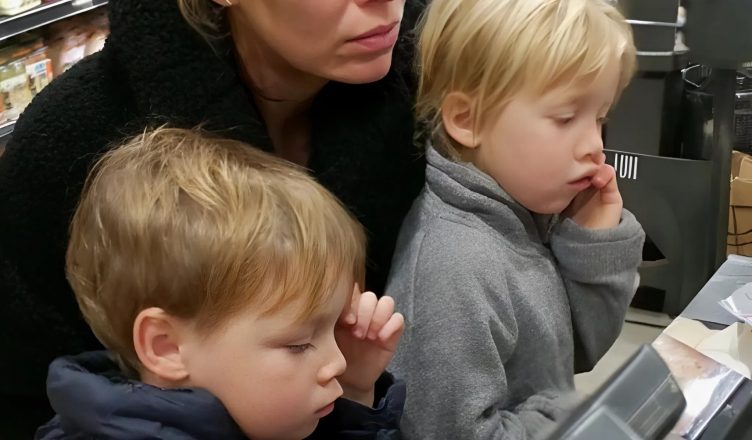
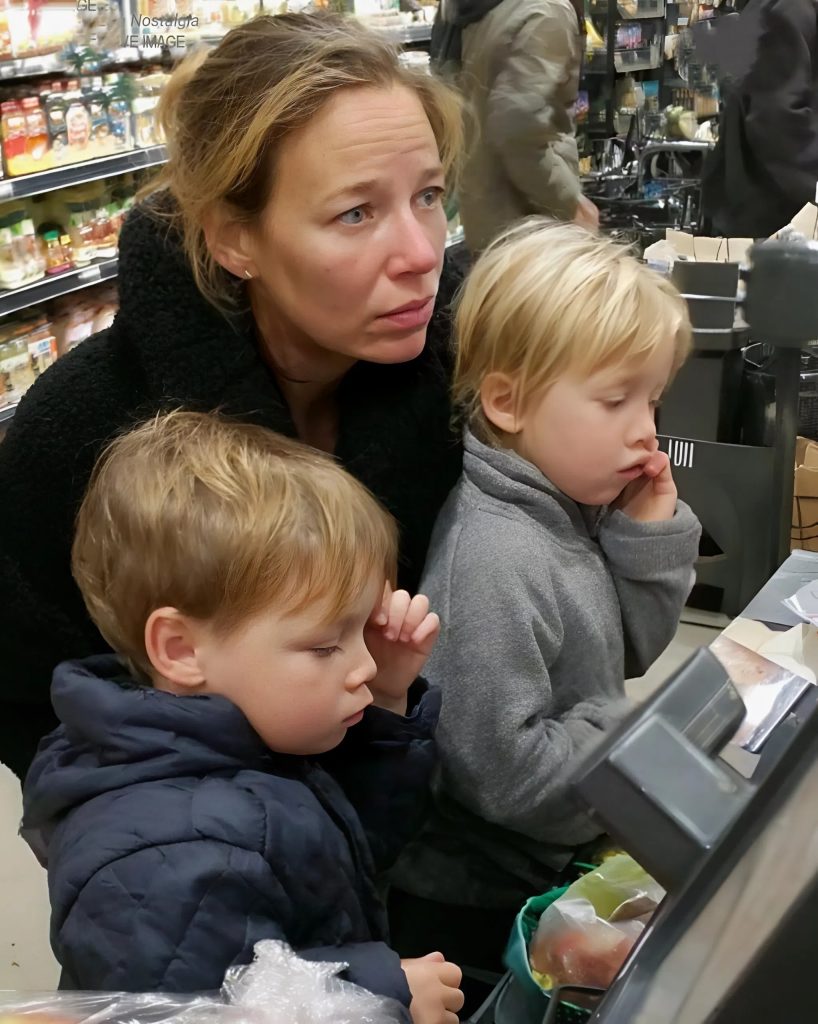
The same woman. The same kids.
The older child walked up to my register holding a single apple. He placed it carefully on the counter.
“For you,” he said seriously. “Mom says you’re kind.”
In that moment, I understood something I’ll never forget:
Sometimes the smallest act — one quiet decision, one swipe of a card — can change the direction of an entire life.