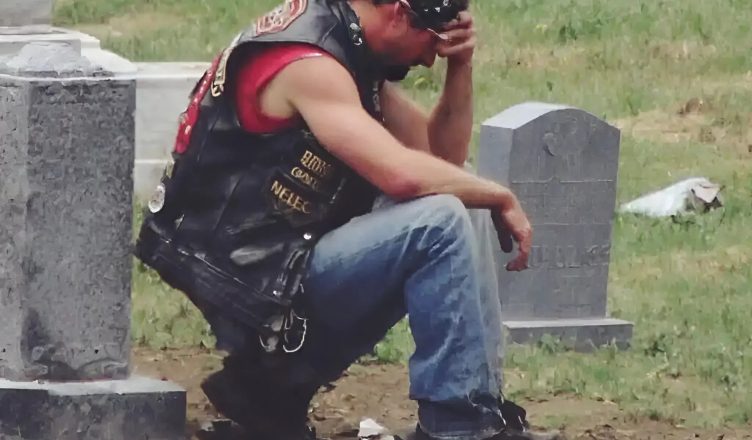
There was nothing threatening about it. Nothing aggressive. Just exhaustion. The kind that settles into a man who has carried regret for too long. His eyes were red and heavy, as if sleep had avoided him for years. The leather jacket looked worn, like it had absorbed every bad decision he’d ever made.
Anger rose in my chest. Sharp and sudden.
Who was he to sit here?
Who was he to grieve my wife?
Who was he to claim space in a place that felt like it belonged only to me?
“What do you mean?” I asked, my voice shaking despite my effort to control it.
He exhaled slowly and lowered himself back onto the ground beside the headstone, as if his legs had given up.
“Six years ago, I should have died,” he said quietly. “Overdose. Crash. The doctors were done with me. My family had already walked away. I was finished. And then your wife walked into my hospital room.”
My chest tightened.
He told me about the hospital—the sterile smell, the constant pain, the shame of being looked at like a lost cause. Everyone treated him like a file, a problem, a statistic. Everyone except Sarah.
“She never looked at me like I was broken,” he continued. “She talked to me like I still mattered. She stayed when the withdrawal hit and my hands wouldn’t stop shaking. She spoke to me when I didn’t want to live anymore. One day I asked her why she cared so much. She said, ‘If even one life can still be saved, then my own has meaning.’”
Those were her words. I knew they were. I could hear her voice saying them.
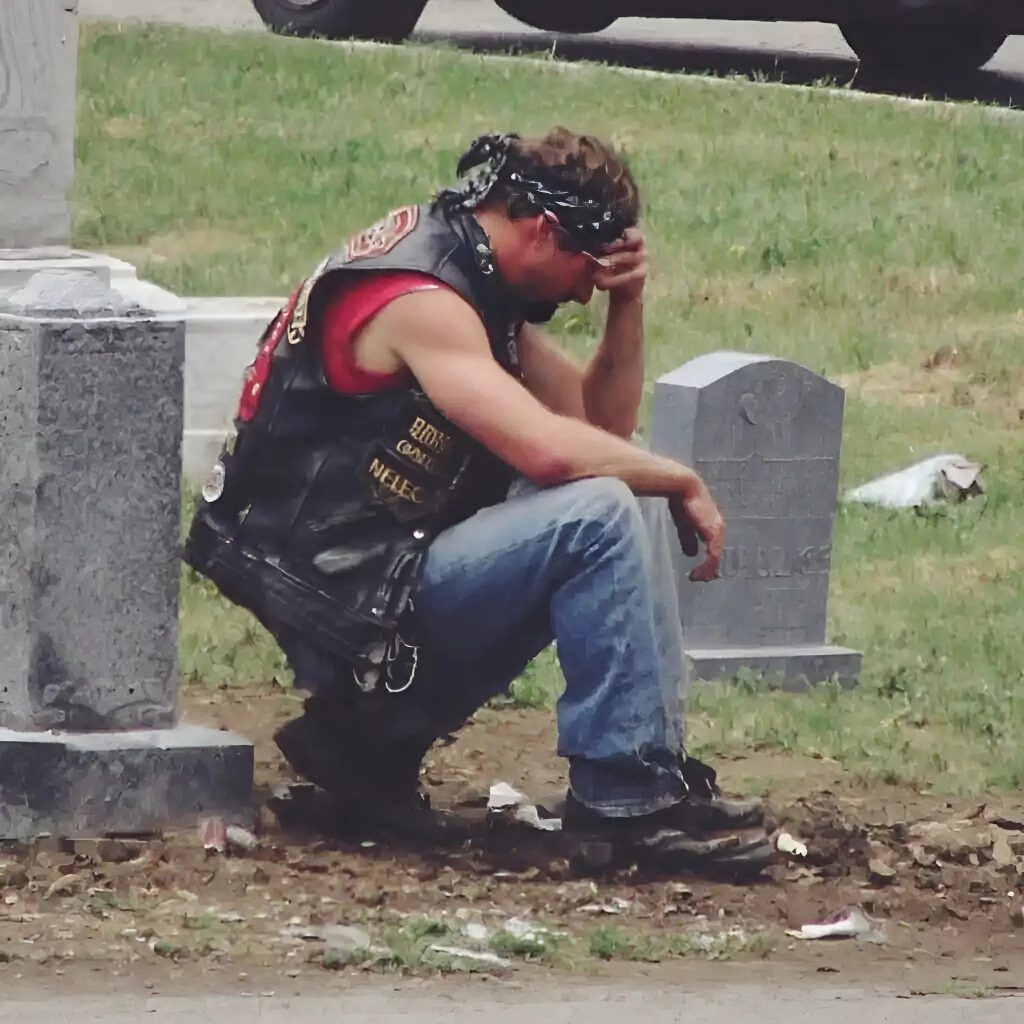
“She asked me not to tell you,” he added softly. “She didn’t want me to be a shadow over your family. She said your life was good… clean. And that mine didn’t belong in it.”
In that moment, my anger collapsed into guilt.
How many times had Sarah come home exhausted and silent? How often had I assumed it was just another hard shift? I never realized she was carrying the weight of strangers. That she was saving people who would never appear in our stories.
“When I left the hospital, I changed everything,” he said. “I quit drinking. Quit drugs. Walked away from the people who were killing me. I got a job. I started living again. All because one woman believed in me when no one else did.”
He stopped speaking and gently placed his hand on the stone engraved with my wife’s name.
“When I found out she had died… I knew I had no right to be at the funeral. I wasn’t part of her official life. But I promised myself that as long as I could walk, I’d come here. Every Saturday. Same time. Just to say thank you.”
I didn’t remember sitting down beside him. The tears came on their own. For the first time since her death, I wasn’t crying only because she was gone—but because of who she truly was.
That man didn’t come there out of misplaced love. He didn’t come to take anything. He came out of gratitude. Because Sarah was still alive in him.
Now, sometimes, we sit there together. Sometimes in silence. Sometimes talking about life, about the kids, about her.
And every time I leave, the same truth settles in my chest:
I was her husband.
But to the world, she was so much more.