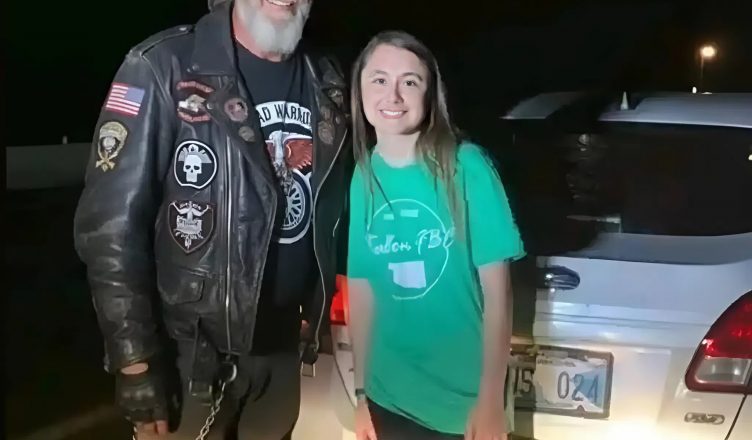
What I discovered in the trunk of her car that night still haunts me.
It was close to 11 p.m. when I noticed a white sedan pulled over on the shoulder of Highway 42. Its hazard lights blinked weakly in the darkness. There was nothing around us but forest, cold asphalt, and silence. I was tired, and I still had a long drive home, so for a moment I considered continuing on.
Then I saw her.
In the beam of my headlights stood a very young girl, no older than fifteen or sixteen. She was crouched near the rear tire, gripping a tire iron tightly in her hands. She was crying—but not the kind of crying that comes from frustration. She kept glancing over her shoulder toward the dark woods, as if she expected someone to step out at any moment.
I’m sixty-three years old. I spent nearly thirty years as a firefighter. I’ve seen panic, shock, and fear in countless forms. What I saw in that girl wasn’t simple anxiety. It was raw terror.
I turned around and parked about twenty yards behind her car. When my headlights hit her fully, she jumped up and raised the tire iron defensively.
“Stay back!” she shouted. “I have pepper spray!”
I shut off my engine and raised both hands.
“Easy. I’m not here to hurt you. I just want to help.”
“I don’t need help,” she said, though her voice was shaking. “Please leave.”
She was trembling from head to toe. And her eyes kept drifting back to the trunk of the car.
“I’m a retired firefighter,” I said calmly. “I have a daughter about your age. I’m not going to leave a kid alone on a dark highway in the middle of the night. Either I help you change the tire, or I call the police so they can make sure you’re safe.”
The word “police” drained the color from her face.
“No. Please. Don’t call the police.”
That was the moment I knew something was very wrong.
“Alright,” I said after a pause. “I won’t call anyone yet. But you need to tell me what’s going on.”
She lowered her head.
“Please don’t tell anyone you saw me,” she whispered.
And then I heard it.
A muffled sound. A weak sob. The unmistakable cry of a child coming from inside the trunk.
I froze.
“Who’s in the trunk?” I asked quietly.
She collapsed to her knees and began sobbing uncontrollably.
“I didn’t kidnap him,” she kept saying. “I found him.”
She told me she’d seen a small boy at a gas station earlier that night. He was alone, maybe four years old, sitting near the restrooms and crying. She waited, asked around, but no one claimed him. Later, a man showed up—drunk, aggressive—and said the boy was his son. When the man grabbed the child, the boy started screaming.
“I don’t know why I did it,” she said through tears. “I just picked him up and ran.”
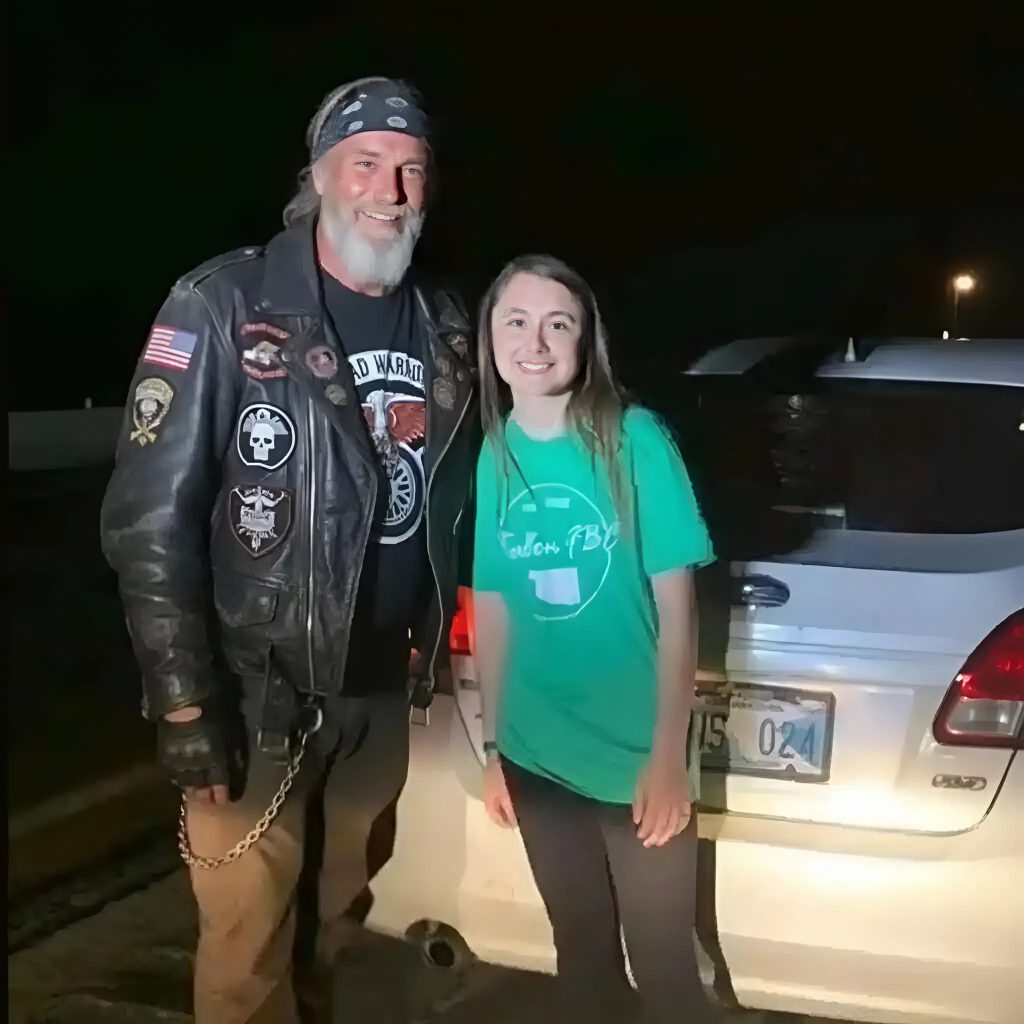
My heart was pounding when I reached for the trunk latch. I took a breath and opened it.
Inside was a little boy, curled up tightly, shivering, clutching a worn stuffed toy. When I lifted him out, he wrapped his arms around me instantly.
He was alive.
I called an ambulance. And I called the police. I broke the promise I’d made to her. But sometimes doing the right thing means breaking a promise to protect someone else.
Later, it was confirmed that the boy had been reported missing. The man who claimed to be his father had a history of violence. The girl was not charged with anything. She was just a frightened child who had been forced into an impossible situation.
As for me, I still remember that sound.
A child crying softly from inside a trunk on a deserted highway at night.
And I know one thing for certain:
if I hadn’t stopped that night, this story could have ended very differently.
Sometimes it’s not about being a hero.
Sometimes it’s simply about not looking away—and not driving past.