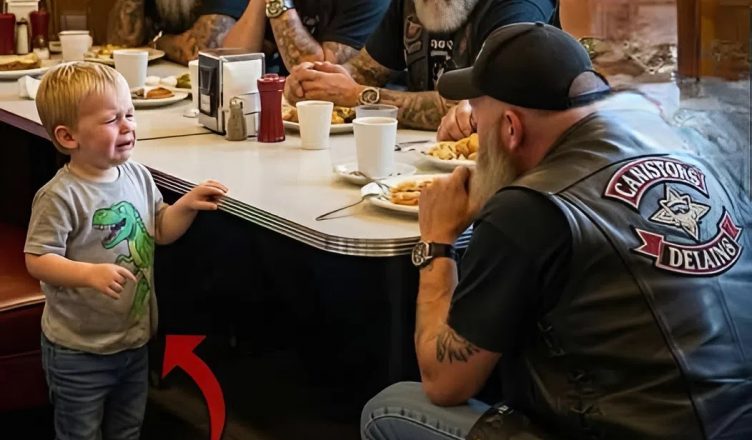
The woman’s eyes darted around the room, searching for exits, witnesses, miracles — anything. But she found only fifteen men who looked like they could bulldoze mountains, and for the first time in a long time, she didn’t look afraid of them.
“My husband,” she whispered, swallowing hard. “He… he gets angry. It’s my fault. I shouldn’t provoke him.”
That sentence landed like a grenade. Every veteran at that table had heard variations of it in war-torn villages, refugee camps, back-alley aid stations. The kind of places where victims spent their lives apologizing for the people who destroyed them.
Big Mike didn’t yell. He didn’t lecture. He simply leaned forward, voice steady enough to calm hurricanes.
“Ma’am, nothing you do gives a man the right to put his hands on you or your boy. Ever. Not in this universe, not in any other.”
Tyler pressed closer to his mom, tiny fingers gripping her sleeve like it was the only thing keeping him tethered to Earth. She said nothing, but tears streamed down her cheeks silently, like she’d learned long ago that crying loudly got people punished.
“When is he getting off work?” one of the bikers — Diesel — asked. He wasn’t smiling. Diesel only smiled when engines roared or babies giggled. Nothing in between.
She hesitated. “Eight. He works security at the mill. But please — if he sees any of you near our place, he’ll—”
“He won’t see us,” another biker muttered.
That’s when the world snapped back into motion.
The waitress came to take orders and froze mid-sentence as she saw the woman crying. One glance at Tyler’s bruises and her face twisted with quiet fury. She didn’t ask questions. She simply put in a massive dessert order and waved away anyone who tried to protest. Sometimes strangers recognize emergencies before family does.
While Tyler inhaled ice cream like he hadn’t eaten in days, Mike took the mother aside — but never far enough to break the boy’s line of sight. She talked. He listened. Really listened. Not the way cops sometimes do, waiting for inconsistencies. Not the way neighbors do, pretending it’s “none of their business.” He listened like the safety of a whole village depended on getting every detail right.
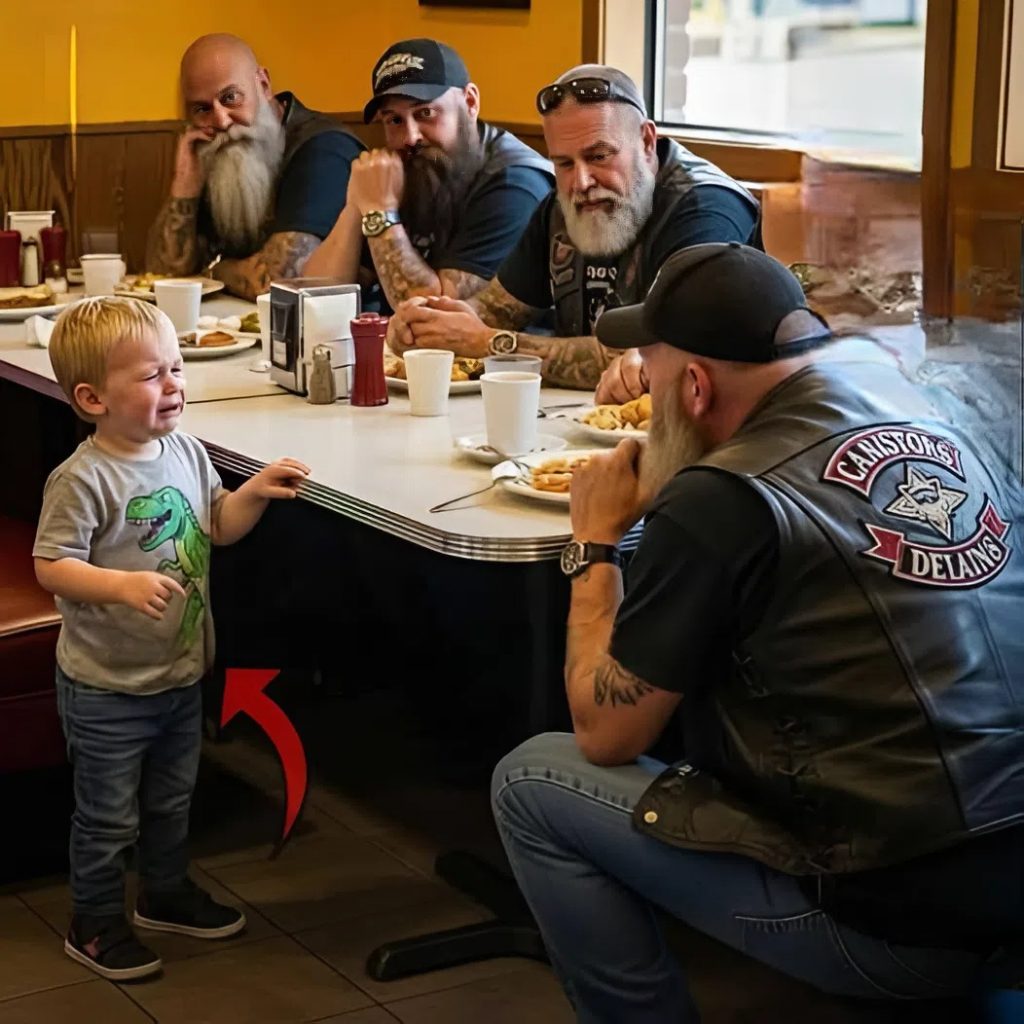
She told him about the control, the threats, the locked phones, the bruises, the emergency room visits disguised as “clumsy accidents.” She spoke of Tyler hiding in the closet with headphones while dishes shattered and furniture broke. She spoke of nights spent awake because sleep made her vulnerable. She spoke of planning to run, then canceling, because running with a child and no money might get them both killed.
When she finished, her hands trembled so badly she had to grip the edge of the table to stay upright.
Mike nodded once. Not in approval, but in confirmation — like a commander who finally had the intel he needed.
Then the bikers got up.
And for a heartbeat, every customer in that Denny’s stared as fifteen men in black leather moved with synchronized purpose. They didn’t swagger or stomp. They walked like soldiers do when the mission is clear and innocent lives are on the line.
“Where are you going?” the mother choked out.
“To get you free,” Mike said simply.
She shook her head. “Please… don’t kill him.”
Mike paused. Then, very calmly: “Ma’am, if there’s anything military service taught us, it’s that there are ways to neutralize a threat without ending a life. Dead men don’t sign custody papers. Dead men don’t go to jail. Dead men don’t confess.”
It took a moment for her to understand what he was saying. When she did, she nodded — tiny, terrified, but grateful.
While the bikers pushed through the doors and disappeared into the parking lot, Diesel stayed behind with Tyler and his mom. He distracted the kid with card tricks and stories about dinosaurs while the waitress quietly handed the mom a small bag filled with first-aid supplies, snacks, and something else: a folded slip of paper containing the waitress’s own address and phone number. Just in case.
Outside, engines roared to life — not for show, but like battle cries stripped of glamour. They rode out not as delinquents or misfits, but as the cavalry no one ever expects until the world collapses around them.
Hours later — after paperwork, witnesses, police reports, social workers, and a very surprised security guard in handcuffs — Tyler and his mom sat in a safe house offered by one of the biker’s wives, eating warm soup that tasted like peace.
When Big Mike finally returned, helmet under his arm, he found Tyler waiting by the door, still in his dinosaur shirt, still too small for a world this cruel.
“You didn’t take my seven dollars,” Tyler said.
Mike knelt again, eye level. “Keep it. Buy something fun.”
Tyler blinked. “But you helped us.”
Mike shook his head. “Helping people isn’t a job, kid. It’s what decent humans do when evil thinks nobody’s looking.”