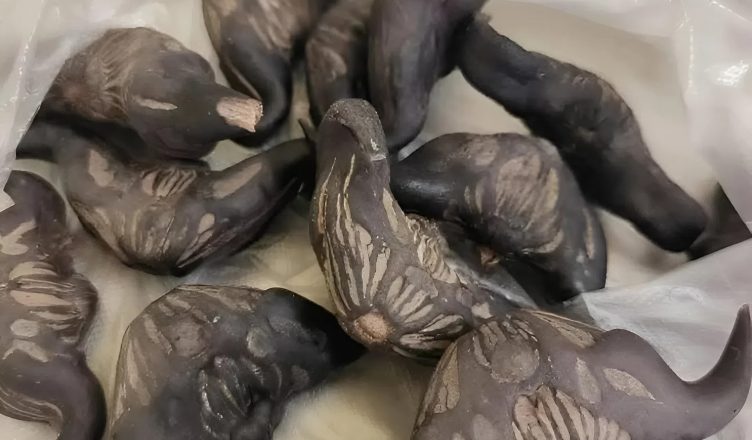
so strange, embarrassing, and honestly unforgettable. It was late already — I had just put water on for tea and was ready to unwind — when someone suddenly knocked. I opened the door and there they were: our neighbors. Foreigners, polite, friendly, but distant in that mutual, wordless way that happens when you don’t speak the same language and only meet briefly in the elevator.
This time, however, they were holding a plastic bag. They smiled widely and said with a noticeable accent:
— Enjoy your meal!
Then they handed me the bag and disappeared back into their apartment, as cheerful as if they had just given me a fancy dessert box.
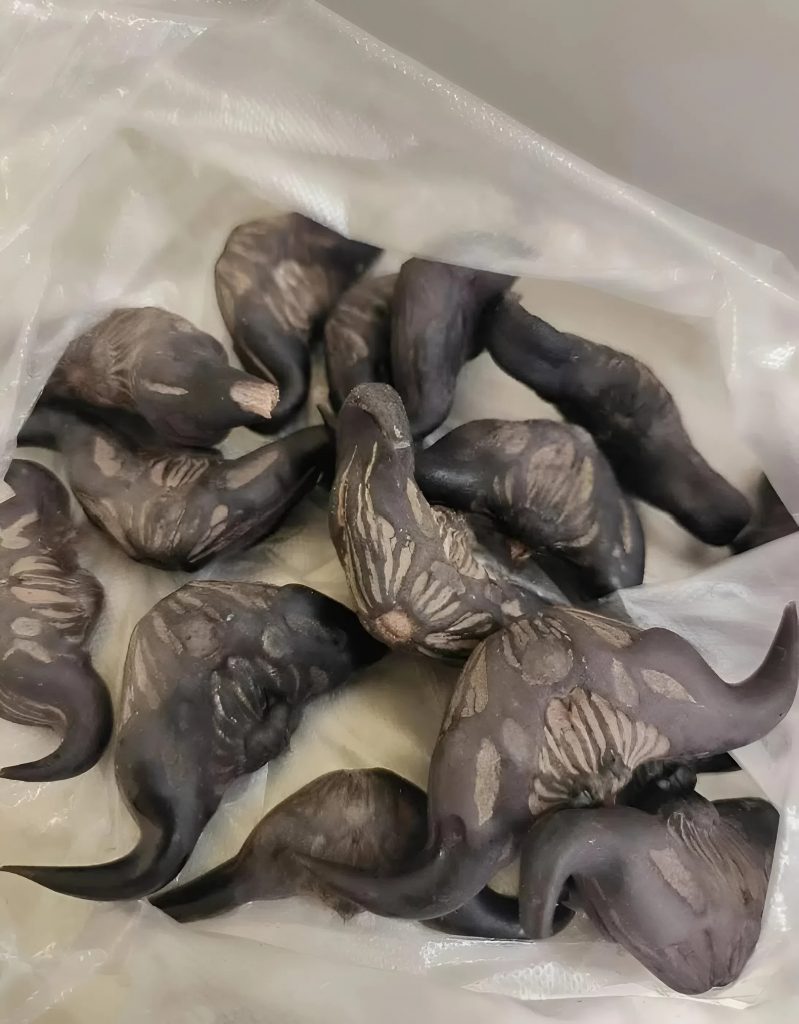
I stood there for a moment, unsure what had just happened. Then I carried the bag to the kitchen, opened it, and froze. Inside were dark, hard, oval objects — cold to the touch, without any smell, without any clear identity. They looked more like archaeological samples than food. I stared at them, trying to make sense of the situation.
My mind started racing. Is this really food? Is it some kind of joke? Or maybe a traditional cultural gift that I completely fail to recognize? I felt weirdly guilty even thinking about throwing them away — what if the neighbors asked later if I liked them? But I also didn’t dare put them into the refrigerator, just in case they spoiled and filled the kitchen with some exotic smell I wasn’t ready for.
Eventually, I sat down at my computer to investigate. I searched by description, by keywords, by images. After about half an hour of scrolling, I finally found a picture that matched exactly what was sitting on my table.
My throat tightened instantly.
What my neighbors had gifted me were called century eggs, sometimes known as preserved eggs. A delicacy in parts of Asia. They are made by coating eggs in a mixture of clay, ash, salt, lime, and rice husks, letting them “mature” for weeks or even months. The egg white turns into a deep translucent dark gel, and the yolk becomes a creamy, greenish paste with a sharp, ammonia-like aroma.
I felt like I was reading instructions for a chemical experiment rather than anything edible. And yet, I knew my neighbors had meant it kindly — it wasn’t sarcasm or mockery, but genuine hospitality.
I still hadn’t decided what to do with the situation when someone knocked again. My heart jumped — I was absolutely not expecting that. I opened the door and found the same neighbors, now holding small jars, fresh herbs, and a mysterious sauce. They tried their best to explain in broken English:
— Eat together! Very tasty! We celebrate today!
All I could do was thank them awkwardly. I returned to the kitchen, feeling as if I’d been thrown into a foreign culture without any translation or warning. There was no hint of mockery or aggression — only sincere generosity.
I sat at the table and looked at those eggs. I felt ashamed for being afraid of trying them. Ashamed for even considering throwing them away. From the neighbors’ apartment, I could hear laughter, clinking dishes, music — they were celebrating something, and somehow, symbolically, I was included.
Finally, I made a decision: I had to taste it.
I picked up one egg and gently cracked the shell. It broke surprisingly easily, revealing a dark, gelatinous egg white that shimmered like polished stone. The yolk was thick, greenish, and had a pungent chemical smell that reminded me of cleaning products, but strangely, it wasn’t entirely repulsive.
My instincts screamed “Don’t do it!” But curiosity and politeness pushed back: “Just one bite.”
I cut a thin slice, added a bit of the sauce they had brought, and closed my eyes before tasting it.
The experience was indescribable. It wasn’t salty, sour, sweet, or bitter. It tasted metallic, mineral, almost medicinal, with an aftertaste that burned like a strong shot of alcohol. I couldn’t honestly say it tasted good — but it didn’t taste rotten or poisonous either. It was simply completely foreign.
After swallowing, I set down my fork and imagined the inevitable encounter in the hallway the next day:
“So? Did you like it?”
What would I say? How do you explain something like that politely?
But before I could invent an answer in my mind, the doorbell rang again — for the third time.
There they were, standing with a bottle of clear alcohol, smiling widely and looking genuinely excited:
— You tried? If you want, we bring more! We show how to eat!
I stood there, caught between laughter, panic, and admiration. In that moment I realized something important: the strangest part of that evening wasn’t the century egg. It wasn’t even its taste.