Among the items I grabbed was a pack of fresh corn on the cob. The ears looked perfectly normal: bright green husks, neatly trimmed ends, reasonable price. I even felt a bit pleased with myself — my kids love corn. For them it’s almost a tiny celebration: hot, juicy kernels with a pinch of salt and a touch of melted butter. Simple, comforting, harmless.
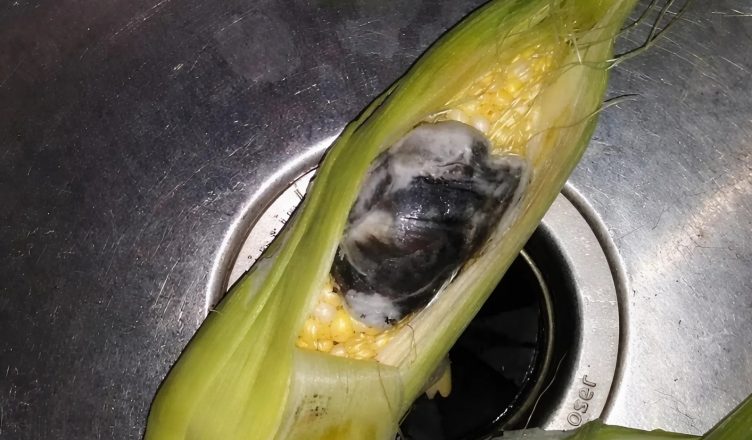
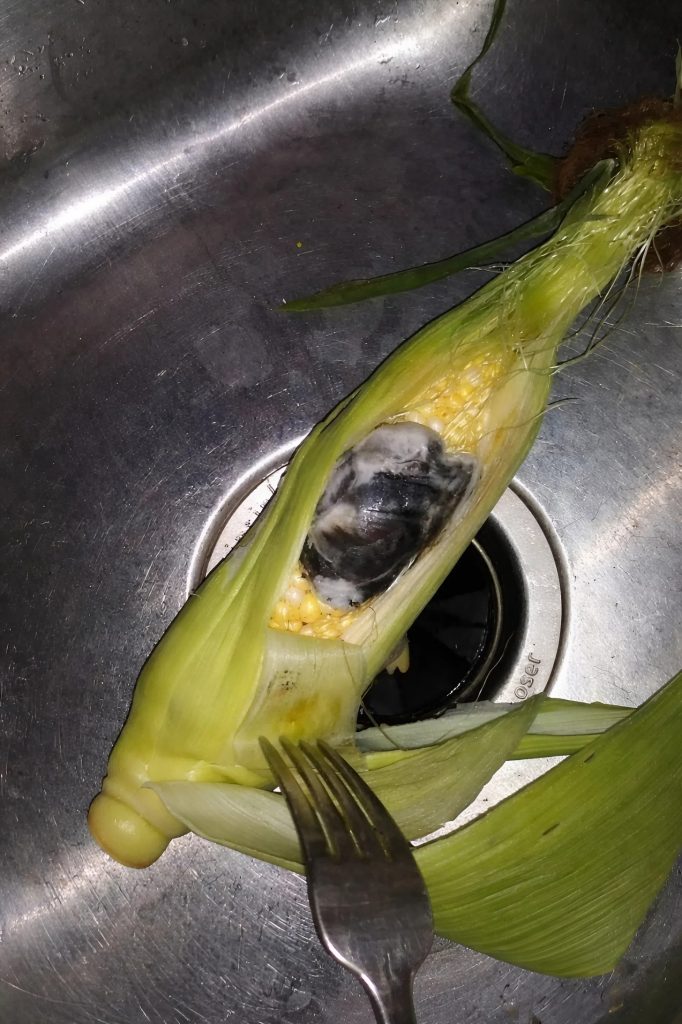
At home I sat down at the kitchen table and began peeling back the husks. First one layer, then the next. And then suddenly my hand froze in mid-air. Inside the cob there was something utterly unexpected. It wasn’t a moldy kernel or a speck of dirt. It was dark — grayish black, moist, swollen, almost biological in a way that made my stomach twist. I just stared at it, unsure what I was even looking at.
A wave of discomfort washed over me. Not just disgust, but a strange sense of alarm too, like my body recognized danger before my brain caught up. I set the corn aside and checked the others. Two more cobs had the same eerie growth.
My decision was instant: the entire pack went straight into the trash. No hesitation, no “maybe I can cut around it,” no “perhaps it’s still fine.” Absolutely not. I refuse to take chances when my children are involved.
But the real shock came later that night.
After the kids were asleep, curiosity got the better of me. I opened my laptop and started searching. At first my attitude was casual — just wanting to identify what I had seen. But as I scrolled through articles, photos and academic descriptions, curiosity turned into discomfort. Everything pointed toward one unsettling conclusion.
What I had encountered is known as corn smut, or by its scientific name Ustilago maydis. It’s a fungal disease that transforms ordinary kernels into swollen, pale gray growths that eventually darken and fill with spores. The kernels don’t just rot — they mutate. They balloon outward, crack open, and turn black, looking disturbingly like charcoal or ash trapped inside living tissue.
I thought that was shocking enough. But then came the twist I never saw coming.
In several countries, especially in Mexico, this fungus is not considered a problem at all — it’s considered a delicacy. People call it huitlacoche, and restaurants serve it in soups, quesadillas, sauces, and even gourmet dishes. Food critics praise its “earthy, mushroom-like flavor” and chefs talk about it with genuine admiration.
Meanwhile, I had been sitting in my kitchen fighting the urge to gag.
And then came the most surreal detail of all: there are farms where growers intentionally infect their corn with the fungus because huitlacoche sells for far more than regular corn. The thing I threw away in horror is, in some places, cultivated on purpose and sold at a premium.
It was one of those moments where the world suddenly feels much stranger than you previously believed.
Two days later I went back to the same grocery store to buy something completely unrelated. I wasn’t planning to get corn again, but as I walked past the produce section, my heart skipped a beat — the exact same packages were still sitting there. Same brand, same spot, untouched. No one had removed or checked them. Customers casually picked them up and placed them into their carts without peeling back a single husk.
I approached an employee and calmly explained what I had found. He listened, shrugged lightly, and said with complete indifference:
— We put out whatever the supplier gives us. If customers don’t like it, they don’t have to buy it.
No concern. No surprise. No sense of responsibility. Just a cold transactional mindset: the store displays the merchandise, the rest is someone else’s problem.
Standing there, I realized how much our food system relies on blind trust — and how often no one is really inspecting anything.