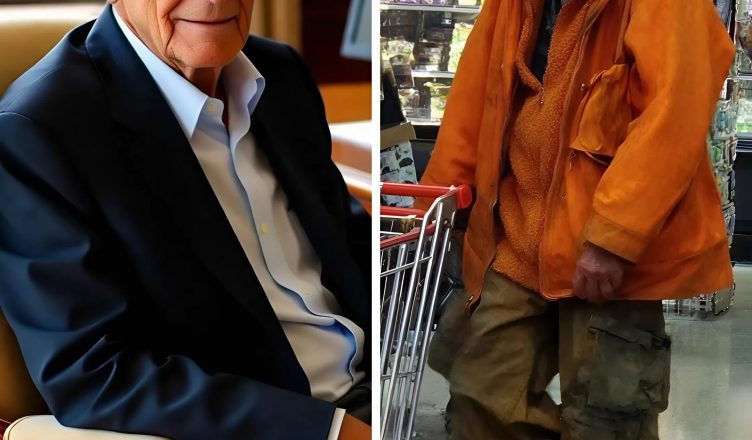
Small frame, tired eyes, no make-up, hair shoved into a loose bun. She could’ve been twenty, maybe twenty-five — it didn’t matter. What mattered was the way she looked at me.
Not with disgust. Not with pity. But with recognition — like she was confirming I was still a human being.
Her grip hurt. Her fingers were rough, calloused, cracked from work. Yet she held my hand with a strength that said she was afraid I might disappear between the aisles and never return.
“Don’t go,” she whispered. Then she pressed a steaming paper cup into my palm. “It’s hot. Hold it, please. It’ll warm you.”
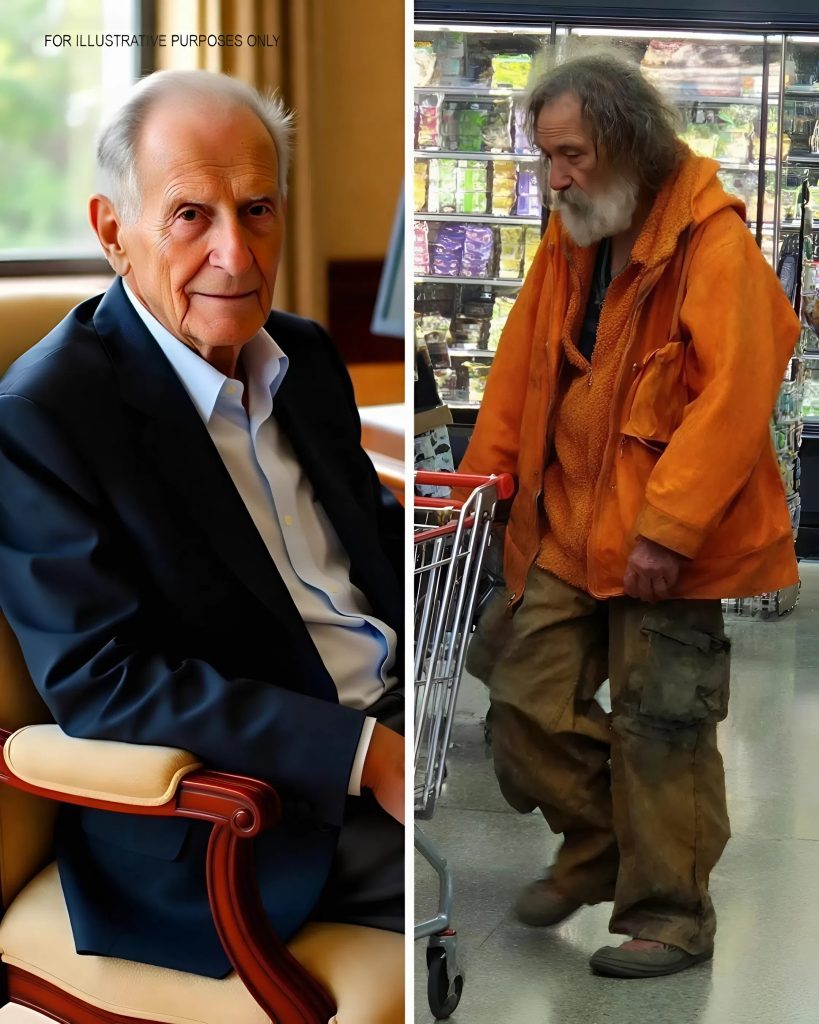
It was a cheap one-dollar coffee. Meanwhile I reeked like a storm-soaked dog, spoiled milk dried on my neck, dust on my cheeks. Customers flinched just being near me. And she — she bought me a drink.
Still holding my hand, she said, “Come with me.”
She guided me through the store toward the bakery seating area. Customers stared, wrinkled noses, pulled children aside as if I carried plague.
I sat at a small corner table — the very table I personally approved years ago, so customers would feel “more comfortable.” I almost laughed at the irony.
“Are you alright?” she asked, setting down a warm buttered roll she had bought with her own money. I knew it — I watched her wallet open; she had just a few crumpled bills and coins.
“You don’t have to buy me anything,” I rasped, voice like dull sandpaper.
“I do,” she said simply. “Nobody deserves to be treated like trash. Nobody.”
That line hit harder than any insult I’d heard all day. It was honest — too honest.
Then she pulled out a tiny bottle of disinfectant.
“Your hand is bleeding,” she murmured.
Only then did I notice the skin torn on my knuckles. Someone must’ve gripped or shoved me when that manager tried to throw me out. Bleeding wasn’t in my plan. I wanted to observe — not create theater. But reality doesn’t care about plans.
“My name’s Sylvia,” she added. “I work here. Not for long — just shifts. I was studying to be a nurse, but my dad has lung cancer. So now I’m juggling two jobs.”
The word cancer froze the air around us. The smell of fresh coffee, the hiss of the milk steamer, the chatter of customers — everything dimmed.
“How much do they pay you?” I asked.
She gave a crooked half-laugh. “Minimum. But I’m grateful they even hired me. When they saw my résumé, they said I was overqualified and wouldn’t last a week. They didn’t consider that I don’t have much of a choice.”
The very same store manager who barked at me earlier didn’t see her as a person — just a number to fill a shift.
“Why did you help me?” I asked quietly.
She glanced around. No crowd watching. No audience for virtue. Just truth.
“Because my dad used to be homeless,” she said. “Before the illness got him. And if someone had treated him with basic dignity back then, the world would’ve been a little less cruel. I don’t want to be another person who just looks away.”
That was the purest sentiment I’d heard in decades.
Then — chaos.
The store manager stormed toward us, face red, eyes bulging.
“Sylvia, to my office. Now! Customers are complaining you’re feeding this man and letting him sit here. We are NOT a charity!”
Silence spread through the café. People stared, smirked, whispered. For them this was entertainment — better than TV.
Sylvia stood slowly, wiping her palms on her apron. Her voice didn’t shake.
“Listen,” she said. “You can fire me if you want. Or you can back off. But this is a human being. And if that bothers you, then the problem isn’t him — it’s you.”
The manager looked stunned, as if no one had ever spoken to him with spine before.
Meanwhile, I sat there, rubbing my chin, feeling a familiar fire rise beneath the grime.
That store was mine. Every tile. Every register. Every label on every loaf of bread.
With a slow motion, I removed my hat, wiped the dust from my face, straightened my posture, and finally used my real voice — the voice that negotiated contracts, built distribution lines, and opened markets across five states.
“I think we should talk,” I said to the manager. “My name is Mr. Hutchins.”
Color drained from his face. His mouth hung open, but no sound came out.
The café froze. A man choked on his muffin. A woman adjusted her glasses like she needed to witness history. Nothing else existed but that moment.
And I sat beside Sylvia, knowing the search for my heir had just ended.