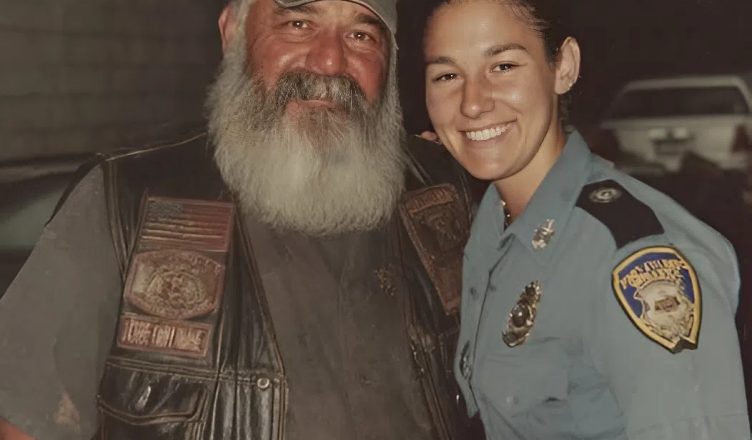
“You’re under arrest. Anything else you say can be considered resistance.”
I nodded. I understood. She was doing her job. Exactly the way she’d been trained. And that was what hurt the most — my daughter had grown into a strong, principled woman… and yet she was a complete stranger to me.
At the station, everything blurred together. A holding cell. A cold metal bench. Paperwork. She sat across from me, filling out forms without once meeting my eyes. I watched her. I couldn’t stop.
The breathalyzer showed zero. Absolute zero. A second test — still zero. The blood test confirmed it. A mistake. Bureaucratic, unpleasant, but a mistake nonetheless.
The shift supervisor frowned and shot her a brief look.
“Officer Chen, are you certain there were sufficient grounds?”
She straightened.
“Suspicious behavior. Disorientation. Emotional instability.”
I let out a quiet laugh. Emotional instability… If only he knew why.
They released me near dawn. Returned my jacket, my wallet, my keys. I was already heading for the exit when I heard behind me:
“Mr. McAllister… wait.”
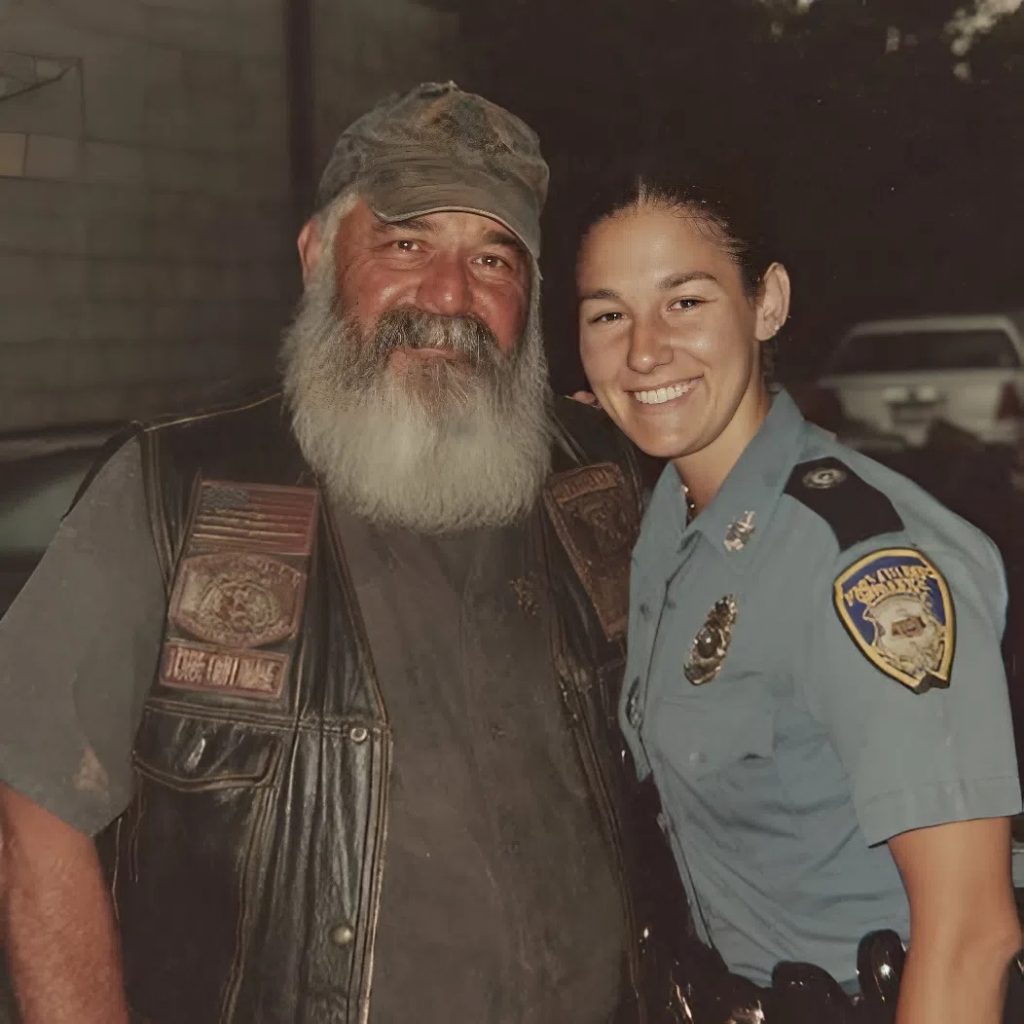
I turned. She stood there alone, without the uniform, without the badge. Just a woman. My daughter.
“Why did you talk about… your daughter?” she asked softly.
“Was that some kind of trick?”
Slowly, I pulled an old, worn photograph from my wallet. The edges were bent, the image faded. A two-year-old girl sitting on my motorcycle, wearing a helmet far too big for her, with that same birthmark beneath her ear.
“Her name was Sarah Elizabeth McAllister,” I said quietly.
“She disappeared in 1993. Her mother took her and changed identities. I looked for her for thirty-one years.”
She stared at the photo for too long. Then her face went pale. Almost instinctively, she reached up and touched her ear.
“That’s impossible…” she whispered.
“My mother said my father died. That he was violent. Dangerous.”
“I’m a biker,” I replied calmly.
“But I never raised a hand against your mother. Not once. And never against you.”
A heavy silence settled between us. I could see something fundamental breaking inside her — stories, explanations, an entire life suddenly thrown into doubt.
“How… how did you know it was me?” she finally asked.
I smiled through tears.
“When you were four, you fell off your tricycle. You still have a scar above your eyebrow. You weren’t crying from pain, but from frustration. And whenever you’re nervous, you tuck a strand of hair behind your ear.”
She covered her mouth with her hand. Her eyes filled with tears.
“Oh my God…” she breathed.
“I spent my whole life thinking I was abandoned.”
“No,” I shook my head.
“You were taken from me.”
We sat in the empty hallway of the station until sunrise. She asked questions. I answered. Sometimes we were silent. Sometimes we both cried. Thirty-one years of pain, lies, and longing can’t be compressed into a single conversation.
She didn’t call me “Dad.” And I didn’t expect her to. Not yet.
When the sky began to lighten, she stood up.
“I need time,” she said.
“I don’t know what to do with all of this.”
“I’ll wait,” I replied.
“I’m used to it.”
She nodded. Then, at the door, she suddenly turned back and said quietly:
“…Can I have your phone number?”
In that moment, I understood: this arrest hadn’t been meaningless. Sometimes life puts handcuffs on you just to finally return what you thought was lost forever.