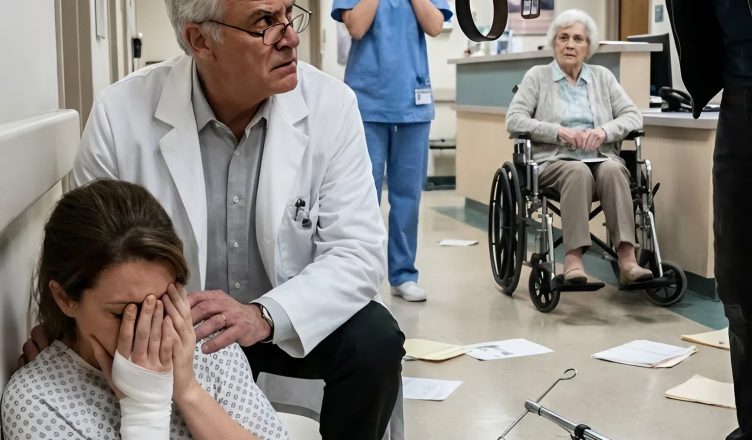
The hospital room was dim, almost unnaturally quiet, as if the world outside had been paused. My body ached everywhere, but that wasn’t what frightened me most.
It was the man sitting beside my bed, gently holding my hand.
My husband.
To anyone else, he looked like the perfect picture of devotion. His eyes were red from crying, his voice low and broken, his touch careful and tender. He could have fooled anyone. But I knew the truth. That same hand had been wrapped around my throat only hours earlier, stealing my breath and my will to resist.
“Stay with me, Sarah,” he whispered. “The doctors said you fell down the stairs. I was so scared I might lose you.”
The fall.
That was his version.
Always the same lie.
I tried to answer, but my mouth tasted of blood, and pain shot through my jaw when I moved. Before I could force out a sound, the door opened.
Dr. Aris Thorne walked in, a tablet under his arm. He didn’t glance at my husband. His eyes were fixed on me — on the bruises darkening my arms, the yellowed marks of older injuries, on a body that carried evidence no words were needed to explain.
“Mr. Thompson,” he said calmly, “I need you to step outside for a few minutes. I must examine the patient alone. It’s standard procedure.”
“I’m not leaving her,” my husband replied quickly. For a split second, his mask slipped. “She needs me.”
“This isn’t a request,” the doctor answered as two security guards appeared at the door. “Please step out. Now.”
The door closed behind him.
Dr. Thorne leaned closer.
“I’ve reviewed your scans,” he said quietly. “Your ribs weren’t broken all at once. Your nose shows signs of an earlier fracture. This doesn’t match an accident. And you know that.”
My heart began to race, the monitor responding instantly. But there was something the doctor didn’t yet know. Beneath the blanket, my left hand was gripping a phone — my husband’s phone. I had taken it while he was busy arranging the scene of the so-called accident.
“If you tell me the truth,” the doctor continued, “I can make sure he never hurts you again. But you have to speak.”
I looked toward the door. I could see his shadow. I knew that if I spoke, everything would change. Silence had protected me for years — and nearly destroyed me.
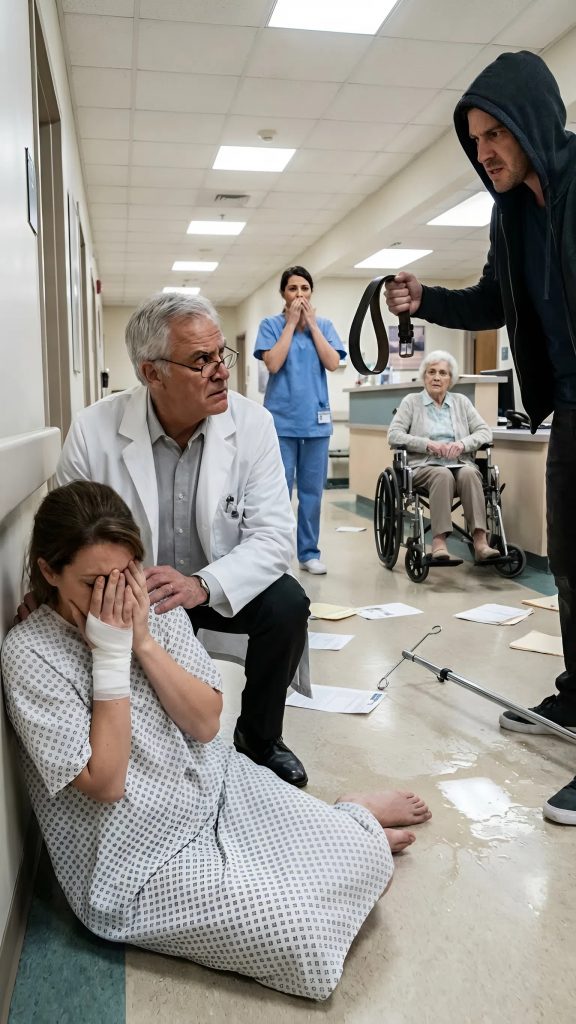
“He’ll apologize,” I whispered. “He’ll cry. And then… it will get worse.”
The doctor nodded slowly.
“I’ve heard that story before.”
The door handle moved. My husband was trying to come back in.
“We don’t have much time,” the doctor said.
I took a deep breath.
The deepest I had taken in years.
“He abused me,” I said out loud. “Not once. Not by accident. He did it for years.”
My husband laughed — cold and real, without pretense.
“She’s confused,” he said. “She’s in shock.”
I handed the phone to the doctor.
Messages.
Voice recordings.
Threats, whispered and screamed.
The color drained from my husband’s face.
As the police led him away, he turned back toward me.
“You’ll regret this.”
I met his gaze without looking away.
“I only regret staying silent for so long.”
Now I sleep without fear.
In a different place.
In a different life.
People think the worst part is the violence itself.
It isn’t.
The worst part is being told for years that it’s all your fault.
But the truth always rises.
And once it stands, it never falls again.