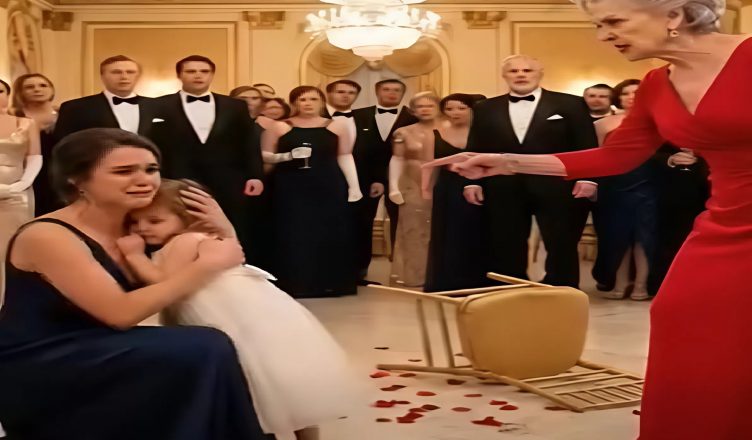
A massive crystal chandelier hovered above a table overflowing with oysters, roast goose, and expensive vintage wine. Everything screamed new money—gold-thread napkins, wine glasses etched with the family crest, and the polished, patronizing smiles of those seated around it.
I sat at the far end of the table, in the place clearly reserved for the “less impressive” relatives, sipping tap water while the others enjoyed aged Merlot. Beside me sat my eight-year-old daughter, Lily. She looked radiant in a simple white dress I had sewn for her myself. No sequins, no oversized bows—just clean lines and flawless tailoring. The fabric was rare: vicuña wool blended with lotus silk.
“Elena,” my mother-in-law Barbara said sharply from the head of the table, setting her cutlery down with a metallic clink. “Why would you let the child wear that on Christmas Eve? It looks like a pillowcase.”
Jessica, my sister-in-law and CEO of a fast-fashion empire, smirked over the rim of her wine glass.
“She probably stitched it together from kitchen scraps,” she laughed softly. “The poor thing looks like an orphan.”
Before I could respond, Barbara waved her hand dismissively.
“I’ve already changed her. She’s wearing a pink sequined dress now—with a large logo across the chest. Much more appropriate for a Sterling. As for that rag, I threw it away.”
For a moment, I couldn’t breathe. I rose without a word and walked to the kitchen.
Inside the stainless-steel trash bin, buried under coffee grounds and cranberry sauce, lay the white dress. Stained. Crumpled. Treated like refuse. My hands trembled as I lifted it out. Sauce dripped down my fingers, but I barely felt it.
I returned to the dining room and placed the dress squarely on the pristine white tablecloth, right beside Jessica’s wine glass.
“You call this a rag?” I asked quietly.
Jessica laughed.
“What else would it be? No label. No brand. You should be grateful my mother disposed of it. I’m actually in talks with Aurelia right now. The designer is a genius. But someone like you wouldn’t understand high fashion.”
I held her gaze.
“Are you referring to Aurelia Atelier?”
Her smile faltered.
I unlocked my phone and turned the screen toward her—official correspondence, confirmation of a private textile acquisition in Milan.
“This dress is made from one of the rarest fabrics in the world. The raw material alone is worth more than some of your seasonal collections.”
Silence fell over the table.
“That’s impossible,” she whispered.
“No,” I replied calmly. “What’s impossible is your assumption. I’m not just a quiet housewife. I am the co-founder and creative director of Aurelia.”
I opened another image—photographs from the latest Milan runway show. A minimalist white dress opened the collection.
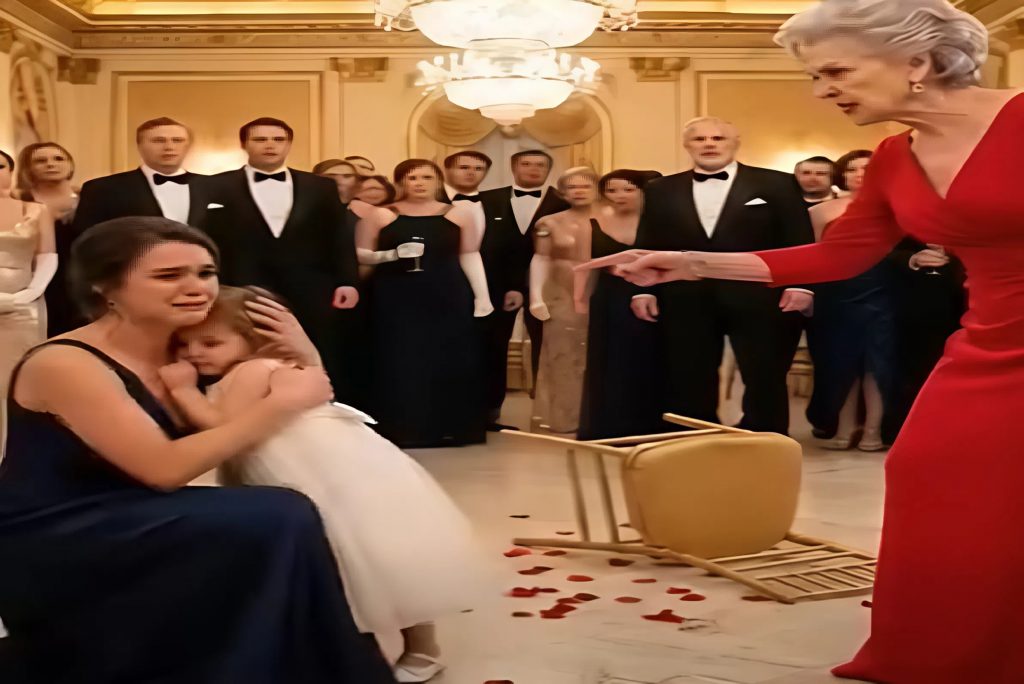
“That piece opened our spring show,” I continued. “The inspiration came from Lily’s drawing.”
My daughter stood frozen in the doorway, still wearing the pink sequined dress with the oversized logo. Her eyes shimmered with tears.
“Mom… really?”
I nodded.
“Your talent is not laughable. And no one has the right to belittle it.”
Jessica pushed her chair back abruptly.
“If that’s true, why doesn’t anyone know your name?”
“Because true luxury doesn’t need to shout,” I answered evenly. “It speaks through craftsmanship and integrity.”
I turned to Barbara.
“Luxury isn’t a logo. It’s respect—for material, for artistry, for effort.”
Then back to Jessica.
“As for that partnership you’re so eager to secure… I believe it requires reconsideration.”
The color drained from her face.
I walked to Lily, gently removed the pink dress, and draped the white one back over her shoulders. Even stained, it carried more dignity than all the glitter in the room combined.
“We’re going home,” I said softly.
Behind us, the dazzling dining room suddenly felt fragile and hollow. Ahead waited the quiet winter night—calm, unpretentious, real.
That evening, they finally understood something they had mistaken for weakness.
Silence is not powerlessness.
And the woman they dismissed as insignificant held far more influence than they ever imagined.