But I had no other choice. I work as a saleswoman in a small vegetable shop. My salary is modest, yet I have always carried myself with dignity. I raised my son alone, and I have always been proud of the man he became. We never had much money, but we had honesty and love.
When my son told me he was going to marry a young woman from a wealthy family, I felt both happiness and quiet anxiety. I was glad he had found someone he loved, yet deep inside I wondered whether I would fit into their polished world. For three months before the wedding, I barely slept. I worried about the arrangements, about expenses, about my son stepping into a new chapter of life. But most of all, I kept asking myself one painful question: what would I wear?
There was only one suitable dress in my closet. A simple green one I had bought many years ago. I wore it to my son’s graduation and to other meaningful occasions. And, despite wishing for something newer, I put on that same dress for his wedding day.
The moment I entered the church, I felt the stares. Some were curious, others unmistakably judgmental. I overheard whispers:
“Is that the groom’s mother?”
“She could have dressed better…”
“She looks so out of place next to the bride’s family.”
Each word cut deeply. Surrounded by sparkling jewelry and perfectly tailored suits, I felt small and exposed. I wanted to disappear.
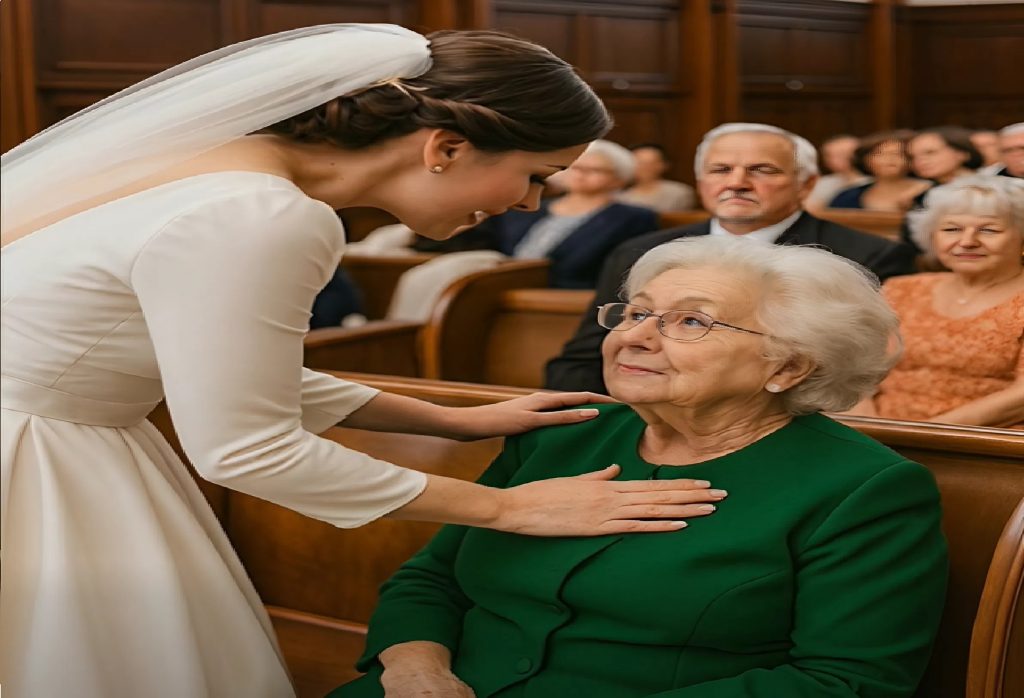
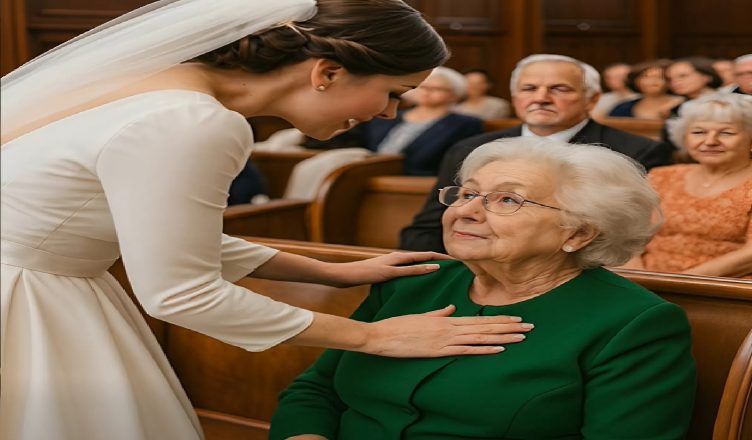
Then the bride approached me. She looked radiant in her stunning white gown. I expected a polite smile, perhaps a few formal words. Instead, she surprised everyone.
She took my hands and looked straight into my eyes.
“Mom,” she said clearly, loud enough for those nearby to hear, “thank you for this day.”
I froze. She had called me Mom.
“Without you, I wouldn’t be marrying the man I love. You raised him to be kind, honest, and strong. Everything I cherish about him began with you.”
A sudden silence filled the church. The whispers stopped.
Then she gently removed the delicate lace wrap from her shoulders and placed it around mine.
“I want you standing beside us with pride,” she added softly. “You are family.”
Tears filled my eyes. Not because of the lace, but because of what it meant. Respect. Acceptance. Gratitude.
My son joined us and embraced us both. In his eyes, I saw emotion and understanding. In that moment, I realized I had nothing to be ashamed of. I had given him the best I could—not wealth, but love and values.
After the ceremony, several guests approached me differently. Some offered quiet apologies. Others simply smiled with genuine warmth. The atmosphere had shifted.
That day, I learned something important: poverty is not disgraceful. Judging someone by appearance is. My green dress was not fashionable, but it carried years of hard work, sacrifice, and devotion.
I entered the church feeling embarrassed and out of place. I left with my head held high.
Because true worth is not measured by the price of a dress, but by the depth of a heart.
And on that day, everyone finally saw it.