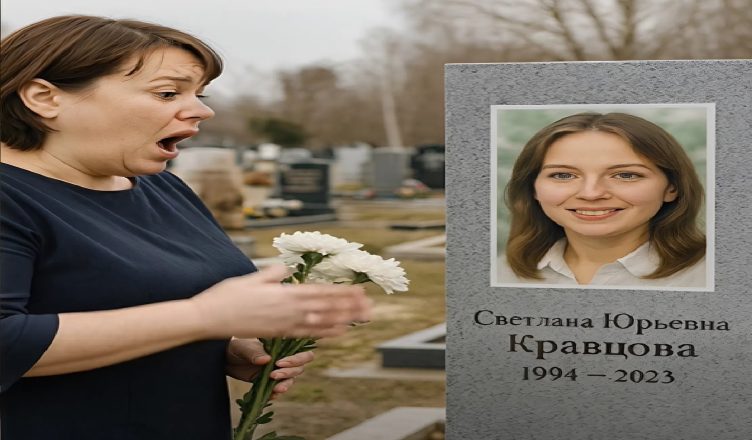
It felt as though I was about to cross an invisible line, to enter a grief that did not belong to me. And yet I knew I had to do it. Before marrying him, I wanted to visit his first wife’s grave, lay down flowers, and quietly ask for forgiveness.
When we first met, he had been honest about his past. He had been married once before, but his wife had died in a tragic accident. He said the loss was something he would carry forever. I felt compassion for him and chose not to dig deeper. I believed what mattered was the present—the life we were building together.
Still, the thought of visiting her grave would not leave me alone. I didn’t want to replace anyone. I only wanted to show respect to the woman who had once stood where I stand now. Every time I mentioned going to the cemetery, he firmly refused. He insisted it wasn’t necessary, that revisiting the past would only reopen wounds. But there was something else in his voice—not just sadness. There was tension. Almost fear.
One morning, without telling him, I bought a bouquet of white flowers and drove there alone.
The cemetery was silent, the air heavy and still. Gravel crunched under my shoes as I searched for her name among the rows of headstones. When I finally found it, I noticed how well-kept the grave was. Fresh flowers had been placed there recently.
I stepped closer and lifted my eyes to the photograph.
My breath caught in my throat.
The woman staring back at me looked almost exactly like me. The same shape of face. The same eyes. Even a small beauty mark near her lips in the exact same place as mine. It wasn’t a vague resemblance. It was unsettlingly precise—like looking into a mirror frozen in time.
I had to steady myself against the stone to keep from collapsing. It felt impossible, and yet the longer I looked, the clearer it became.
Then I noticed the dates engraved beneath her name. Her birth date matched mine perfectly. Day. Month. Year.
A chill ran through me.
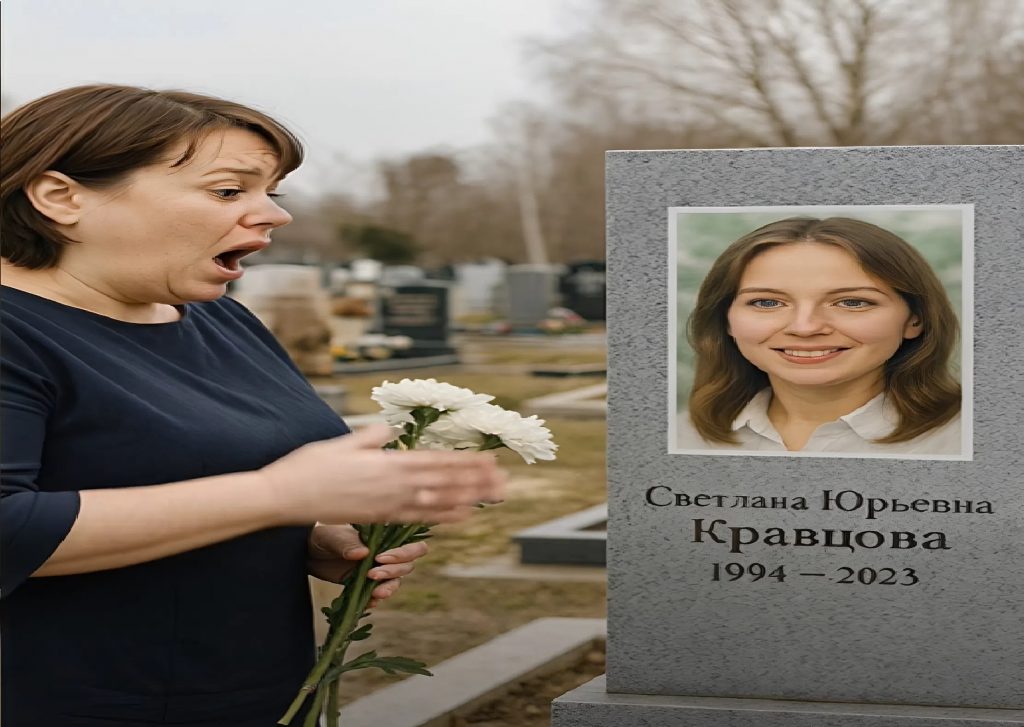
Suddenly, small details from our relationship resurfaced in my mind. Early on, he had once said, “You remind me so much of her.” I had taken it as an awkward comment. He always preferred that I keep my hair blonde. When I suggested cutting it short, he reacted more sharply than expected. There was one particular dress he loved seeing me wear. He would say I looked “exactly the way he remembered.”
Remembered.
At the base of the grave, I saw a wedding photo. She was wearing a gown almost identical to the one my husband keeps carefully stored in our closet, calling it a family keepsake.
A terrifying realization began to take shape. Maybe I wasn’t a new beginning for him. Maybe I was an attempt to recreate what he had lost.
As I turned to leave, I noticed an envelope partially tucked beneath the flowers. I recognized his handwriting immediately. The date on it was recent.
With trembling hands, I opened it.
“I’ve found her. She’s almost just like you. This time, I won’t make the same mistake. This time, everything will be different.”
Mistake?
The word echoed in my mind. I remembered how he had described the accident: a rainy night, brake failure, a tragic misfortune. I had never questioned it.
Until now.
I sat down on a nearby bench, struggling to breathe steadily. I had come to ask forgiveness from a dead woman. Instead, I was leaving with a fear I had never known before.
When I returned home that evening, he greeted me as usual. A gentle smile. A soft kiss on my forehead. A casual question about my day. His eyes were calm—too calm.
And for the first time, I felt real fear.
Because if the first story ended with a “tragic accident,” I can’t help but wonder how the second one might end.