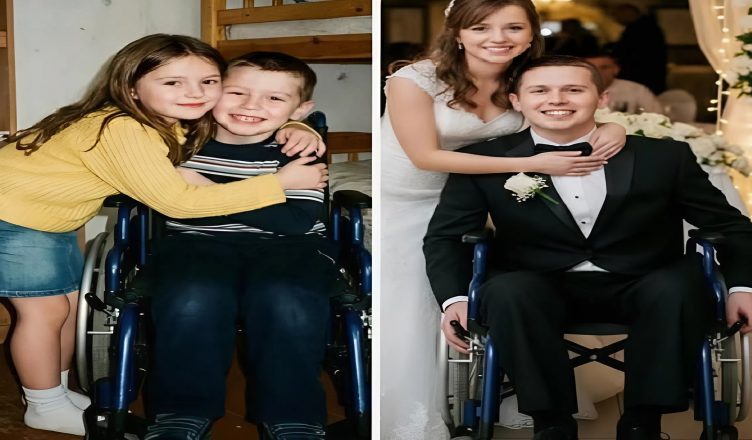
We met when I was eight and he was nine. He was in a wheelchair. Most of the other kids avoided him. They didn’t know what to say, how to act, how to look at him without staring. I simply sat down next to him on his first day. I didn’t ask questions. I didn’t pity him. I just stayed. From that moment on, we were rarely apart.
We became inseparable. Best friends. Each other’s only real family. When other children left for weekends with foster families, we stayed behind together. When birthdays were forgotten, we celebrated them on our own. We learned early that no one was coming to rescue us. If we wanted something better, we would have to build it ourselves.
We grew up side by side. We learned how to stretch every dollar. We studied hard, worked part-time jobs, encouraged each other through every setback. After college, we rented a tiny apartment on the edge of the city. We painted the walls ourselves and furnished it with secondhand finds. It wasn’t fancy, but it was ours. We had created a life from nothing.
Love didn’t arrive in a dramatic rush. It unfolded quietly, naturally. In late-night conversations. In shared laughter over cheap dinners eaten on the floor. In the way he looked at me as if I were the only person in the world. He proposed in our living room, his hands shaking slightly, his voice steady despite his nerves.
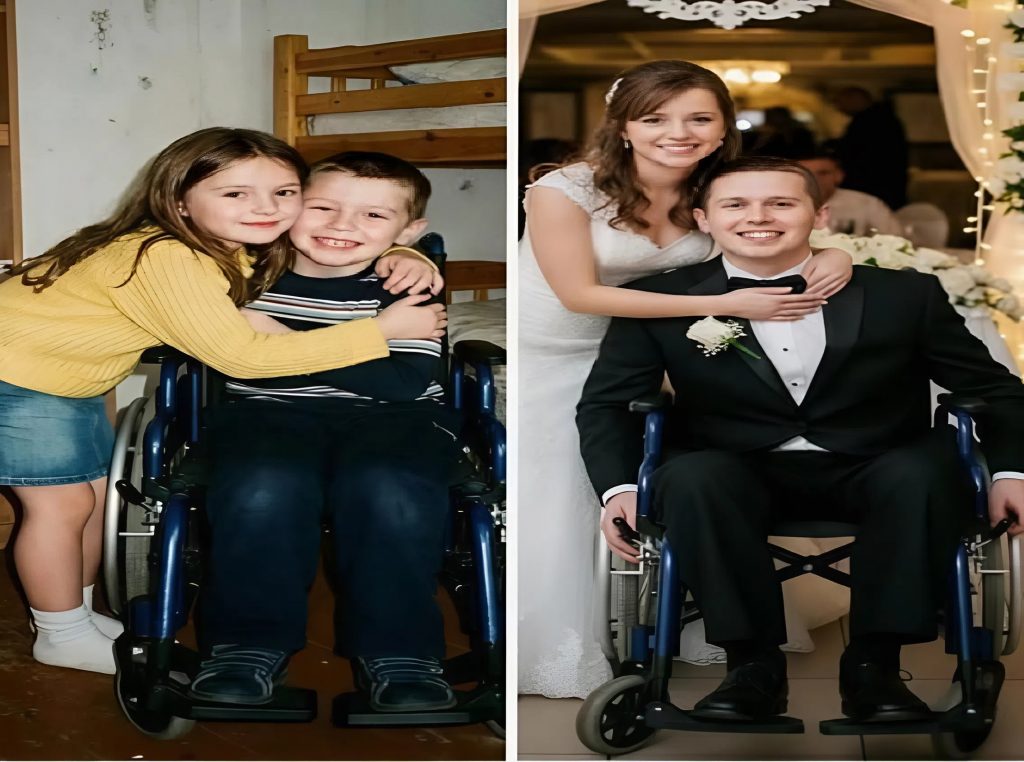
Our wedding was small. Just a few close friends. No relatives in the pews. No grand reception. And yet, it felt perfect. When we exchanged vows, I truly believed we had finally outrun the shadows of our past.
The morning after the wedding, someone knocked on our door. Hard.
Noah was still asleep. He looked peaceful, almost boyish. The knocking came again, louder and more insistent. I went to answer it.
A man I had never seen before stood outside. He wore a tailored coat, his hair neatly styled, his expression serious.
“Good morning,” he said calmly. “I know we’ve never met. But I need to tell you the truth about your husband. I’ve been searching for him for a long time.”
My heart began to pound.
“What are you talking about?” I asked.
He handed me a thick envelope. Inside were official documents, photographs, copies of records.
“There are things you don’t know about him,” the man continued. “Read this, and you’ll understand.”
My hands trembled as I pulled out the first page. It listed a different last name. The date of birth matched. The place of birth matched. But the surname was not the one I knew. Beneath it were the words: “Reported missing — twenty years ago.”
There was a photograph of a young boy in a hospital room. He looked like Noah. But he wasn’t in a wheelchair.
“This can’t be real,” I whispered.
“He didn’t end up in the orphanage by chance,” the man said. “He was taken. His family searched for him for years. They are powerful people. Influential.”
I heard movement behind me.
“She knows now,” Noah said quietly.
I turned. He stood in the hallway, pale but composed.
“Is it true?” I asked, my voice breaking.
He closed his eyes for a moment. “Yes. I found out a few years ago. I tried to uncover who I really was. But going back to that world… I didn’t want to. Not without you.”
“What world?” I demanded softly.
“A world where I wouldn’t be seen as a person, but as an heir. A responsibility. A strategic asset.”
The man at the door added, “His family is prepared to do whatever it takes to bring him back.”
“Bring him back?” I repeated. “He’s my husband.”
Noah looked at me, fear flickering in his eyes. “They won’t accept our life. They won’t accept you.”
That hurt more than anything. Not because of them — but because he had carried this alone.
“Why didn’t you tell me?” I asked.
“I was afraid you’d see me differently,” he admitted. “All my life, I’ve been afraid of losing the only thing I ever truly chose for myself. You.”
I stared at him. At the boy who once split his last piece of bread with me. At the man who had promised to stand by me forever.
The truth changed many things. But it didn’t change what I felt.
I walked to him and took his hand.
“They don’t get to decide,” I said firmly. “We do. Together.”
And in that moment, I understood that our lives were shifting forever. Not because of wealth or power. But because we now had to face the truth — and choose each other all over again.