That winter was bitterly cold, snow covering the roads up to the waist, and at night, piercing howls echoed from the forest. The villagers avoided going into the woods unless absolutely necessary. It was dangerous there: one could get trapped in the snow, freeze, lose their way, and if luck was particularly cruel — stumble upon a wolf trail.
Yet sometimes there was no choice. When the pipes froze and water no longer reached the houses, someone had to venture into the forest to clear the old underground pipes.
That day was no different. The man, accustomed to hard winter labor, slung a heavy tool-laden backpack over his shoulders and headed toward the forest. The icy wind bit his face, the snow crunched beneath his feet, yet he walked with determined steps.
Halfway there, across a wide snow-covered field, he noticed a dark shape. At first, he thought it was an abandoned sheep or a bag. But as he got closer, it became clear — it was a wolf.
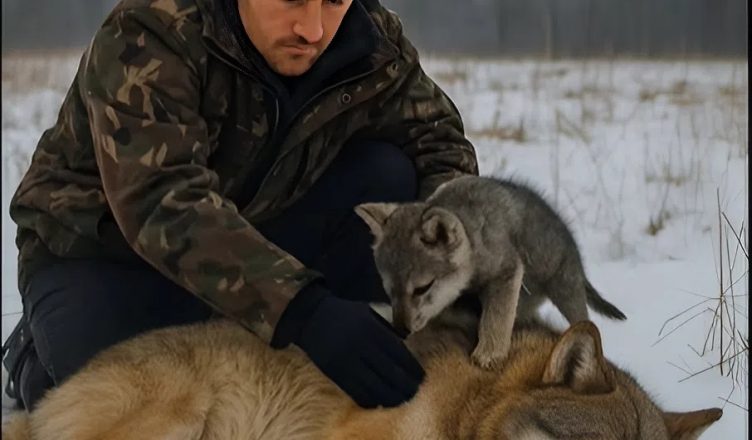
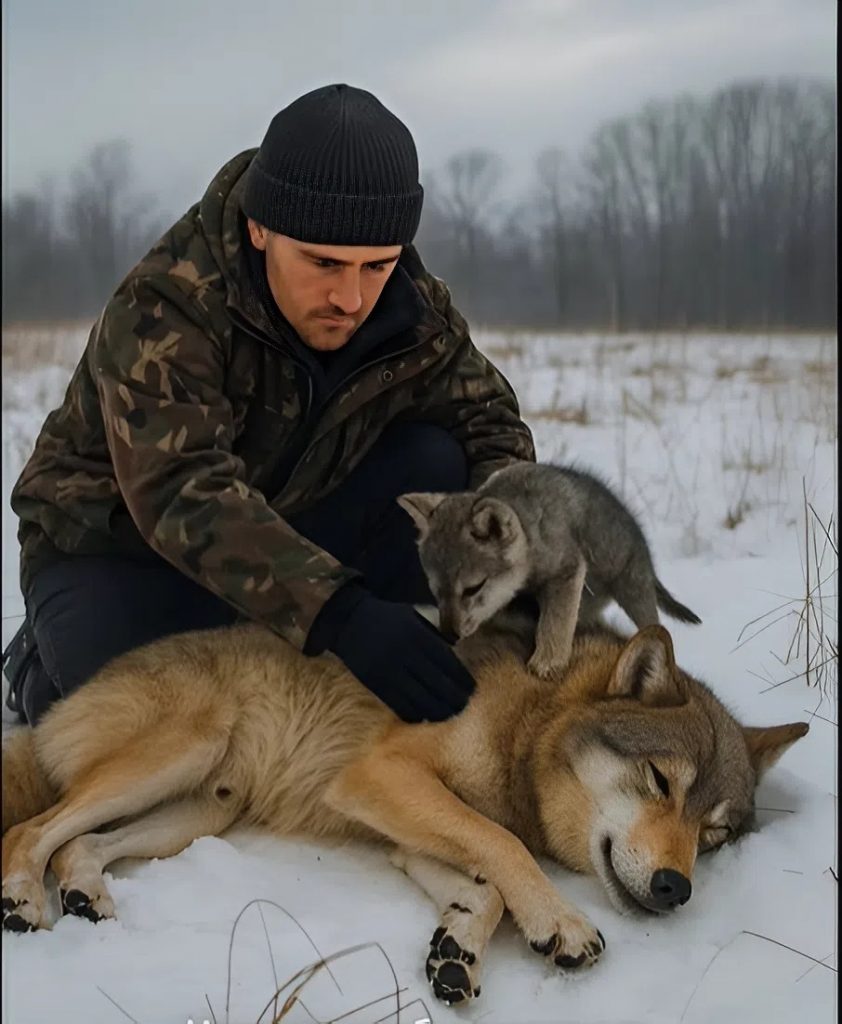
He was about to step back and run, but then he saw that the wolf wasn’t moving. Nearby, a small pup scurried around, rubbing against its mother’s side and trying to lick her.
The man listened carefully. The she-wolf was breathing heavily and unevenly. Apparently, she had gotten caught in a trap.
Fear was natural. Everyone knows that an injured predator is unpredictable. But his conscience gnawed at him. To walk past and leave them to die? Even if they were wolves… it wouldn’t be right.
He set down his backpack, knelt slowly, and tried not to make sudden movements. He examined the wound. The animal was alive.
He took out his knife, cut the wire that had trapped the wolf, disinfected the wound with alcohol, and covered her with his old coat to keep her warm.
When the wolf opened her eyes, the man rose carefully and hurried back toward the forest without waiting for gratitude. A wild animal remains wild. He had done good — and that was enough.
He thought the story ended there. But the next morning, the entire village was in shock at what they saw.
In the middle of the village, on the snow-covered path, stood the she-wolf and her pup. They showed no aggression, no fear. They simply observed the houses with almost human-like eyes. The villagers were both amazed and terrified: “How did they get here? Wolves never come this close to humans…” they whispered.
What shocked them even more was what happened next. The village animals, which normally feared anything with claws or teeth, remained calm. Dogs stopped barking, chickens approached without fear.
The village elder, who had seen much in his life, whispered with a trembling voice: “This is a sign… They came to thank the one who saved them yesterday. I’ve never seen a wolf approach humans like this.”
The man who had saved the wolf stood aside. His heart pounded so hard it felt like it might leap out of his chest. He couldn’t explain what was happening: his act of kindness had opened a door to something beyond the human world.
Finally, the she-wolf slowly approached him, lowered her head to the ground, and let out a quiet breath. The pup pressed against his legs, then took a step forward, as if inviting him to follow. The villagers watched as the man and the wild animals disappeared into the forest, feeling both awe and fear at the same time.
From that day on, the village was never the same. People became more cautious and began to respect the forest and its creatures. They understood that acts of kindness toward nature could have consequences far beyond the human world.
The man who saved the wolf never fully recounted what happened in the forest after they left. Sometimes he would quietly whisper: “Thank you for surviving…”
And the villagers, who witnessed the morning scene, still shiver at the memory of the she-wolf’s wise eyes and the little pup, which seemed to know more than any human ever could.