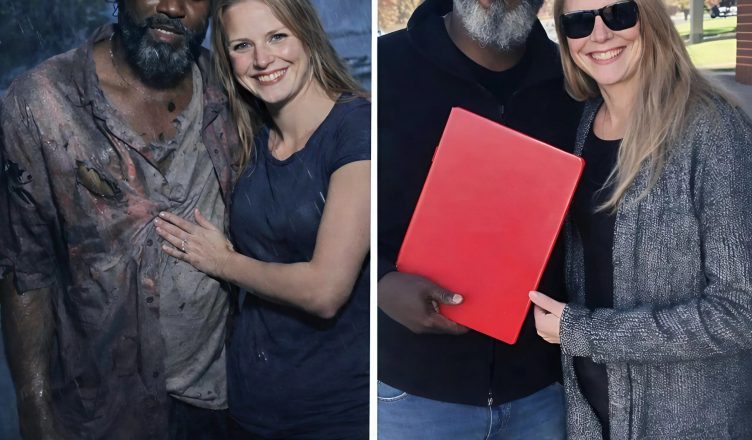
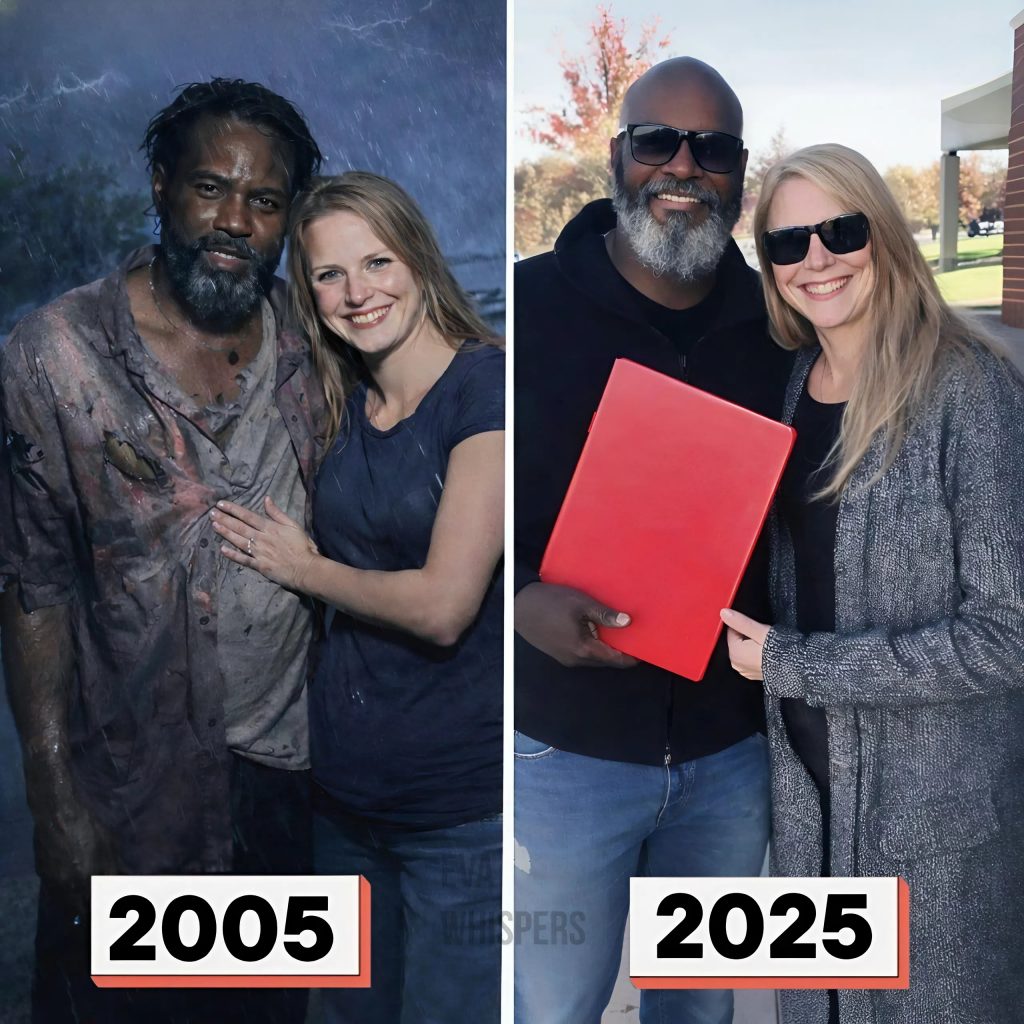
face into the present. But the longer I stared, the more the years peeled away. The stranger wasn’t a stranger at all. He was the broken man from the storm — except now he stood steady, his voice firm, his eyes clear.
He handed me the folder as if it weighed more than it looked. I took it slowly. It was thick, heavy with documents, sealed with a single strip of tape. I could feel something hard beneath the papers — metal maybe, or a small box.
Before I could ask anything, James walked past me into the hallway, just as he had twenty years before. But this time he didn’t collapse, and he didn’t look frightened. He looked like someone on a mission.
“Can we sit?” he asked.
I nodded and led him into the living room — the same couch, the same layout, just older, worn down by time. He sat carefully, like he remembered how it felt to sleep there all those years ago.
“You saved my life,” he began. “But that night, I didn’t tell you the most important part.”
I felt a chill crawl up my spine. I didn’t interrupt. His voice carried a tension that made the room feel smaller.
“I was running from someone,” he continued. “From some people, to be exact. I was involved in things I shouldn’t have been involved in. Money. Secrets. The kind of work where loyalty is a debt and mistakes are paid in blood.”
He paused. The storm outside in my memory felt closer than the quiet suburban morning around us.
“That night, I escaped. And I would have died if you had turned me away. They were close. Too close. You opening that door changed everything. It gave me a second chance.”
I finally found my voice. “What does this have to do with the folder?”
He leaned forward, his expression darkening.
“Twenty years ago, I vanished. Changed my name. Started over in another country. I became someone who built instead of destroyed. I married. I had children. I made money — real, clean money. But I never forgot. While I was rebuilding, the people I ran from were tearing themselves apart. Most are dead now. A few are in prison. The past has finally stopped chasing me.”
Then he gently pushed the folder toward me with two fingers.
“That,” he said, “is everything I accumulated after I rebuilt my life. Legally. Honestly. There’s documentation inside — property, shares, liquid assets. Enough to change the life of anyone who receives it.”
My eyes widened, and my hands trembled. It felt unreal. Like a scene stolen from a movie that didn’t belong in my living room.
“Why me?” I whispered.
He looked at me with a quiet, heavy seriousness.
“Because back then, you were the only person who didn’t demand anything from me. Not money. Not explanations. Not gratitude. You just helped. I needed to return that debt before I die.”
My breath caught. Before he dies? He looked healthy. Strong. Why would he say that?
“James… are you sick?”
He closed his eyes for a moment, and for the first time since he arrived, the strong facade cracked. His voice dropped.
“I have an aneurysm. It’s inoperable. It could go off tomorrow or in five years. No one knows. But I know what unfinished business feels like. This is mine.”
Silence. Awkward and heavy. I didn’t know what to say. I didn’t know if there was anything to say. He reached into his coat and took out an old, yellowed photograph. He handed it to me.
It was us. Me standing at my front door twenty years ago, arms out, holding onto him as he collapsed inside. Rain streaked across the image. His face looked hollow. My face looked terrified. I never knew anyone had taken it.
“I came back that night,” he said. “After you fell asleep. You had gone to bed and left a blanket near me. I was freezing, but I felt safe. Before I left, I stole something… a moment. I asked a boy in the street to take a picture so I’d never forget where my life restarted.”
For a moment, I couldn’t speak. My throat felt tight. The photo was proof of something bigger than kindness. It was the moment a dying life found shelter in the most mundane doorway.
“You owe me nothing,” I said, echoing the words I spoke twenty years earlier.
He smiled — the same small, grateful smile he had that first morning.
“That’s what makes giving this to you easier.”
He stood up slowly, adjusted his coat, and headed for the door. I followed him, folder still in my hands, heart pounding so violently it almost hurt.
“Will I ever see you again?” I asked.
James paused with his hand on the handle, staring at the wood grain for a long moment.
“If there’s time,” he replied, “I’ll knock again.”
Then he opened the door, stepped into the cold daylight, and vanished into the quiet street.