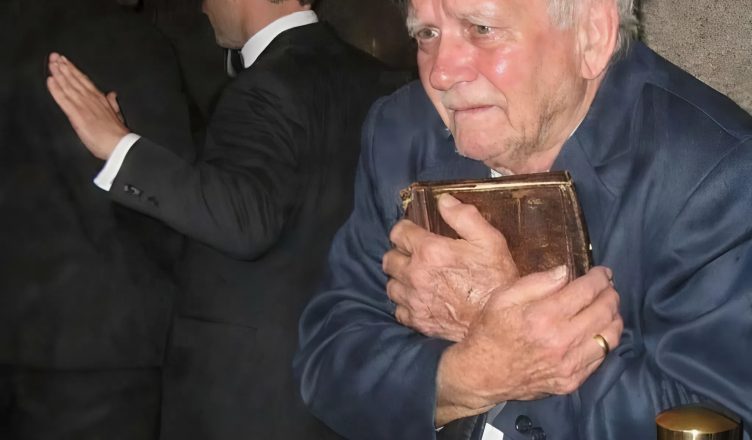
He found himself sitting at the small table in his quiet kitchen, surrounded by a stillness that felt heavier than any accusation. It was the kind of silence that asked questions no newspaper ever would: Were forty-two years of chalk dust, lesson plans, parent conferences and hallway reprimands worth what happened in that VIP ballroom?
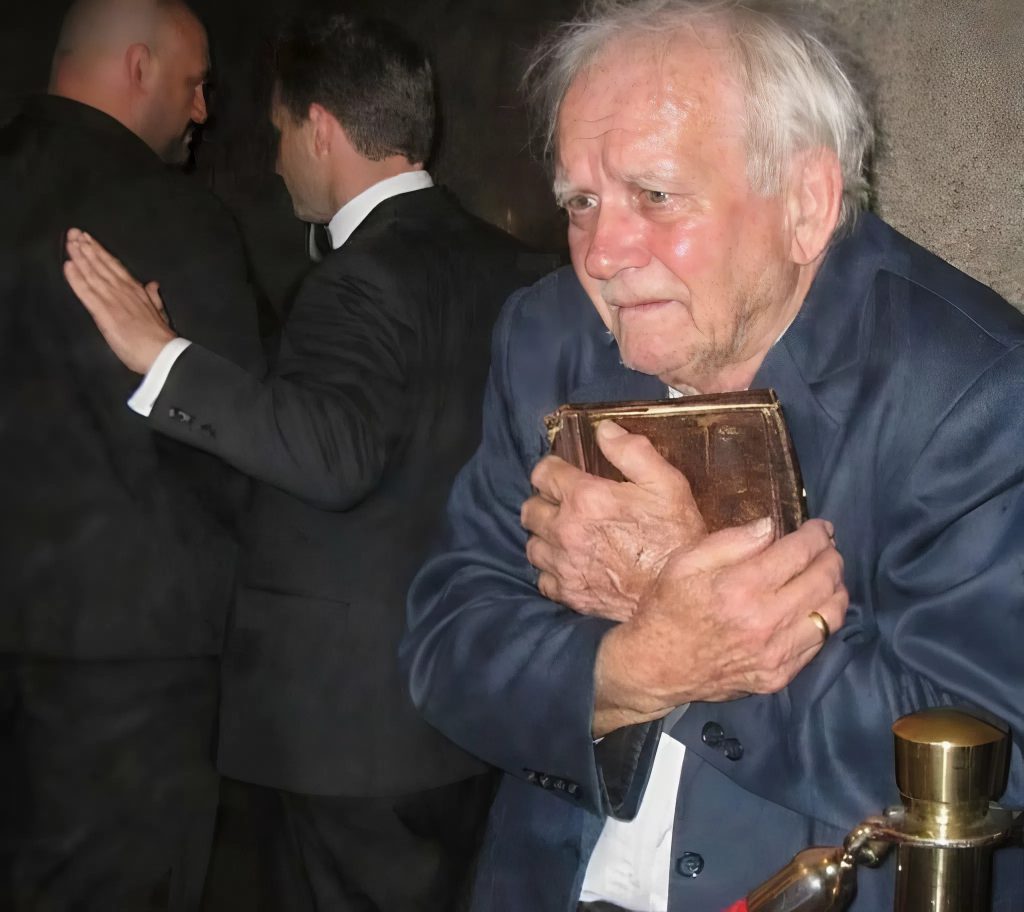
The newspapers certainly had their answer. Bold headlines praised the Senator’s brilliance: “Julian Hill Inspires the Nation,” “Golden Horizon Gala Brings Together Political and Financial Elite,” “A Night of Vision and Leadership.” None of them mentioned the elderly teacher escorted out the side door as if he were an unwanted solicitor. None of them mentioned that for Arthur Vance, the gala marked the funeral of his illusions.
His old, cracked cell phone buzzed on the table. A message from Rick: “How are you? I’ll be in town tomorrow — I can bring groceries.” Arthur set the phone down carefully, as though it might break under the weight of his thoughts. In that moment he realized a bitter truth that can haunt any teacher: he spent decades pushing students upward, only to watch some of them look down at him from their new heights — while never noticing that the truest outcomes of his work had been growing quietly somewhere else, far from spotlights and donor dinners.
The next day, when Rick showed up, the apartment smelled of coffee and old books. He carried in several grocery bags and then stopped mid-stride, staring at a wall lined with framed class photos. His eyes landed on one particular picture: Class of 1998. In the center stood a skinny boy holding a notebook. Off to the side was a lanky teenager in a jacket too big for his frame, wearing a crooked grin. Arthur stepped beside him wordlessly.
“Man, I remember how you used to line us up before tests,” Rick laughed. “I always thought textbooks didn’t matter. And people mattered even less.”
Arthur shook his head slowly.
“I thought the opposite back then,” he said quietly.
It was not a complaint. It was a confession — and perhaps the most honest evaluation of the modern school system. It demands that teachers play the role of mentors, counselors, policemen, and therapists, yet gives them no shield, no lasting credit, no permission to fail. And when the curtain falls, the applause rarely belongs to them.
Rick set the groceries down.
“I got in late last night,” he said. “Mom asked who I drove home. I told her: ‘My school saved me today.’ She laughed and said, ‘So now your school rides around in your truck?’”
Arthur smiled — a fragile, heart-cracking smile. Because he knew the truth: it wasn’t the school that saved him that night. It was a single hand extended out of a loud pickup truck on a wet highway.
When Rick left, Arthur sat near the window and watched the city breathe. Neon signs flickered. Cars drifted through intersections. Teens smoked near a convenience store entrance. He watched them and remembered the ones who were written off long before graduation — the girl with three brothers and an alcoholic mother, the boy who slept in his father’s car, the quiet kid whose brother died overseas. He remembered them with painful clarity.
And then came the revelation that hit him hardest: if he had collapsed on that rainy sidewalk outside the glass hotel, Senator Hill might never have heard the news. And if he had, it would have been a line in a morning briefing, a footnote skimmed over black coffee and schedules. Nothing more.
That night, Arthur understood something few adults ever say out loud: a teacher’s real triumph isn’t the child who becomes a keynote speaker, but the one who refuses to abandon his decency even when the world abandons him.
Society worships high achievers. But it is often the quiet, rough-edged, “difficult” children who carry genuine gratitude. They seldom write letters or make donations, yet they show up when wealth and titles evaporate. That is the brutal paradox: the system praises the front-row success stories, yet it is the back-row fighters who come back with warm jackets and full gas tanks.
And so Arthur realized that a divide had formed — a massive, invisible divide that every teacher should understand: the nation celebrates the podium, but it is held together by those who never stand on it.
Looking out the window at the city lights, Arthur reached a final, unsettling truth: loving people does not mean they will love you back. But that does not release us from the responsibility of being the ones who reach out first. And if the world chooses to forget the men and women who once stood at the blackboard, then it is not the world that will remember them. It will be the mechanic who almost flunked civics, the troubled kid who sat in the back row, the child everyone expected nothing from — except the teacher.