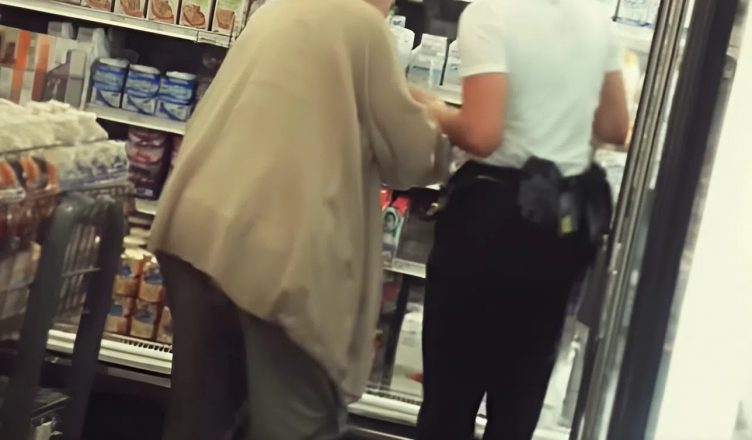
of the shopping bags as if they might vanish the moment she let go. Her hands were shaking—not from the weight, but from everything she had been carrying inside for far too long. For months, no one had asked how she was doing. No one had looked at her as a person. Only as an old woman fading quietly into the background, someone the world no longer noticed.
She turned back one last time. Emily was already scanning items for the next customer, but for a brief second their eyes met. The cashier smiled—softly, sincerely. In that instant, Helen didn’t feel shame. She felt warmth. And that feeling startled her more than anything else.
The walk home took less than ten minutes, yet to Helen it felt like a journey back to life itself. Emily’s thirteen-year-old son carried the bags in silence. He didn’t look at her with pity, but with a kind of careful respect. At her door, he set the bags down, hesitated, then said quietly,
“Ma’am… if you need anything, please don’t be afraid to ask. Mom said you’re not alone anymore.”
When the door closed behind him, Helen remained standing in the hallway. Then she slowly sat down on an old chair and began to cry. These were not tears of humiliation or despair. They were the tears of someone who had just been reminded that she still mattered.
In the kitchen, she unpacked the groceries with almost ceremonial care. The milk—the very item that had started everything—she placed at the front. Bread, butter, fruit followed. Her refrigerator hadn’t looked like this in years… maybe not since her son passed away.
That evening, Helen made soup. The smell filled the apartment, pushing away the heavy silence that had settled there after her loss. She ate slowly, savoring every spoonful. And then she noticed something unexpected—she was smiling. It was simple food, but for the first time in a long while, she ate without stomach pain, without fear of what tomorrow might bring.
The next morning, Helen woke earlier than usual. Sunlight filtered through the window. She put on a clean dress and brushed her hair carefully in front of the mirror. Then she sat at the table and wrote a letter. It was short, written in shaky handwriting, but every word came from the heart.
She returned to the store around midday. There was a long line at the register, and Emily was working nonstop. Helen didn’t want to interrupt. She simply placed an envelope on the counter and whispered,
“This is for you. Thank you… for saving me.”
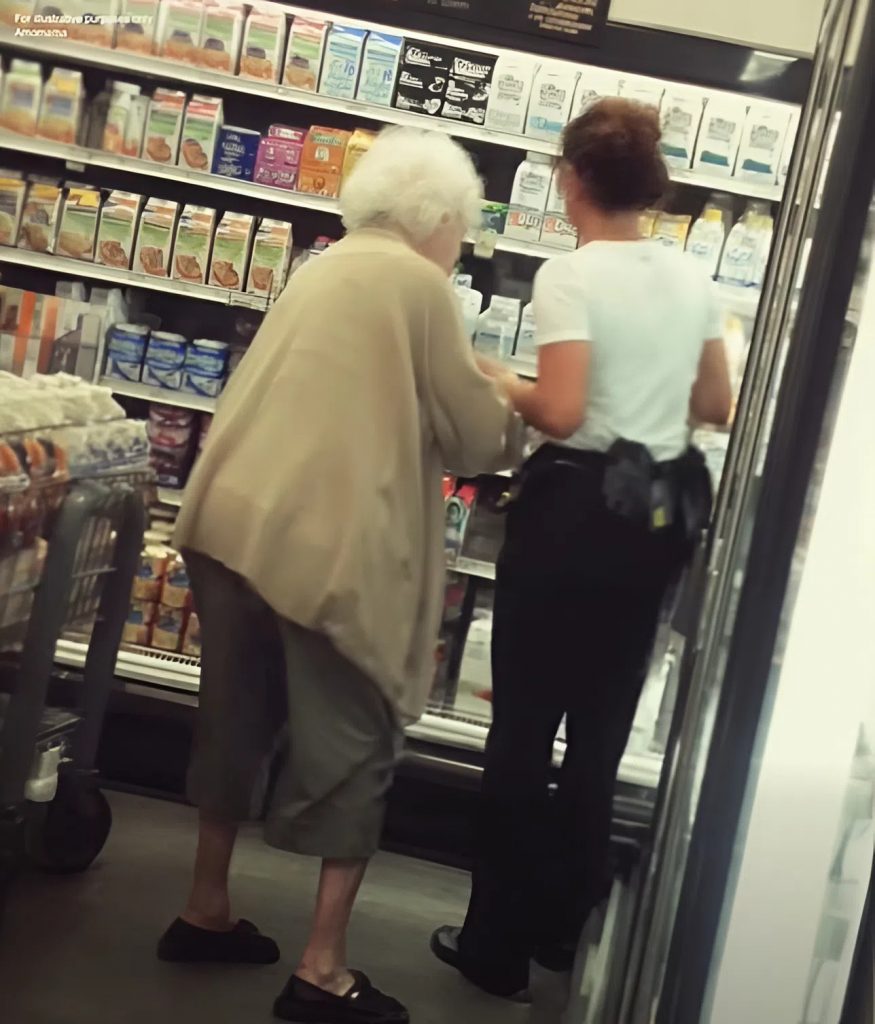
Emily opened the letter after her shift ended. Inside, it read:
“You didn’t just buy me food. You gave me back my dignity. I thought the world had forgotten me. I was wrong.”
Emily sat for a long time in the break room, holding the letter in her hands. She didn’t see herself as a hero. She had only done what her grandmother would have done. She had no idea what would follow.
A week later, Helen’s story began to spread. A customer who had witnessed the moment shared it online. No names. No exaggeration. Just a simple account of how a cashier chose humanity instead of humiliation.
The post was shared thousands of times.
People started bringing groceries for elderly customers. Some left envelopes marked simply, “For Helen.” Store management didn’t punish Emily—instead, they promoted her. As for Helen, she received additional social assistance and support from volunteers.
But the most important change happened quietly.
Every Wednesday, Helen returned to the store with her head held high. She bought milk. This time, with her own money. And she always stopped at Emily’s register.
Sometimes, it takes just one human gesture to save a life.
Sometimes, kindness is worth more than any rule.
And sometimes, a carton of milk is not theft—but a cry for help that someone finally chose to hear.