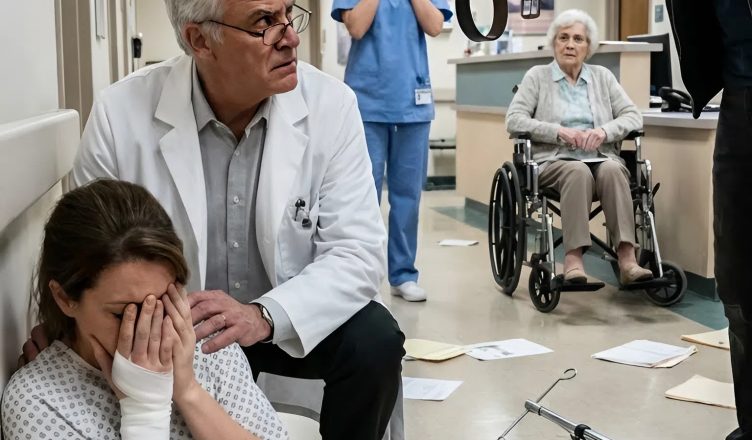
The machine beside me screamed faster, tattling on my fear. Dr. Thorne followed my eyes to the door and nodded once, as if he understood everything without a single word.
“You’re not alone in this room,” he said quietly. “And you won’t be alone after it.”
My fingers tightened around the phone beneath the blanket. It was slick with sweat, the screen cracked from when it hit the kitchen floor earlier that night. Earlier—when his hands had closed around my throat, when the world had gone dark at the edges, when I’d realized with a terrifying clarity that he wasn’t going to stop this time.
“I… I can’t,” I croaked. The sound that came out of me didn’t feel like my own. “If I say it out loud, he’ll—”
“He won’t,” the doctor interrupted, firmer now. “Because once you say it, things move very fast. Faster than he can.”
He straightened and tapped something on his tablet. The heart monitor slowed a fraction, responding to the medication dripping into my vein. My body was calming down, but my mind was racing.
I remembered the first time he hit me. Not with a fist—no, that came later—but with words. How he told me I was stupid for burning dinner. How he laughed when I cried. How he apologized afterward, flowers in hand, swearing it would never happen again. And I believed him, because believing felt safer than facing the truth.
The door handle rattled. My husband’s voice floated through the wood, sweet and concerned. “Is she okay? I just want to see her.”
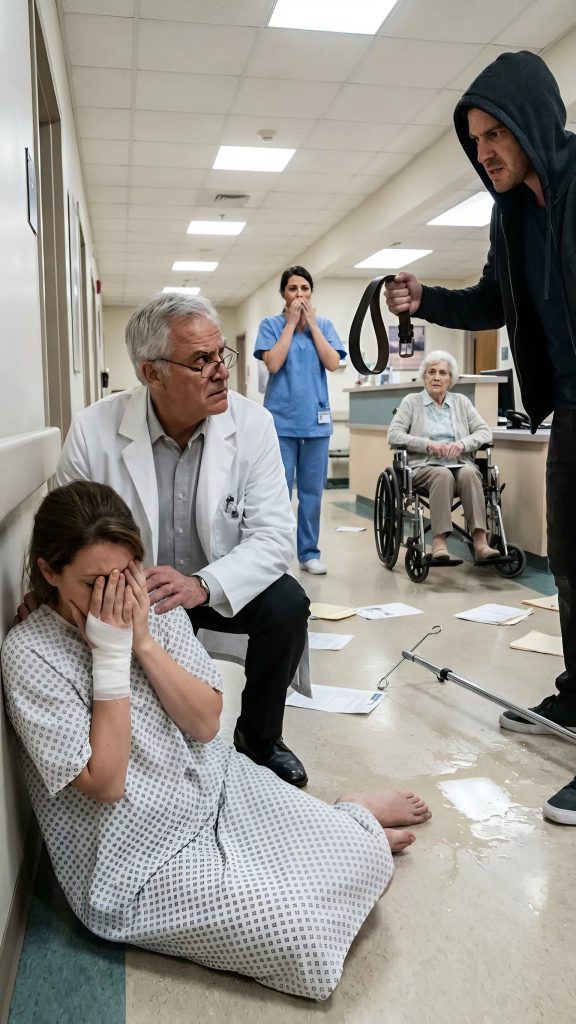
Dr. Thorne didn’t answer him. He looked back at me instead. “Sarah, listen carefully. I’m going to ask you a yes-or-no question. You can answer however you want. But know this—whatever you say, I will document what I see. And what I see already tells a story.”
He lowered his voice. “Did someone hurt you?”
The room felt impossibly small. I could almost feel my husband’s fingers again, the pressure, the heat, the certainty that my life meant nothing in that moment.
My lips trembled. I thought of the phone in my hand. I had unlocked it hours ago, shaking so badly I almost dropped it. I hadn’t meant to listen. I’d only wanted to distract myself from the pain while he was in the other room rehearsing his lies. But there it was—his voice message to his brother, sent just minutes after I collapsed.
“She’s out cold,” he’d said, irritated, not worried. “I might’ve gone too far this time. If anyone asks, she fell. Same as before.”
The truth. Recorded. Undeniable.
“Yes,” I whispered.
It was barely audible, but it was enough.
Dr. Thorne’s jaw tightened. He placed the tablet down with deliberate care, as if sealing something irreversible. “Okay,” he said softly. “Thank you for telling me.”
He stepped toward the door and opened it. “Security,” he said, voice calm and loud enough to carry down the hall. “I need local law enforcement in Trauma Two. Now.”
My husband’s face drained of color.
“What is this?” he demanded, stepping forward—and stopping short when two guards blocked him. “I’m her husband!”
“And you’re no longer welcome here,” Dr. Thorne replied. “You can step away peacefully, or you can be escorted.”
“This is insane,” my husband snapped, eyes darting toward me. For the first time since I woke up, there was no tenderness there. Only calculation. Threat. “Sarah, tell them. Tell them you fell.”
My heart pounded, but something inside me shifted. Maybe it was the IV medication. Maybe it was exhaustion. Or maybe it was the realization that I had already crossed the point of no return.
With trembling hands, I pulled the phone from beneath the blanket.
“I don’t have to,” I said. My voice cracked, but it didn’t disappear. “You already did.”
I pressed play.
His own voice filled the room—cold, annoyed, damning.
The silence afterward was deafening.
My husband lunged forward, screaming that it was a lie, that it was taken out of context, that I was crazy. The guards grabbed him as he thrashed, the mask finally shattered beyond repair. I watched as they dragged him away, his shouts fading down the corridor.
I expected to feel triumph. Or relief. Or something dramatic and cinematic.
Instead, I felt empty. Hollow. Like a house after a fire—still standing, but scorched down to the bones.
Dr. Thorne closed the door and returned to my bedside. “You did exactly what you needed to do,” he said. “The rest… we’ll handle together.”
Tears finally came then. Silent at first, then wracking, painful sobs that made my ribs scream. He didn’t tell me to be brave. He didn’t tell me everything would be okay.
He just stayed.
Hours later, a police officer took my statement. A social worker sat with me and talked about safe places, restraining orders, names of shelters I’d never imagined I’d need. Dawn crept in through the narrow window, pale and indifferent.
As the sun rose, I realized something terrifying and miraculous.
For the first time in years, I was afraid—but he wasn’t there to punish me for it.