
He pulled out my chair, listened attentively, asked thoughtful questions. He spoke confidently about his work, his projects, his business partners. He was a senior manager at an international construction company, drove an expensive car, dressed impeccably, and clearly knew how to make an impression.
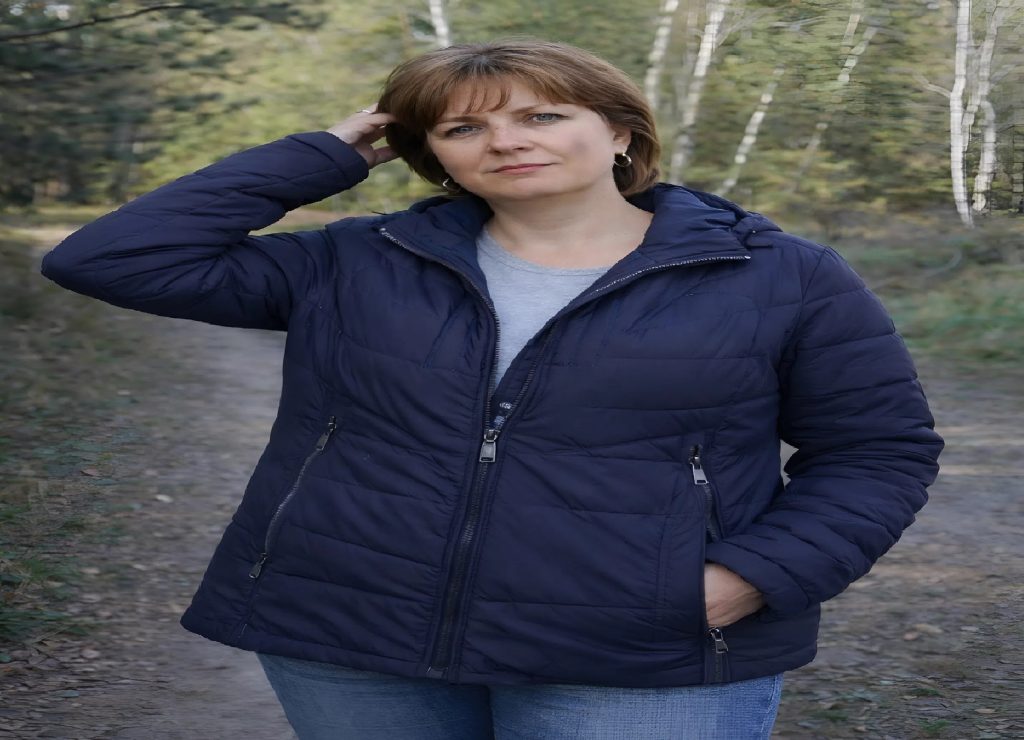
I was forty-five at the time. I have never been a model, nor have I tried to be one. But I’ve always had a healthy relationship with my body. I go to the gym, I eat reasonably well, I take care of myself. I’m 5’7″ and wear a size 12 (46 EU). I felt comfortable in my own skin. Before meeting Mark, it had never crossed my mind that there was something about me that needed “fixing.”
The conversation I didn’t expect happened on our third date, at a café. He was drinking coffee, I had tea. The discussion was easy and relaxed until he suddenly went quiet and looked at me with a strangely evaluative expression.
“I like you,” he said. “You’re attractive.”
I smiled, expecting a compliment to follow.
“I have several important events coming up,” he continued. “Business dinners, receptions, investor meetings. Everything needs to look… perfect.”
“What do you mean?” I asked.
He hesitated for a second.
“A woman next to a man at my level should look impeccable. You’re very nice, truly. But if you lost five to seven kilos, that would be ideal.”
For a moment, I was speechless. Then I looked at him more carefully. At the shirt that pulled slightly at the buttons. At the way he subtly sucked in his stomach when he shifted in his seat. At the faint double chin visible when he glanced down at his phone.
“So,” I said evenly, “in order to stand next to you, I need to change my body?”
“Don’t take it the wrong way,” he replied with a patronizing smile. “I just value order. Excellence. And it would be healthy for you too.”
I didn’t argue. I went home that evening with a strange heaviness inside me.
Yet I agreed to a fourth date. Not because I was hopeful, but because I wanted clarity. Before leaving, I stopped at a store and bought a simple measuring tape. I slipped it into my purse.
We sat by the window at another restaurant. He ordered steak and wine. I chose a salad.
“I’m glad you thought about what I said,” he remarked with visible satisfaction. “A woman should enhance a man’s image.”
“I agree,” I replied calmly. “Compatibility matters in a relationship.”
He frowned. “What exactly do you mean?”
I took the measuring tape out of my bag and placed it gently on the table. He stared at it as if I had produced something dangerous.
“You can’t be serious.”
“Completely serious,” I said. “If we’re discussing standards and perfection, let’s measure everything. If I’m expected to meet certain physical requirements, I’d like to make sure you meet mine.”
His face flushed.
“This is ridiculous.”
“What’s ridiculous,” I answered quietly, “is reducing someone’s worth to a number on a scale.”
The air between us grew tense.
“I was just trying to help you be the best version of yourself,” he insisted.
“The best version of myself,” I replied, “isn’t defined by kilograms. It’s defined by self-respect.”
In that moment, I understood something clearly: this was never about weight. It was about perspective. Did he see a person in front of him—or just an accessory to complement his status?
I placed the measuring tape back into my purse.
“Perfection starts with respect,” I said. “And that can’t be measured in centimeters.”
I stood up, paid my share of the bill, and walked out.
Outside, the evening air was cool. I took a deep breath and felt unexpectedly light. Not lighter in body—but lighter in spirit.
A week later, he texted: “You misunderstood me.”
I didn’t reply.
Because I had understood him perfectly.
A person’s value cannot be calculated in kilos. And a real connection never begins with conditions.