Friday. I was standing in line at the supermarket with my three-year-old son on my hip, silently begging him not to toss another pack of candy into the cart. I was tired, stretched thin, and mentally calculating every dollar.
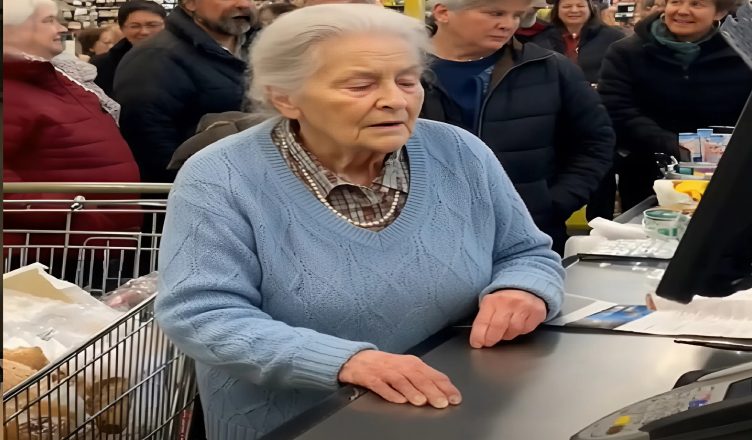
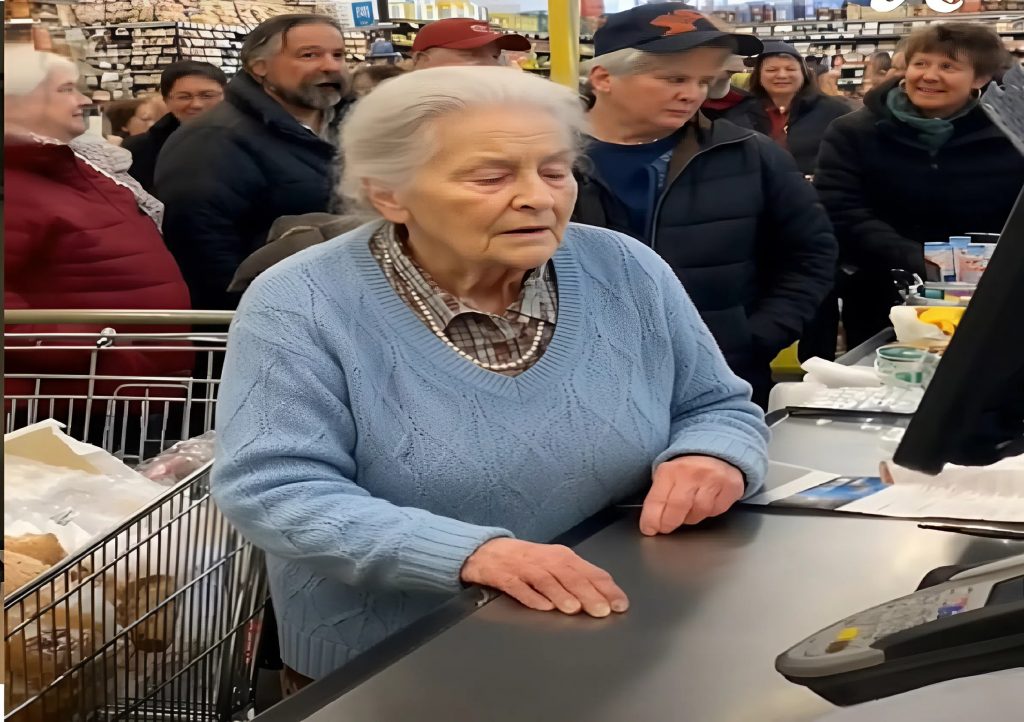
In front of us stood an elderly woman, probably close to eighty. She was small, neatly dressed, her thin hands trembling slightly as the cashier scanned her items. There was nothing unnecessary in her cart—just the basics: bread, milk, canned soup, a bag of potatoes, and a single apple pie.
When the total appeared on the screen, she froze. She stared at the numbers as if hoping they might somehow shrink. Then she slowly took out her card and swiped it.
Declined.
The cashier tried again.
Declined.
A ripple of impatience moved through the line. Someone sighed loudly. A man behind me muttered something under his breath. The air felt heavier by the second. The woman lowered her eyes.
“I can put the pie back,” she whispered softly, reaching toward the box.
I didn’t think. I simply spoke.
“It’s okay. I’ll take care of it.”
I stepped forward and tapped my card. The payment went through immediately. The cashier looked at me in surprise but said nothing. The elderly woman turned toward me, her eyes filling with tears.
“Oh, dear… I will pay you back. I promise.”
I gently shook my head.
“That’s not necessary. Please, just keep it.”
My son waved enthusiastically at her.
“Bye-bye, grandma! Have a nice day!”
She smiled through her tears and slowly walked out of the store.
I didn’t feel heroic. In fact, a quiet worry tugged at me—money was tight for us too. But I knew that sometimes protecting someone’s dignity matters more than protecting your own budget.
Two days later, we returned to the same store.
As soon as we walked in, my son gasped.
“Wow! Mommy, look!”
I looked up—and stopped in my tracks.
Near the entrance stood a table covered with neatly packed paper bags filled with groceries. Above it was a sign that read:
“For anyone having a hard day. Please take what you need.”
And standing beside the table was the same elderly woman.
But she looked different now. Straighter. Brighter. There was a calm strength in her posture. When she saw me, her face lit up with recognition.
“I was hoping I’d see you again,” she said, her voice trembling slightly. “I couldn’t repay you the way I promised. So I decided to do something else.”
She told me she was a retired teacher. She had shared the story—not my name, just the kindness—with a few former students and neighbors. She told them how a stranger had stepped in when she needed help most.
People responded.
Someone brought rice. Another brought canned goods. Others donated flour, pasta, or a few dollars. The store manager agreed to let them create a small “community table” near the entrance. Anyone in need could take a bag. Anyone able could leave something behind.
“You reminded me that kindness still exists,” she said quietly. “I just passed it on.”
My eyes filled with tears. I had thought it was just a small gesture—an ordinary moment in a busy evening. But that moment had become something bigger.
Within a week, the table was fuller each day. People paused, smiled at one another, sometimes even started conversations. The same place that had once echoed with irritated sighs now held a quiet sense of compassion.
My son waved to her again.
“Bye, grandma!”
And in that moment, I understood something important: children don’t remember receipt totals. They remember what they see us do.
Maybe one day, when he’s standing in a line of his own and sees someone struggling, he won’t hesitate. Maybe he’ll simply step forward and say,
“It’s okay. I’ve got it.”