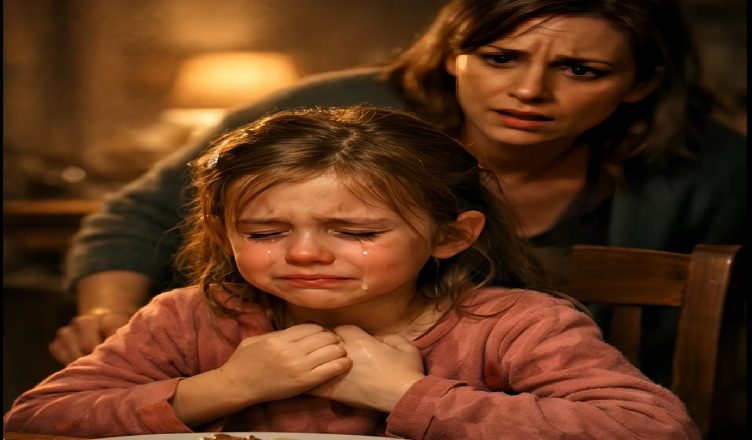
She was only five, yet there was a seriousness in her dark eyes that didn’t belong to a child. Every evening the same scene unfolded: a full plate in front of her, her gaze fixed downward, and a soft whisper that barely carried across the table.
“I’m sorry, Mom… I’m not hungry.”
That word — Mom — touched me every time. It was sweet, but it carried a weight I couldn’t explain. I tried everything: fluffy omelets, baked rice, lentils, crispy croquettes — meals most children happily devour. Nothing worked. She would move the food around with her fork and leave the table without eating. The only thing she accepted was a glass of milk in the morning.
My husband, Javier, always reassured me.
“Give her time. She’ll adjust.”
I wanted to believe him. A new home, a new city, a new family dynamic — it’s a lot for a little girl. But my instincts told me this wasn’t just adjustment. It was fear.
A week later, Javier had to travel to Madrid for work. On the first night we were alone, I was cleaning the kitchen when I heard small footsteps behind me. Lucía stood there in her wrinkled pajamas, clutching her blanket tightly to her chest.
“Mom… I need to tell you something.”
Her voice trembled. I knelt down and pulled her gently into my arms. She glanced toward the hallway, as if making sure we were alone. Then she whispered words that made my heart stop.
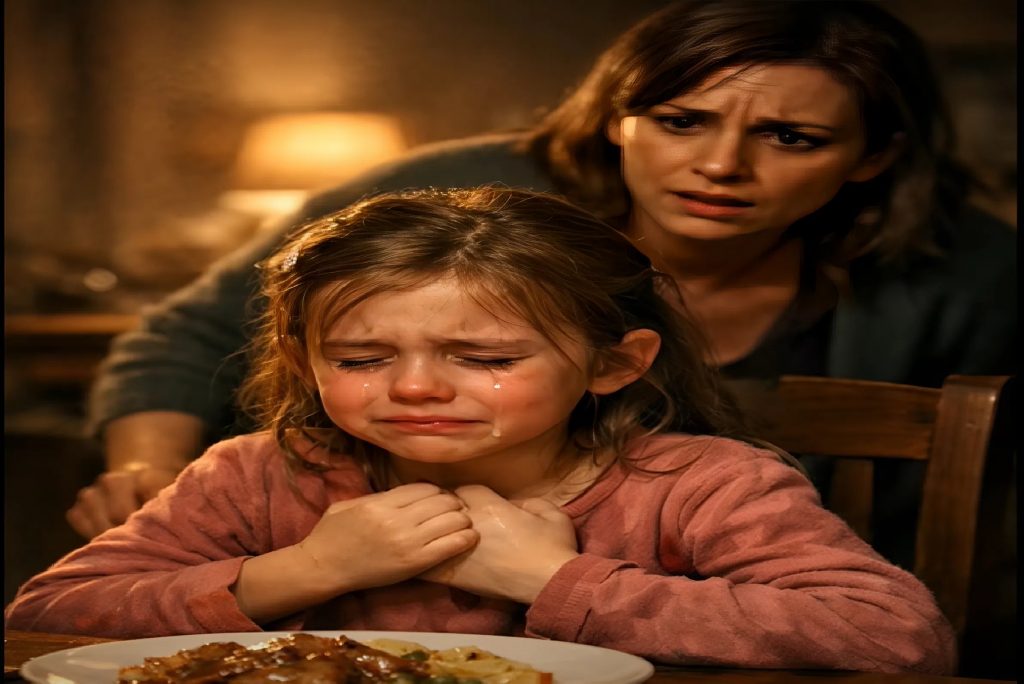
“Daddy said if I eat and if I’m happy, he won’t love me anymore. He said I have to stay sad… or he’ll leave and never come back.”
Suddenly everything made sense. The untouched plates. The constant apologies. The fear in her eyes. She wasn’t refusing food because she wasn’t hungry — she was afraid of losing her father’s love.
I didn’t hesitate. I grabbed my phone and called the police.
When the officers arrived, my voice was barely steady. Lucía clung to me, shaking. One of the officers knelt down to her level and spoke gently. She repeated exactly what she had told me.
They explained that emotional manipulation of a child is a form of psychological abuse. Teaching a child that love depends on suffering or self-denial can cause lasting damage — eating disorders, anxiety, deep-rooted guilt.
The next day, child protective services became involved. We began sessions with a child psychologist who confirmed that prolonged emotional pressure can leave invisible but serious scars. Recovery would take time — but it was possible in a safe environment.
When Javier returned home, he denied everything at first. He called it a misunderstanding, an exaggeration. He claimed he was only afraid of losing his bond with his daughter.
Then Lucía looked at him and said quietly, but firmly:
“You told me if I eat, you won’t love me anymore.”
The silence that followed was suffocating.
Authorities imposed temporary restrictions on contact and required counseling. I was forced to make the hardest decision of my life — to prioritize the child’s safety over my marriage.
Months have passed since then. Slowly, Lucía began eating again. First a few bites. Then half a plate. One evening, she asked for seconds. I had to turn away to hide my tears. It wasn’t just about food. It was about trust returning. It was about fear loosening its grip.
I’ve learned that abuse doesn’t always come with shouting or bruises. Sometimes it hides behind quiet words and conditional affection. Sometimes it sounds like love — but feels like control.
And sometimes, the first warning sign is a small child sitting in front of a full plate, too afraid to take a bite.
That night, I didn’t act out of anger. I acted out of protection.
Because a child’s safety should never wait.