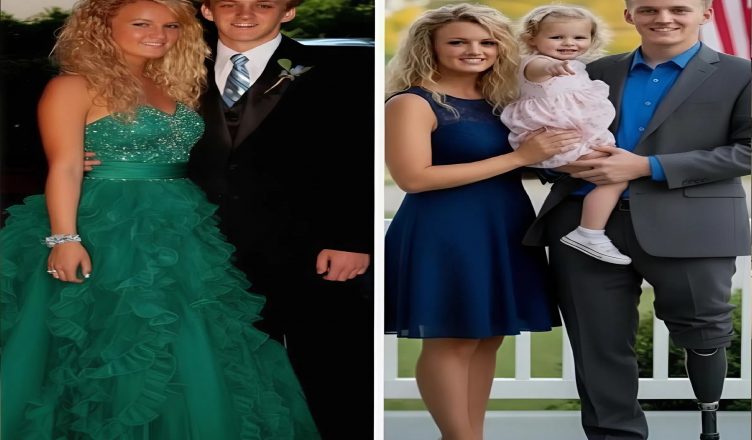
One second everything was routine—the next, my life was split into before and after. Hospitals. Rehabilitation. A prosthetic. Learning to walk again step by painful step. It was humbling in a way I never expected.
When I finally came home, I asked my high school sweetheart, Jess, to marry me. She had waited through the deployment, through the silence, through the uncertainty. The first time she saw me after the injury, she broke down in tears.
Then she wrapped her arms around me and said, “We’ll get through this.”
And she meant it.
Her parents had their doubts, but Jess never wavered. She looked me straight in the eyes and told me she loved me—not my body, not who I used to be, but me.
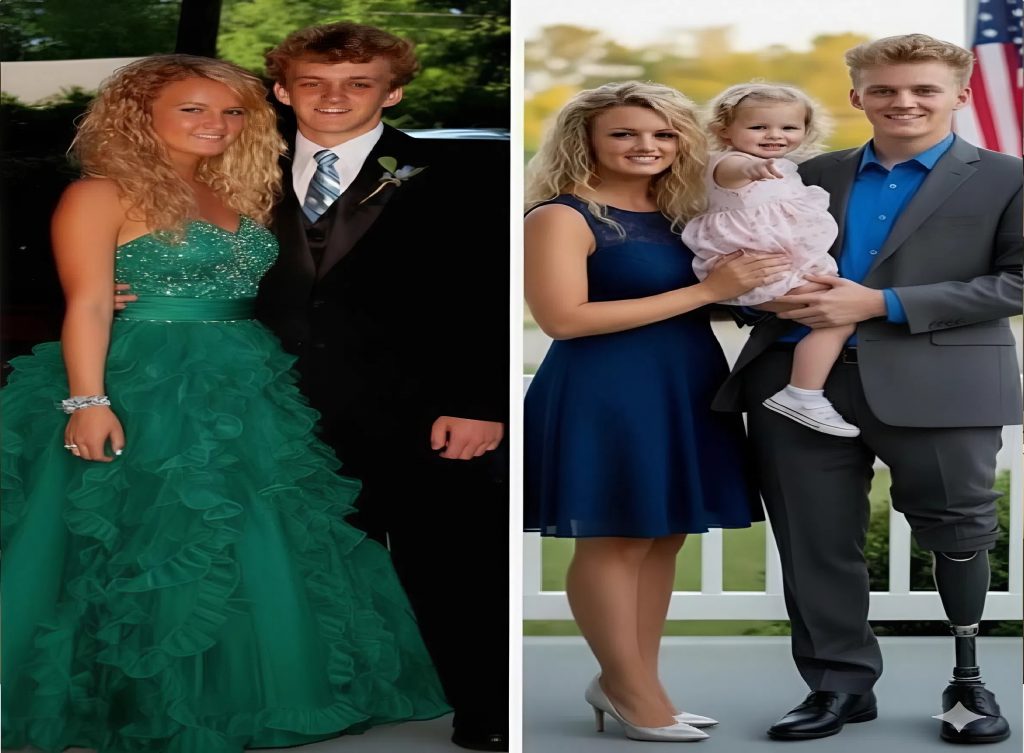
We got married. Built a quiet, steady life. A few years later, we had a beautiful daughter who became the center of everything.
Then came her third birthday.
Jess was home decorating a chocolate cake—our daughter’s favorite—softly humming to herself like she always did. I drove to the mall to pick up the oversized doll our little girl had been begging for.
It took nearly two hours. Moving through crowded stores with a prosthetic isn’t quick, and by the time I got back, I was exhausted.
The moment I opened the front door, something felt wrong.
No music.
No clatter from the kitchen.
No humming.
Just silence.
“Jess?” I called out.
Nothing.
The kitchen was empty.
I checked the bedroom—and my stomach dropped.
Her side of the closet was cleared out. Shoes gone. Suitcase gone.
Panic hit me so hard I had to grab the dresser to steady myself.
I rushed to the nursery.
Our daughter was asleep in her crib.
And taped to the wall behind her was a folded note.
Jess’s handwriting.
My hands shook as I opened it.
I’m sorry. I can’t stay anymore. Take care of her. I made a promise to your mom. Ask her.
That was it.
No explanation.
No goodbye.
I strapped my daughter into her car seat and drove straight to my mother’s house.
I walked in without knocking.
She was sitting calmly in the living room.
“Mom,” I demanded, my voice breaking, “what did you say to Jess?”
The color drained from her face.
“Oh no,” she whispered. “She actually left.”
She looked at my daughter, then back at me.
Jess had visited her three weeks earlier. Alone. Exhausted. Barely holding herself together.
She had told my mother she was tired—not of me, but of living on edge.
Tired of the nightmares.
Tired of the sudden silences.
Tired of pretending everything was fine.
“She was scared,” my mom said softly. “Scared you might hurt yourself one day… or that your pain would swallow the whole house.”
The words felt like another explosion.
I thought I had hidden it well. The sleepless nights. The flashbacks. The way I shut down and stared into nothing. Every time she asked if I was okay, I told her the same thing:
“I’m fine. I’ve got it.”
I believed staying silent was strength.
But silence can look like distance. Like danger.
“What did you tell her?” I asked.
My mother lowered her eyes.
“I told her that if she ever felt she couldn’t handle it anymore, she should leave. That the child needed stability. And that you… you would never ask for help.”
Jess hadn’t left because of my missing leg.
She left because I refused to admit I was still fighting a war inside my own head.
That night, after I put my daughter to bed, I sat alone in the dark and finally allowed myself to break.
The next morning, I called the veterans’ counseling center I had avoided for months.
The diagnosis came quickly: severe PTSD.
Therapy wasn’t easy. It forced me to say things out loud that I had buried deep. But for the first time, I stopped pretending.
Two months later, I wrote Jess a letter. No accusations. No anger. Just honesty.
Three weeks passed before she replied.
“I never stopped loving you,” she wrote. “But I couldn’t save you if you didn’t want to be saved.”
We started talking again—carefully, slowly. I began seeing my daughter regularly. Jess and I didn’t rush anything. We didn’t pretend the damage hadn’t happened.
We didn’t go back to who we were before.
We tried to build something new. Something based on truth instead of pride.
The war didn’t end when I stepped off the plane.
I lost my leg in an explosion overseas.
But I almost lost my family because I was too afraid to admit I was hurting.
Now, when my daughter looks at me and asks, “Daddy, do you still get scared?”
I don’t lie anymore.
“Yes,” I tell her. “But I’m learning how to face it.”
And maybe that’s what real strength looks like.