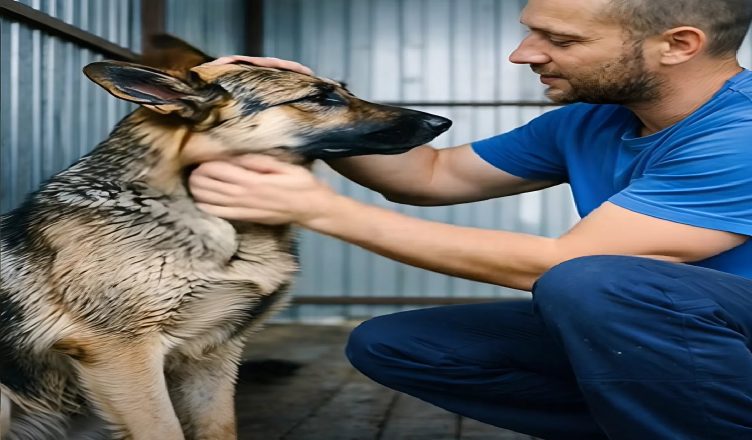
When the staff member asked what kind of dog he was looking for, he didn’t hesitate. He wanted the most difficult one. The one everyone feared. The one no one else was willing to take. That was exactly why he had come.
The employee, Irina, stared at him in disbelief. She tried to warn him, explaining the risks and reminding him of the failed adoption attempts. The dog had already hurt someone. After that incident, he had been labeled dangerous. No one wanted to take responsibility. No one wanted the risk.
A few minutes later, they brought out a large German Shepherd. One ear was torn and scarred, his coat marked by old wounds. His eyes were cold and distant, as if whatever trust he once had was long gone. He didn’t bark. He didn’t growl. He simply watched.
His name was Shadow.
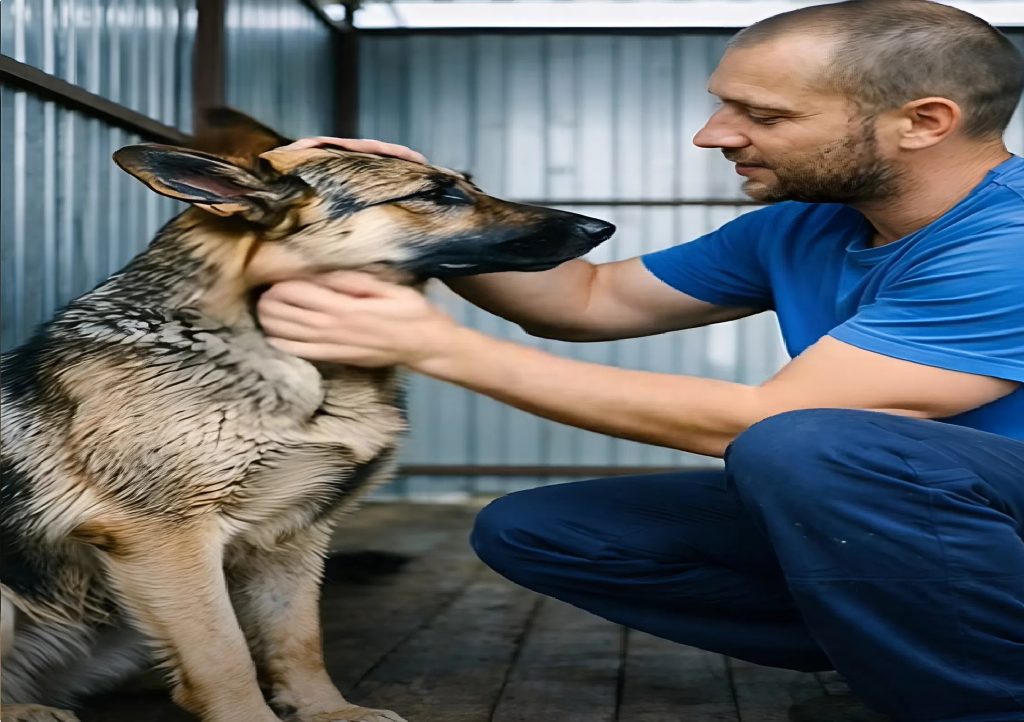
For three years, Shadow had lived inside a concrete enclosure. Several families had tried to adopt him, but each attempt ended badly. After the last incident, the shelter had quietly accepted that he would likely spend the rest of his life behind bars. He was considered beyond hope.
Ivan signed the papers without dramatics. Irina asked one final time if he truly understood what he was doing. He nodded. He understood perfectly.
The first days were tense. Shadow barely touched his food. At night, he paced the yard, alert to every sound. The smallest noise made him stiffen. It was clear he expected danger at any moment. Ivan didn’t force contact. He would sit on the porch, place the bowl nearby, and speak calmly about ordinary things—weather, work, small details of his day. He offered presence instead of pressure.
News spread quickly through the neighborhood. People were uneasy. Some parents refused to let their children play outside. Whispers traveled from fence to fence. One mistake, they said, and everyone would pay for it.
Then came the night that changed everything.
A fire broke out in a neighbor’s storage shed. Flames climbed rapidly, fed by dry wood and wind. Thick smoke filled the yard. Inside the building was an elderly woman who hadn’t managed to get out in time. Neighbors gathered, shouting, panicking—but no one dared to run into the flames.
Suddenly, Shadow bolted forward.
Ivan froze for a split second as the dog disappeared into the smoke. The seconds that followed felt endless.
Then Shadow emerged. His fur was blackened, his movements heavy, but he had hold of the woman’s clothing, pulling her toward the exit. Ivan rushed forward and helped bring her to safety. The crowd stood in stunned silence. The dog they had feared most had just saved a life.
After that night, the tone of the neighborhood shifted. The fear did not vanish entirely, but it softened. People began to see something different in Shadow. Under Ivan’s patient guidance, he grew calmer. He allowed careful touches. His eyes no longer looked empty; they reflected awareness, even quiet strength.
Ivan never gave a long explanation for his choice. Once, sitting on the porch at dusk, he simply said, “Sometimes all it takes is one person who doesn’t give up.” There was something in his voice that suggested he understood that truth deeply.
Months passed. Shadow did not become a perfect dog, but he found his place. He walked beside Ivan with steady confidence. Children could approach him under supervision. He was no longer a symbol of danger but of resilience.
The story shook the neighborhood not just because of the fire, but because it challenged a belief. It proved that being labeled hopeless does not mean being lost. Sometimes, beneath fear and scars, there is only pain waiting to be understood. And sometimes, one act of trust can change everything.