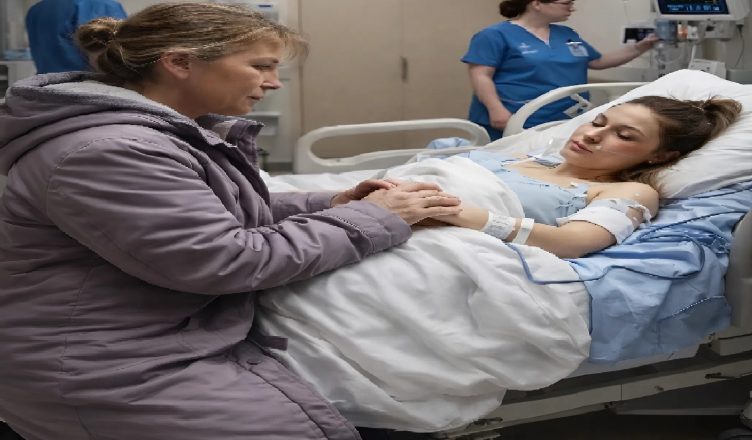
I was no longer just a mother sitting beside her daughter’s hospital bed. I became someone who would see this through to the very end.
While Laura lay in the intensive care unit, I stepped into the hallway and called the police. Officers had already responded to the bus stop — a passerby had seen a young woman lying on the rain-soaked concrete and called for help. I gave my statement calmly and clearly. No hysteria. No confusion. Every word mattered.
The investigator looked at me carefully and asked,
“Are you prepared to take this all the way to court?”
I didn’t hesitate.
“I’m prepared to take it all the way to a verdict.”
Daniel and his mother were arrested later that day. They were confident, as always. They believed their money and connections would protect them again. They claimed Laura had “fallen on her own,” that she was “emotionally unstable,” that it was simply a domestic disagreement.
But they had overlooked one critical detail.
Laura had recorded everything.
Her phone was found in the pocket of her soaked nightgown. The screen was cracked, but the device still worked. In her gallery was a three-minute video.
The footage showed their kitchen. Her mother-in-law was holding Laura’s arms. Daniel stood in front of her holding a golf club. The sound of blows echoed through the room. There were screams. And then his voice, cold and deliberate:
“You’re nothing. We made a mistake. You belong on the street.”
The final image showed an open door, darkness, and heavy rain.
When the video was played in court, the courtroom fell completely silent. Even Daniel’s attorney avoided looking at the screen.
Ten days later, in the ICU, Laura moved her fingers. Then her eyelids fluttered. The doctors slowly reduced her sedation.
I was there when she finally opened her eyes.
She looked at me for a long moment, as if returning from somewhere very far away.
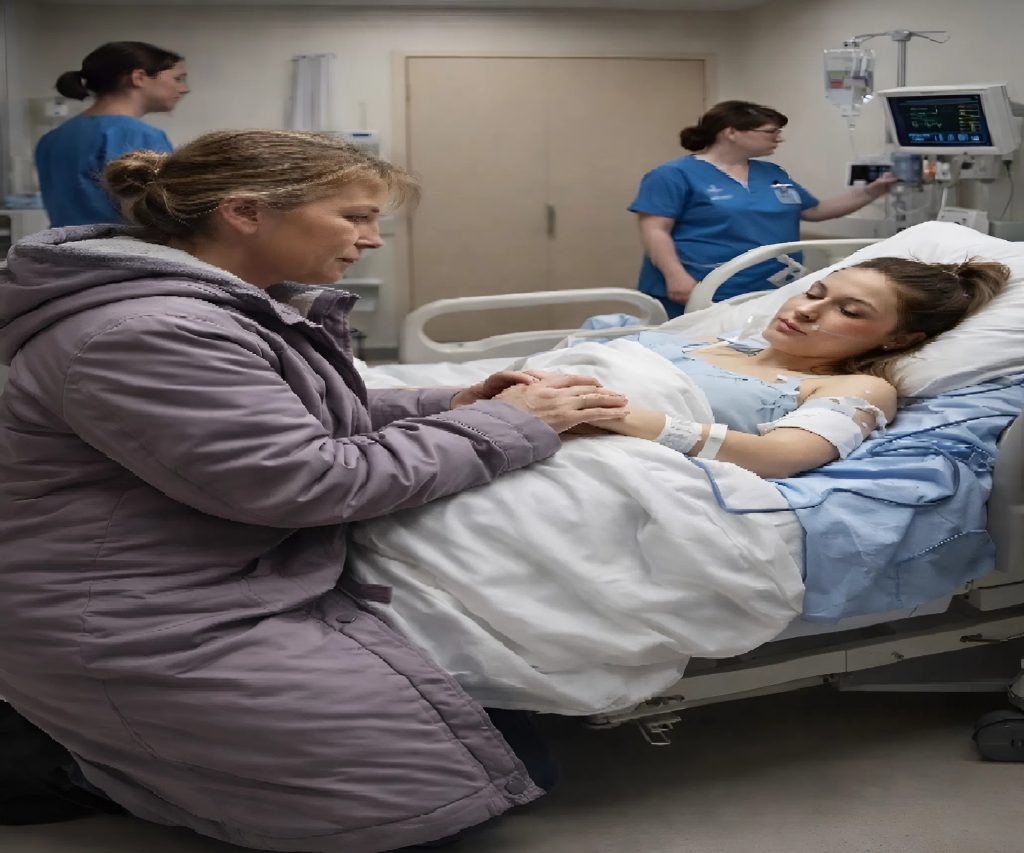
“Mom…” she whispered.
In that instant, I knew she had come back to me.
The doctors were cautious. A skull fracture, a ruptured spleen, multiple broken bones, and severe brain trauma — recovery would be long and uncertain. But she was alive. She remembered. She could speak.
At trial, Laura testified in person. She sat in a wheelchair, her voice weak but steady. She described months of humiliation, isolation, financial control, and monitoring of her phone. The first blow, she said, had come long before that night. She had forgiven it, convincing herself it was a moment of anger.
This was never about poorly polished silverware.
It was about systematic abuse.
Two months later, the verdict was delivered. Daniel was sentenced to a lengthy prison term for attempted murder and aggravated assault. His mother was convicted as an accomplice.
For the first time, I saw fear in their eyes. Their confidence was gone. Money and status could not save them.
After the hearing, reporters asked me how I felt.
“Justice,” I answered.
But justice is not joy. It is relief. The knowledge that cruelty did not go unanswered.
Laura continues her rehabilitation. She is learning to walk without pain. Some nights she wakes up remembering the cold bus stop and the rain.
One day she told me,
“I thought if I just endured it quietly, things would get better. I was afraid to leave. Afraid of being judged.”
I held her hand tightly.
“You will never be alone again.”
I will never forget that phone call at five in the morning: “Come get her. We don’t want her anymore.”
They threw her away like an unwanted object, believing that was the end.
They had no idea it was the beginning.
The beginning of a fight. The beginning of truth. The beginning of a life without fear and without silence.
Because silence protects abusers — never the victims.