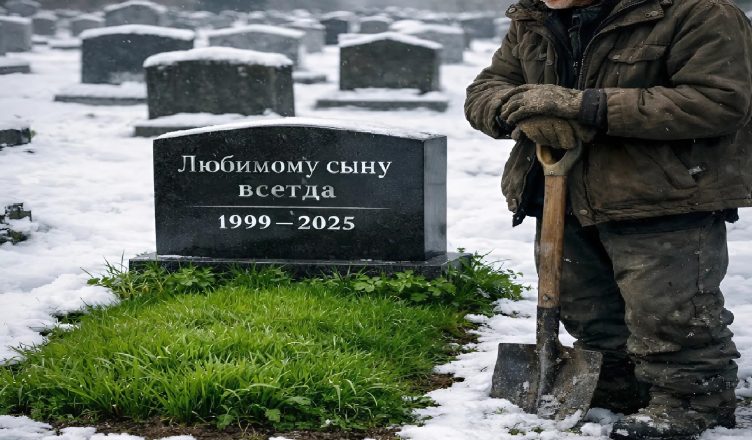
The ground was frozen solid, gravestones were sealed in frost, and a thick layer of snow covered every path and monument. The entire cemetery looked lifeless and pale beneath the gray sky.
Except for one grave.
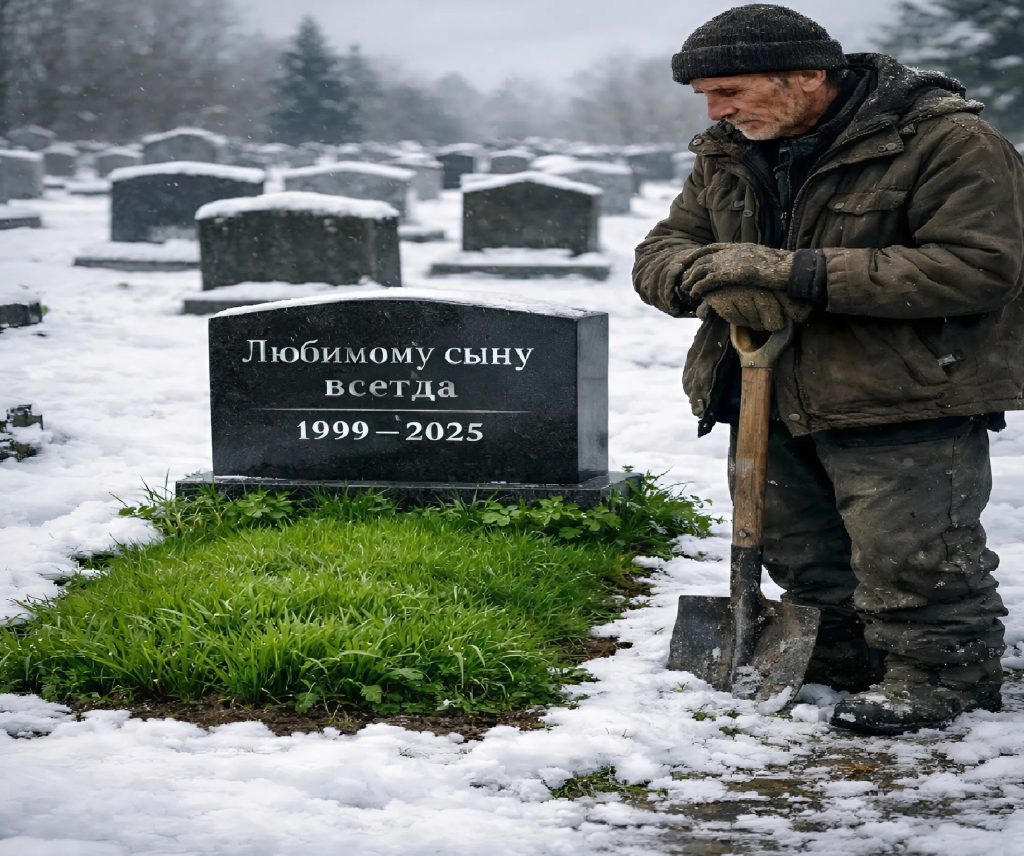
The man had worked there for over thirty years. He knew every headstone, every crack in the stone pathways, every old tree leaning against the fence. He had witnessed countless winters, but never anything like this.
One grave remained green.
The inscription on the headstone read:
“Beloved Son
1999–2025”
Snow blanketed the surrounding plots, yet none settled on this one. The grass above it was vivid and fresh, as though spring lived just beneath the surface. At first, he assumed a grieving relative must have been clearing it daily. Determined to confirm his suspicion, he began arriving before dawn.
For four consecutive mornings, he stood in the darkness watching.
No one came.
And each time, the soil felt warm.
He searched for a rational explanation. Perhaps an old heating pipe ran beneath the section? Maybe something in the soil composition caused the anomaly? He even reviewed old maintenance maps. Nothing. There were no utilities beneath that plot.
On the fifth morning, his unease overpowered his restraint. He brought a shovel.
The earth yielded too easily. It was not frozen, not even stiff. It parted as if it had been disturbed recently. With every scoop, a growing sense of dread settled deeper into his chest.
Less than three feet down, the shovel struck something hard.
Metal.
Not wood. Not stone.
He dropped to his knees and brushed away the damp soil with his bare hands. Slowly, a large metallic container emerged—sealed tightly, reinforced with heavy bolts around its edges. There was no cross, no nameplate. Only a faint industrial marking stamped into the surface.
He clearly remembered the funeral. It had taken place in early spring. It was raining. The boy’s mother could barely stand. The coffin looked ordinary. The ceremony was brief and quiet.
Nothing unusual.
And yet, beneath the grave lay something entirely different.
When he pressed his palm against the metal, he felt it.
A vibration.
Subtle. Rhythmic.
He pulled his hand back sharply.
It wasn’t his imagination. The vibration was steady, mechanical—like a device operating beneath the ground. Or like something… alive.
He held his breath and listened. The cemetery was silent. Then he heard it again—a muffled thud from inside the container.
His heart pounded violently.
With trembling hands, he began loosening the bolts. The wrench slipped more than once in his frozen grip. When the final bolt came free and he lifted the lid, a rush of warm air escaped.
The container was empty.
No body. No remains. Nothing human.
Instead, inside lay a strange apparatus—wires, tubes, and small green indicator lights glowing faintly. Several tubes extended downward, deeper into the earth.
A sudden crunch of snow behind him made him freeze.
Slowly, he turned around.
A young man stood a few feet away. He wore a thin jacket despite the freezing temperature. His face was pale, his expression calm—too calm.
The caretaker recognized him instantly.
It was the same face engraved in the photograph on the headstone.
“That’s impossible,” the old man whispered.
“You shouldn’t have dug,” the young man said quietly.
“They buried you. I was here. I saw it.”
“What you saw was meant to be seen.”
A cold shiver crawled down the caretaker’s spine.
“What is this?” he asked hoarsely.
“Not every grave holds the dead,” the young man replied evenly. “Sometimes they hide the living.”
The air suddenly felt heavier.
That was when the caretaker noticed something terrifying—no mist left the young man’s mouth in the freezing air.
The ground trembled beneath them.
The metal container began to sink slowly, as though pulled downward by an unseen mechanism. Soil shifted on its own, sliding back into place, erasing all signs of excavation.
The caretaker stumbled backward into the snow.
When he looked up, the young man stood at the edge of the grave.
“Forget what you saw,” he said calmly. “Or you may find yourself beneath the same earth.”
Then he stepped back into the pale morning fog—and vanished.
Within minutes, the grave looked untouched again. Snow covered the ground around it, but the grass above remained vividly green.
A few days later, the caretaker was found inside his small cabin. He sat in darkness, staring blankly ahead. He barely spoke.
He repeated only one sentence:
“It didn’t freeze… because he wasn’t dead…”
To this day, even in the harshest winter, that single grave remains green in the middle of a white, frozen cemetery.
The newer workers avoid walking too close to it.
Because sometimes, when the wind dies and the world falls silent, it feels as if something warm is still breathing beneath the soil.