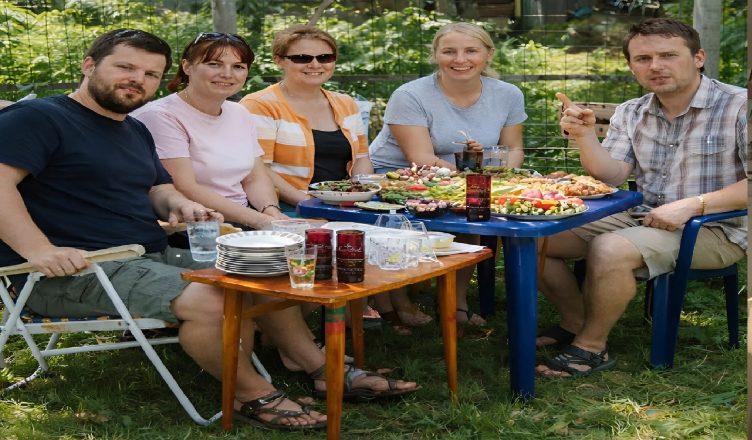
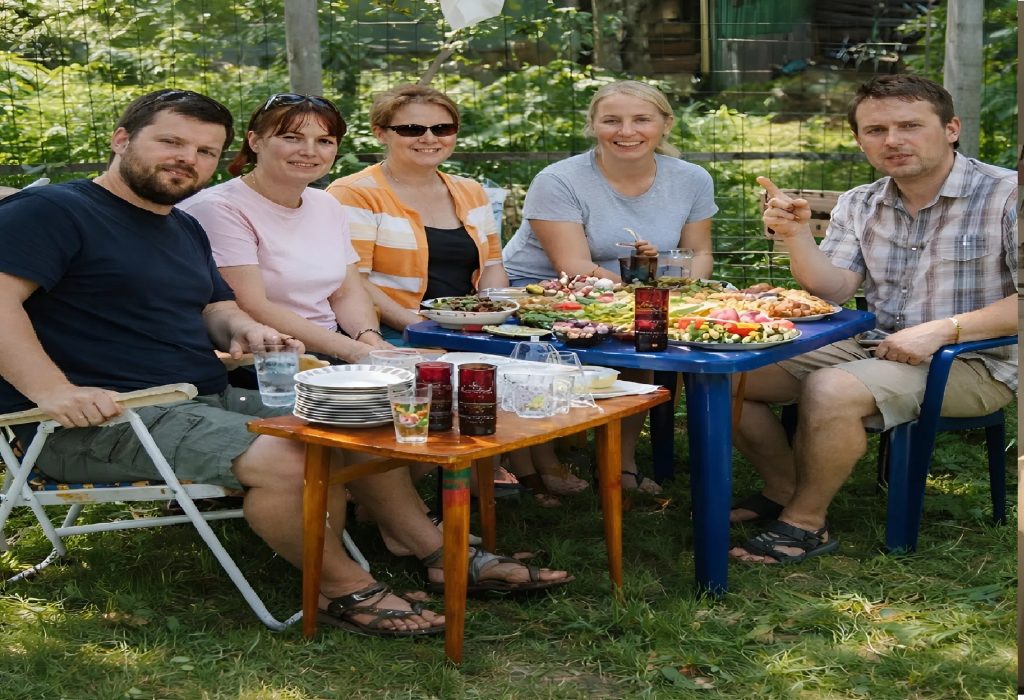
All he asked for was a simple celebration at our country house — a long table under the trees, close family around, and proper homemade food.
I spent almost two full days cooking. Outside, a large pot of fragrant pilaf simmered slowly. I had marinated grape leaves in advance for dolma, prepared several appetizers, and baked a big layered cake with buttercream frosting. I wanted everyone to feel that everything on that table was made with care, not ordered and delivered in boxes.
Among the guests was Michael’s older brother, David. He’s the kind of person who considers himself an expert on absolutely everything. This time, he showed up nearly empty-handed — no real gift to speak of — but with plenty of confidence.
We set the table in the yard. The air smelled of spices and grilled meat. The guests were smiling, raising glasses, congratulating Michael. But David sat down as if the celebration were his.
He was the first to serve himself pilaf. He stirred the rice with his fork, lifted a piece of meat, and said loudly:
“Is this what you call pilaf? The rice is overcooked, and the meat is dry. Who made this?”
“Emma did,” Michael replied calmly. “I like it.”
David smirked.
“Well, if you compare it to army cafeteria food, maybe it passes. But this is far from real cooking.”
I stayed silent. I didn’t want to ruin my husband’s birthday.
When I brought out the dolma, David unwrapped one of the grape leaves right on his plate.
“Too sour. And the filling is too dense. These days it’s rare to find a woman who actually knows how to cook.”
The table fell quiet. My mother looked down. Michael tried to change the subject, but David clearly enjoyed the attention.
Finally, I brought out the cake. Soft layers, smooth cream, decorated carefully. David took a bite and pushed his plate away.
“The frosting is too heavy. The layers aren’t light enough. Honestly, Michael, you’re not very lucky. A wife should cook in a way that leaves guests speechless with pleasure — not silent out of politeness.”
That was the moment something inside me snapped.
Two days of work. Burned fingertips. Exhaustion. And in return — public humiliation.
I slowly set the cake server down.
“You know what, David?” I said evenly. “Maybe you’re right.”
Everyone turned to look at me.
“If it tastes that bad to you, there’s no need to force yourself.”
I picked up his plate and removed it from the table.
“But since we’re offering honest evaluations tonight, let’s be consistent.”
I went inside and came back with a folder.
“You see yourself as an expert. So let’s take a look at your achievements as well.”
I placed copies of bank overdue notices and a document about unpaid child support in front of him.
David’s face went pale.
“Where did you get those?”
“Last month you asked Michael to help you with your email. You showed him these messages yourself. I said nothing then because it wasn’t my place. Just like my cooking isn’t yours.”
The guests exchanged uneasy glances.
“What’s truly inappropriate,” I continued, “is humiliating someone in their own home, at their own table. You came without a gift, without offering help — but full of criticism.”
Michael stood up. His voice was quiet but firm.
“That’s enough, David. Emma cooked for me. I appreciate it. If you don’t, the door is right there.”
David looked around, expecting support. No one said a word. He grabbed his keys and left without another comment.
When the sound of his car faded, a heavy silence lingered for a few seconds. I braced myself for judgment.
Instead, Michael’s aunt spoke softly. “It was about time someone said it.”
Gradually, conversation returned. People asked for seconds. The cake disappeared within minutes.
Later that evening, Michael and I sat alone on the porch.
“I’m sorry I didn’t stop him sooner,” he said quietly.
“You stopped him today,” I replied.
That night I realized something important: respect is not automatic. If you don’t defend your boundaries, someone else will cross them without hesitation.
A week later, David sent a short message: “Can we talk?”
I don’t know if he’ll ever change. But I do know one thing for certain — I will never again allow anyone to humiliate me at my own table.