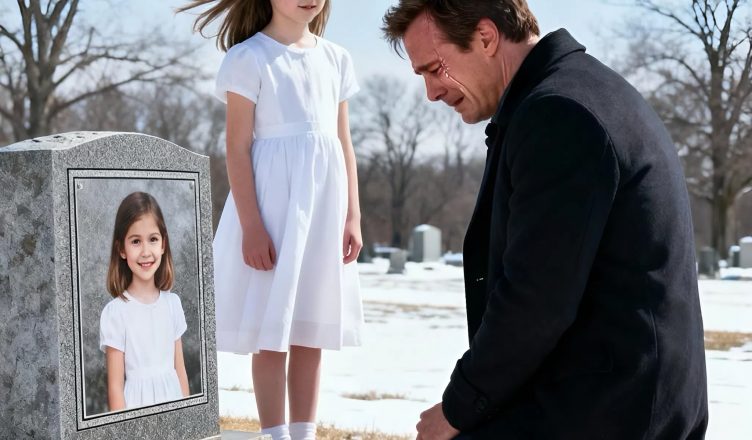
Not memory. Not imagination. My daughter’s heartbeat thudded against my chest, frantic and uneven, like a bird trapped in a cage.
“Sweetheart…” My voice cracked so badly it barely sounded human. “This isn’t possible. They said—”
“They lied,” she whispered, burying her face into my coat. “Daddy, please don’t let them take me back.”
The word they sliced through me sharper than grief ever had.
I pulled her inside, locked the door with trembling hands, and sank to the floor, holding her as if letting go would make her disappear again. Her hair smelled of damp earth and smoke. Real smoke. Not the sterile scent of a funeral home. Not the imagined residue of a fire report.
I wrapped her in a blanket and sat her under the kitchen light. Only then did I truly look at her. Scratches along her arms. Bruises, yellowing at the edges. A burn mark on her sleeve — small, deliberate. My stomach turned.
“Where have you been?” I asked softly, afraid my voice might break her again.
She hesitated, eyes darting toward the hallway. “Not here. Not there. Somewhere they said was safe.”
My wife’s words echoed in my head: It’s time to let her rest.
I felt sick.
As my daughter sipped water with shaking hands, fragments spilled out. A fire that wasn’t meant to kill her — just scare her. Men in masks. A woman’s voice she recognized immediately. Vanessa’s voice. Calm. Cold. Telling someone, Make sure she doesn’t speak.
I stood up so fast the chair clattered to the floor.
Vanessa.
My wife. The woman who cried into my shoulder at the grave. The woman who pressed those warm mugs into my hands, who whispered about healing while guiding me away from questions I was too broken to ask.
And Colby. My brother. The paperwork. The sudden concern for my “well-being.” The legal language I hadn’t read closely because my hands shook too badly.
I understood then.
They hadn’t just buried my daughter.
They had buried me — under lies, signatures, and grief thick enough to blind a man.
A sound creaked upstairs. Footsteps.
My daughter flinched. “They’re here.”
“No,” I said, forcing calm I didn’t feel. “They won’t touch you again.”
I grabbed my phone, quietly recording as I ushered her into my study and locked the door. I stepped into the hallway just as Vanessa appeared at the top of the stairs, her face soft with practiced concern.
“You’re still up?” she asked. “I heard a noise.”
I stared at her — really stared — and saw nothing familiar left behind her eyes.
“You lied to me,” I said.
She blinked once. “What are you talking about?”
Before I could answer, a small voice echoed from behind the study door.
“Mom… please don’t.”
The silence that followed was deafening.
Vanessa’s face drained of color. Her mouth opened, then closed. Behind her, Colby stepped into view, already calculating, already looking for a way out.
I pressed stop on the recording.
“Get out,” I said quietly. “Both of you. The police are on their way.”
Colby laughed nervously. “You’re emotional. You’re imagining things.”
That was when my daughter opened the door herself and stepped into the light.
Alive.
Whole.
Unburied.
Colby stumbled backward. Vanessa collapsed onto the stairs, sobbing — not in grief, but in defeat.
By morning, the truth unraveled faster than I could process. Insurance money. Custody threats. A plan so clean it relied on one thing they hadn’t expected.
That a little girl would survive.
That she would run.
That she would knock on her father’s window instead of disappearing forever.
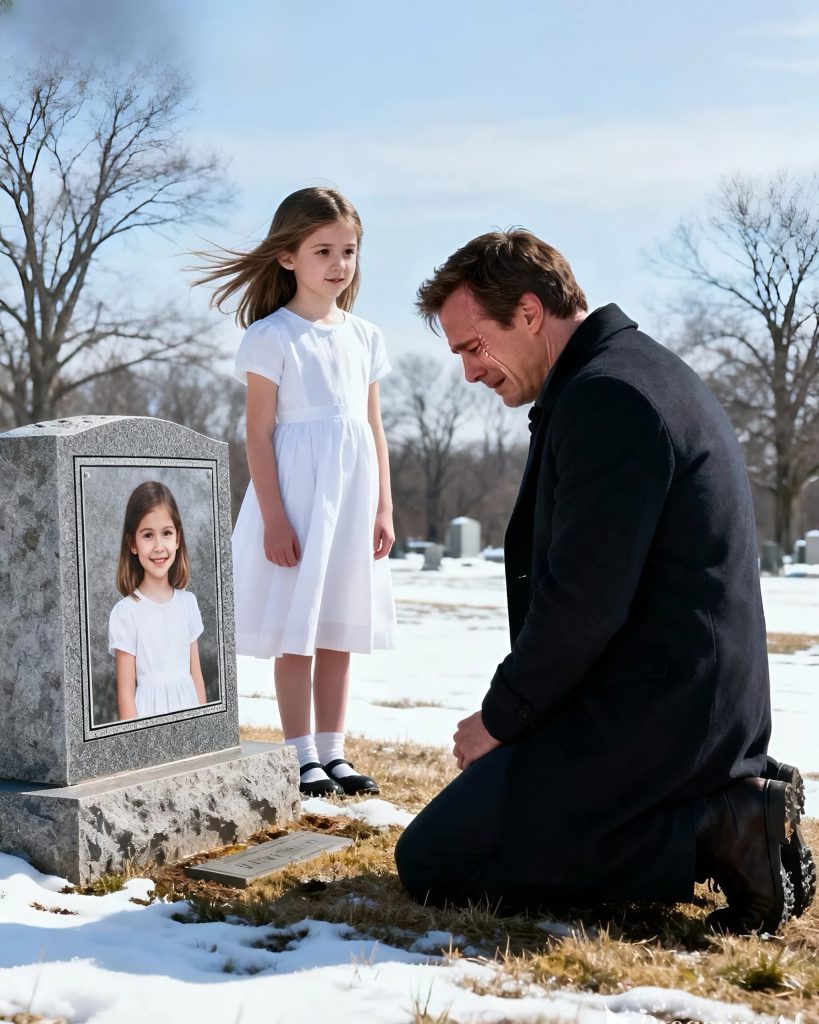
I visited the grave again later that week. I brought flowers — not for loss, but for lies finally laid to rest.
And as my daughter squeezed my hand and asked if we could go home, I realized something terrifying and beautiful at once:
Sometimes the dead don’t stay buried.
And sometimes, the ones you trust most are the ones who try to put them there.