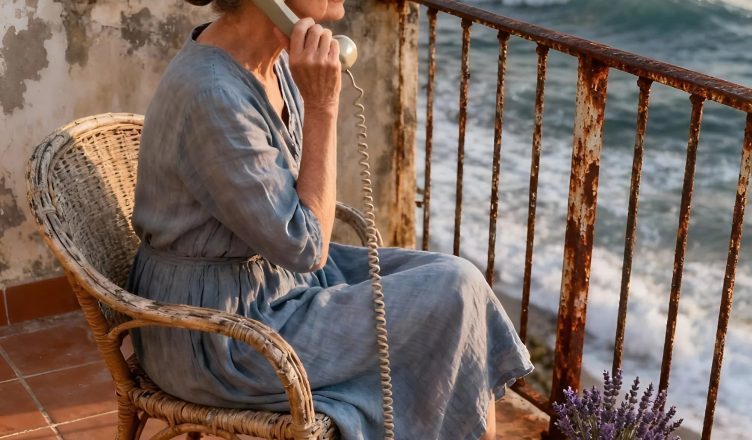
I woke before sunrise, not because I was anxious, but because my body already knew: today was the day truth would no longer be negotiable. The sea outside was calm, deceptively so, its surface smooth as glass. I brewed my coffee slowly, deliberately, as if every small ritual grounded me in certainty.
At 9:17 a.m., my phone rang.
I didn’t answer right away.
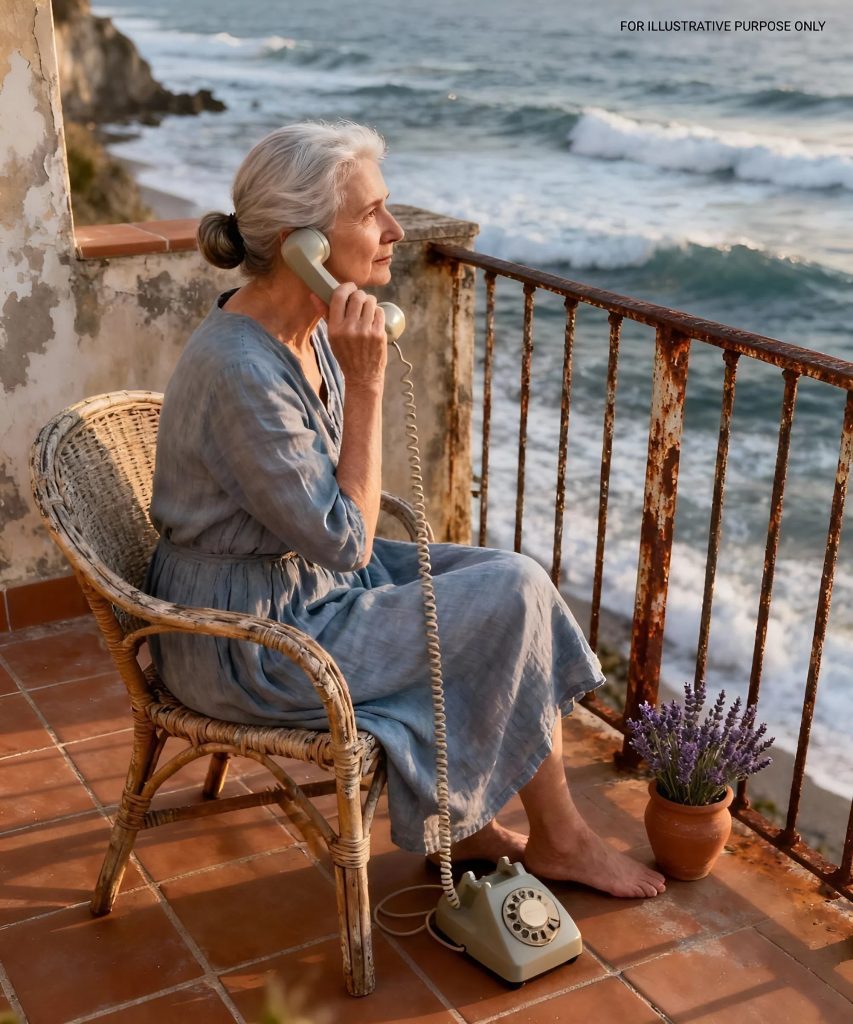
I watched it vibrate on the table, Laura’s name flashing like a warning light I’d seen coming for years. When I finally picked up, her voice was nothing like the confident tone from the day before.
“Mom… there’s a problem.”
I said nothing.
“The buyer is here. With his lawyer. And the notary. They’re saying the documents don’t match. They’re saying the house can’t be transferred.”
Still, I remained silent.
“They asked me if this was some kind of mistake,” she continued, her words tumbling over each other now. “I told them it wasn’t. I told them I owned it. But they—” Her breath caught. “They pulled out a file. With Dad’s name. And another name I’ve never seen before.”
I closed my eyes.
That other name had been written into the foundation of that house long before Laura ever slept in its rooms.
It belonged to Daniel’s sister—María. The woman Laura had cut out of her life years ago. The woman my daughter called “irrelevant.” The woman who had quietly helped Daniel finish the house when his hands began to shake from illness.
Laura didn’t know that.
She didn’t know that Daniel had foreseen this exact moment.
When the doctors told him time was short, he didn’t panic. He planned. He planned like a man who had loved deeply and been disappointed just as deeply.
He had said to me, “If Laura ever tries to take what she didn’t help build, let the house protect itself.”
And it had.
“Mom?” Laura whispered now. “Why didn’t you tell me?”
That question—so small, so fragile—almost made me laugh again. Almost.
“Because you never asked,” I replied quietly. “You assumed.”
There was a long pause. Then anger rushed in to fill the fear.
“You let me embarrass myself,” she snapped. “You watched me make this deal knowing it would fall apart!”
“No,” I corrected her. “I watched you rush into something you had no right to touch.”
She began to cry then—not the soft kind. The furious kind. The kind that comes when control slips through your fingers and refuses to return.
“You chose strangers over your own daughter,” she accused.
I stood up and walked to the window, letting the light spill across the floor.
“No,” I said. “I chose boundaries. Something you stopped respecting years ago.”
Down at the house, I could already see movement. Cars pulling away. The buyer gesturing sharply. Lawyers closing folders. A deal unraveling in real time.
Laura had thought ownership was inherited by proximity.
She had been wrong.
“What happens now?” she asked, her voice hollow.
“That depends,” I replied. “On whether you finally understand that love doesn’t mean entitlement.”
Another silence followed—but this one felt different. Heavier. Final.
“I need time,” she murmured.
“So did your father,” I answered. “And he used it wisely.”
I ended the call.
By noon, Héctor sent me a single message: It’s done. Exactly as written.
I poured myself another coffee and sat back down on the terrace.
The sea was still calm.
But somewhere behind me, a life built on assumptions had just collapsed—and for the first time in years, I didn’t feel guilty about standing my ground.
Because some lessons arrive gently.
And others come crashing through the front door—carrying contracts, consequences, and the truth you tried to sell without permission.